

You've just landed at CUN, your hotel wants you checked in, a cenote reservation is waiting, and dinner is booked on the coast. The map looks manageable because it displays roads as clean lines. Your actual day includes immigration, luggage, hotel access, parking, traffic, and the time it takes to move a family from an airport terminal into a vehicle.
That's where a multi stop trip planner needs to do more than draw a route. In Cancun, it has to turn airport pickup, hotel drop-off, an attraction, and dinner into a workable chauffeur schedule. The difference between a pleasant arrival day and a rushed one usually comes from the order of stops, the type of time window attached to each stop, and how well the driver receives the plan before pickup.
Table of Contents
- Why a Multi Stop Trip Planner Matters in Cancun
- Mapping Your Stops and Timing Windows
- Ordering Stops So the Day Stays Feasible
- Briefing the Driver and Handling Luggage
- Choosing Single vs Multi Vehicle Logistics
- Coordination Habits That Save the Day
- Turning the Plan Into a Bookable Itinerary
Why a Multi Stop Trip Planner Matters in Cancun
A traveler arriving at CUN in the afternoon may have a hotel check-in expectation in the Hotel Zone, a pre-paid cenote reservation later that day, and a sunset dinner in Playa del Carmen. A navigation app can calculate separate driving legs, but it won't automatically account for luggage collection, customs processing, loading time, hotel access, or the possibility that traffic on the main coastal road will slow several legs at once.
The common mistake is treating drive time as elapsed itinerary time. A route can look short on a map and still fail once the group searches for the hotel entrance, waits for a room, changes clothes, or unloads bags that need to remain secure during the next leg. A chauffeur absorbs much of that friction by keeping the vehicle with the travelers, handling the road sequence, and reducing the number of separate pickups.
Practical rule: Plan the day around the time guests must be ready in the lobby, not around the moment a map app says the vehicle should arrive.
The chauffeur's role is closer to a trip coordinator than a point-to-point driver. The service can begin with a scheduled airport meet and greet, continue to the hotel, hold the luggage while the group visits a cenote, and finish at dinner without forcing travelers to rebuild the route between each booking. The point is not just to drive more stops. It's to protect the transitions between them. For a useful explanation of how a continuous transfer differs from separate rides, see this guide to point-to-point transportation.
This matters even more for multigenerational groups. Children, older travelers, and guests carrying medical or mobility equipment need fewer fragmented handoffs, not a string of loosely connected reservations. Lounge Wagon's multigenerational travel tips offer helpful context on planning around different needs within one group.
A practical Cancun itinerary therefore starts with four questions:
- What can't move: Flight arrivals, prepaid tours, ferry departures, and timed dinner reservations are hard commitments.
- What can flex: Hotel drop-off, shopping, beach time, and an informal lunch usually have more room.
- What stays in the vehicle: Decide which bags travel onward and which must reach the room.
- Who owns the clock: A coordinator and chauffeur should manage the route while the guests manage the experience.
Mapping Your Stops and Timing Windows
Begin with a complete stop list, not with a map. Write down the airport, every hotel, each attraction, the dinner location, and the final drop-off. Beside every stop, record the address, the earliest acceptable arrival, the latest acceptable arrival, the expected time on site, and whether the vehicle must wait.
Then classify each window. A flight arrival, ferry departure, or prepaid cenote slot is a hard window. Missing it may cancel the activity or force the group to buy another reservation. A hotel drop-off, beach club meal, or shopping stop is usually a soft window. It may still matter, but the coordinator can move it when an earlier leg runs late.
Build the route backward
Start with the least flexible booking and work toward the airport. If the cenote has a fixed entry slot and dinner has a reservation time, those anchors determine when the group must leave the hotel. The airport pickup then needs to include arrival processing, baggage collection, vehicle loading, and the possibility that the flight doesn't release passengers at the expected time.
Don't trust a straight-line distance. Cancun's road network, hotel entrances, traffic direction, and the movement along Federal Highway 307 can make a short-looking leg consume much more of the afternoon than expected. The route also changes depending on whether the group is moving north toward the Hotel Zone, south toward Playa del Carmen, or farther toward Tulum.
| From | To | Off-peak drive | Peak drive, 4 to 6 p.m. | Window type |
|---|---|---|---|---|
| CUN | Hotel Zone | Usually the shortest regional transfer | Can become unpredictable with congestion | Flight arrival and hotel drop-off |
| CUN | Playa del Carmen | Longer southbound transfer | Allow additional road and loading margin | Airport arrival or dinner anchor |
| CUN | Tulum | Long regional transfer | Sensitive to traffic and stop delays | Usually a hard tour or hotel window |
| Hotel Zone | Cenote | Depends on the cenote's location and access road | Return timing can affect later plans | Prepaid entry slot |
| Cenote | Playa del Carmen | Regional transfer with variable access time | Sunset and dinner timing can tighten | Dinner reservation |
The figures above are planning categories rather than promises. A professional coordinator checks the actual addresses, current traffic, weather, road conditions, and stop duration before confirming the schedule. For broader context on how planners need to account for feasibility rather than just route order, this multi-stop snorkeling itinerary guide is a useful example of the difference between a list of activities and a coordinated day.
Use soft stops as shock absorbers
Put flexible activities around the hard anchors. If the hotel room isn't ready, the driver can take the group to a planned lunch or keep the luggage secured while the travelers wait. If the cenote visit runs late, an optional shopping stop should disappear before the dinner reservation does.
The sequence should also reflect operating reality. Open-air attractions can close or become unsuitable in heavy rain, while hotel lobbies and restaurants may have their own arrival procedures. A good multi stop trip planner leaves room for those decisions instead of presenting every minute as fixed.
Ordering Stops So the Day Stays Feasible
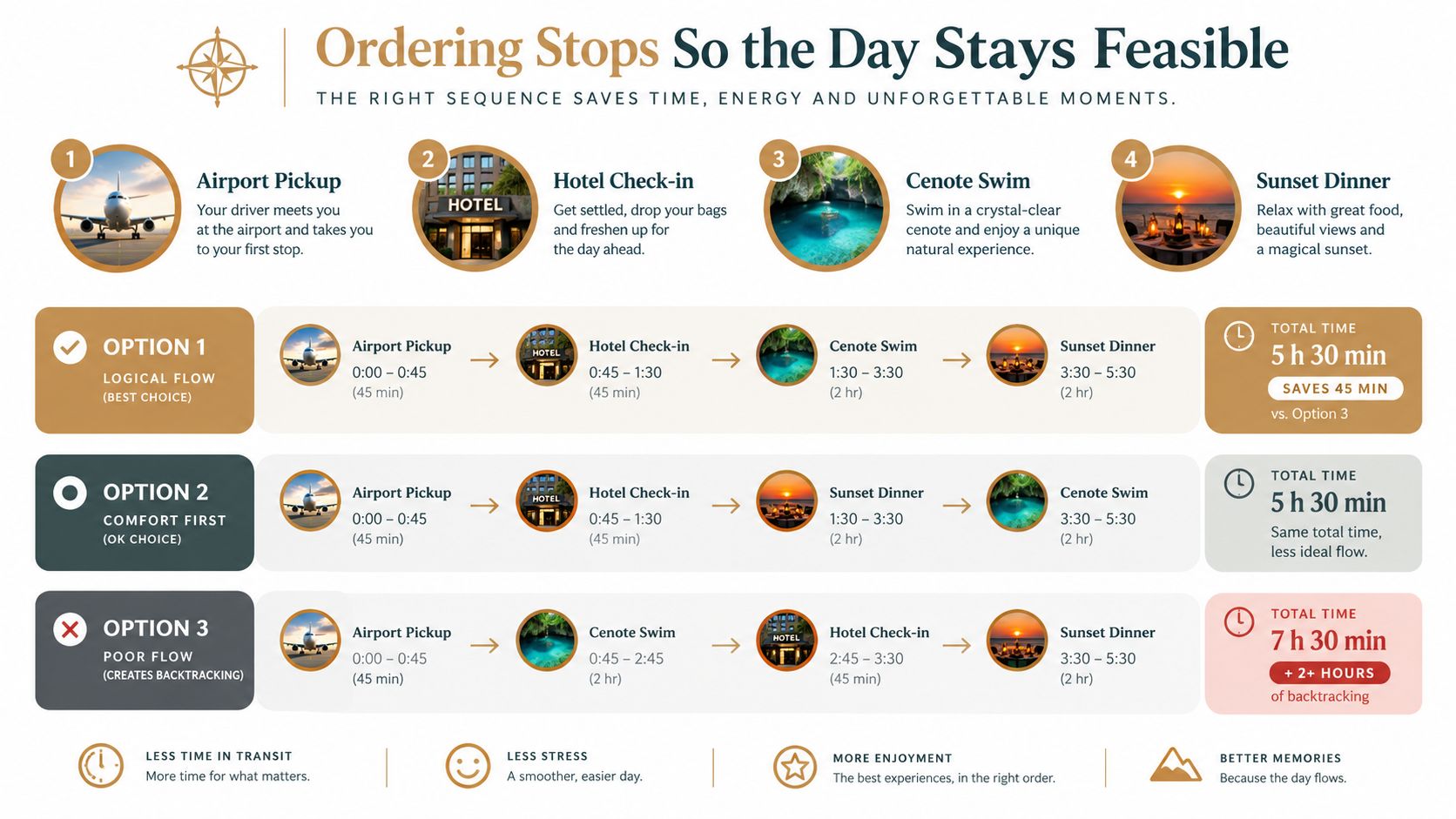
The same four stops can produce very different days. Consider airport pickup, hotel check-in, a cenote swim, and sunset dinner. The best sequence isn't determined by geography alone. It depends on which reservations are hard, which stops can absorb delay, and whether the driver can remain with the group.
Option one keeps the critical booking protected
Airport pickup, a quick hotel drop, the cenote, then dinner is the logical first draft. It gets luggage out of the way, gives travelers a chance to change, and protects the timed swim before the evening meal. If the flight arrives late, the coordinator can shorten the hotel stop, remove an optional pause, or send the group directly to the cenote if the reservation is more important than room access.
This ordering survives delay better because it places the essential activity ahead of the open-ended part of the day. The chauffeur can preserve the dinner by reducing slack at the hotel or eliminating a discretionary stop.
Option two looks comfortable but spends the margin early
Airport pickup, a long hotel check-in, beach time, the cenote, then dinner feels relaxed. In practice, beach time is the first activity that gets compressed when the airport process takes longer than expected. Guests may also underestimate how long it takes to gather everyone from a resort lobby after changing clothes or collecting bags.
This can work when the cenote has flexible entry and the dinner reservation can move. It is a poor choice when both bookings are fixed.
Option three creates avoidable backtracking
Airport pickup, the cenote, hotel check-in, then dinner may appear efficient if the attraction is on the way south. It becomes risky when the hotel is in the opposite direction or when the group needs a full change of clothes before dinner. The vehicle carries luggage through the activity, the guests spend time retracing the route, and a delay at the first stop affects every later commitment.
A chauffeur evaluates the route with the actual hotel entrance and attraction access point, not just the destination pin. That distinction often determines whether the day feels continuous or fragmented.
The hard-window-first principle: Protect the reservation that cannot be replaced. Let flexible activities absorb the delay.
The first airport standby should also include a meaningful curbside buffer before the expected pickup. That gives the driver room to manage an early landing, terminal confusion, or a group that exits faster than planned. The day should begin with the vehicle ready, not with the coordinator trying to recover lost minutes.
Briefing the Driver and Handling Luggage
Driver briefings happen before pickup, not at the curb. A coordinator should receive a clear passenger and luggage brief early enough to assign the right vehicle, prepare child seats, and understand which bags need to remain accessible during the route.
Send the operational details in a structured format:
- Flight and terminal: Include the flight code, terminal information, scheduled arrival, and the lead passenger's name.
- Passenger list: Provide the names of everyone traveling, including children and guests who may need extra boarding assistance.
- Luggage profile: List the number and type of bags, including oversized cases, sports equipment, and fragile items.
- Child seats: State the ages and number of children who need seats instead of just noting “family transfer.”
- Pets: Identify pet crates and whether they remain in the passenger area or cargo space.
- Contact details: Confirm the lead traveler's phone, preferred messaging channel, language preference, and a fallback contact.
Mark bags by destination
The luggage plan matters as much as the passenger plan. Before departure, identify which bags go directly to the hotel room, which remain in the vehicle for the next stop, and which belong to a different hotel later in the itinerary. Turning luggage tags outward makes the loading order visible and prevents the driver from opening every case at every stop.
Fragile items should be loaded last and unloaded first. Bags needed for a cenote visit should stay reachable. Formal clothing for dinner shouldn't be buried beneath beach equipment. These details sound small until the group is standing outside a resort with wet towels, camera equipment, and a reservation clock running.
Confirm the handoff
The booking should state what the pickup sign says, where the driver will meet the passengers, and how the group will recognize the vehicle. It should also identify who can authorize a route change if the flight is delayed or a guest decides to skip a stop.
A good briefing removes decisions from the curb. The driver should arrive knowing who is traveling, what is being carried, where each bag belongs, and which stop comes next.
This is especially important for Cancun airport transportation because airport pickup is pre-arranged rather than hailed on arrival. Official airport guidance says taxis and door-to-door car services must be booked in advance, and one airport source states that travelers can't hail a taxi curbside at Cancún Airport. Cancún Airport's taxi guidance explains that requirement directly.
Choosing Single vs Multi Vehicle Logistics
One vehicle is usually the cleanest answer when the group shares the same route, the luggage fits safely, and every passenger follows the same schedule. It gives the coordinator one driver to brief, one vehicle to track, and one arrival sequence to manage.
The calculation changes when the itinerary forks. A wedding group may land together but split between hotels. A corporate group may send some guests to a meeting venue while others continue to Playa del Carmen. A family may want one party at a cenote while another heads to the resort. In those cases, forcing everyone into one van creates waiting, backtracking, and an uncomfortable compromise over whose booking takes priority.
A private transportation Cancun airport plan should compare more than passenger count. Consider luggage volume, hotel count, the distance between branches, the length of the total drive, and what happens if one vehicle becomes unavailable. Recovery is harder when a single vehicle carries every passenger and every bag.
| Factor | Single Van Works | Multi-Vehicle Needed |
|---|---|---|
| Group movement | Everyone follows the same route | Travelers split toward different destinations |
| Luggage | Bags fit with safe passenger space | Separate hotels or bulky equipment require dedicated cargo |
| Schedule | Stops happen in a shared order | Activities, meetings, or ceremonies run in parallel |
| Hotel pattern | A small number of aligned properties | More than four hotels create repeated unloading |
| Drive profile | The route stays regional and compact | Total driving exceeds three hours or one leg exceeds ninety minutes |
| Contingency | One driver can recover the day | A vehicle failure would disrupt the whole group |
| Event transport | Guests travel together | A lead vehicle and shuttles need coordinated release times |
A family with six travelers and eight bags may fit one appropriately sized premium van if the route stays together. A wedding party of twenty-four may need a lead vehicle and additional shuttles timed to clear the airport process together. The objective isn't to use more vehicles. It's to prevent the wrong vehicle choice from turning every later stop into a delay.
For the practical difference between a single ride and a coordinated Cancun car service arrangement, review this guide to Cancun car service planning.
Coordination Habits That Save the Day
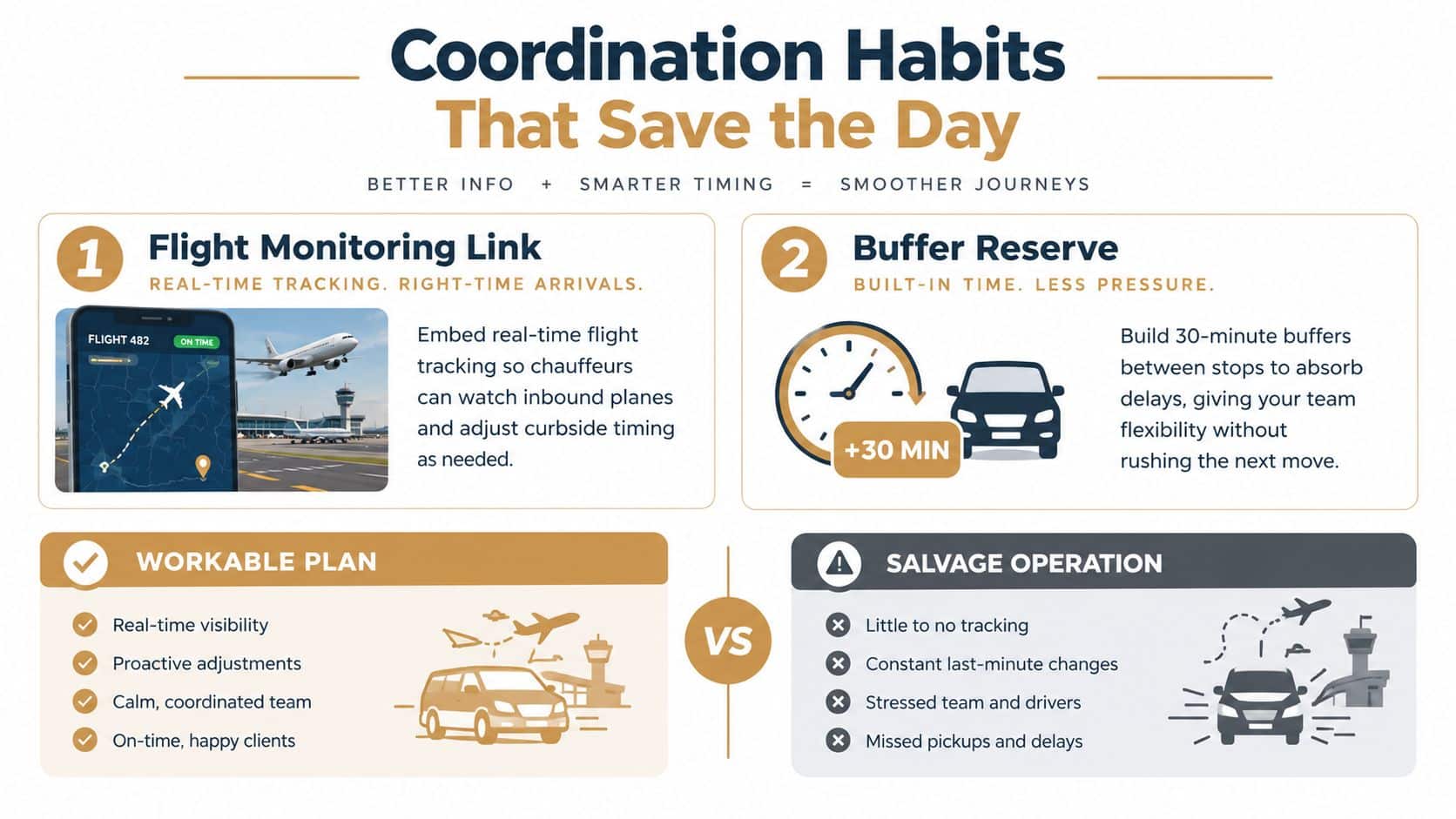
A workable itinerary has recovery built into it. A salvage operation depends on phone calls after every delay. The difference comes from a few habits that should be agreed before the traveler boards the flight.
First, connect the booking to a flight monitoring link. The chauffeur should know whether the aircraft is early, delayed, or already on the ground before the passengers reach the pickup area. That allows the vehicle to adjust its curbside timing without making the traveler coordinate a new ride while collecting luggage.
Second, reserve a post-airport buffer before the first scheduled activity. Customs, baggage collection, and terminal movement don't follow a perfectly stable pattern, so the first booking shouldn't begin immediately after the expected curbside meeting. A buffer also protects the itinerary when a child needs attention, a bag is delayed, or the group needs water before starting the next leg.
Confirm conditions on the day
Cenotes and other open-air activities can be affected by rain. Restaurants can lose reservation notes, change seating availability, or require confirmation for a large party. The coordinator should check the attraction and dinner reservation on the morning of travel, not rely only on the confirmation received earlier.
A shared group chat keeps the lead guest, coordinator, and driver aligned. The messages should answer practical questions quickly:
- Where is the meeting point: Confirm terminal, sign, vehicle description, and the direction guests should walk.
- What changed: Report flight movement, weather, road conditions, or a canceled stop.
- What remains fixed: Keep the cenote slot, ferry departure, or dinner reservation visible to everyone.
- Who decides: Name the person authorized to remove a flexible stop or approve a revised sequence.
Buffer time isn't empty time. It gives the coordinator options when the first part of the day refuses to follow the original estimate.
Bilingual communication also reduces the risk of a small misunderstanding becoming a missed connection. Travelers should know whether to wait inside, walk to a designated meeting zone, or contact the driver through messaging. A reliable Cancun luxury airport transfers arrangement includes those instructions before landing, not after the passengers are searching for a vehicle.
Turning the Plan Into a Bookable Itinerary
The final step is turning the route into a reservation package that another person can operate without guessing. A vague email saying “airport, hotel, cenote, and dinner” isn't enough. The bookable version should list every address, the requested pickup window, the acceptable arrival window at each stop, the expected waiting requirement, and the final destination.
Include the operational details in the same document:
- Flight code, terminal, and arrival information
- Passenger names and a lead traveler's phone
- Luggage quantity, oversized items, and fragile cases
- Child-seat requirements and pet-crate details
- Each hotel, attraction, restaurant, and contact number
- Preferred vehicle class and passenger comfort requirements
- Which bags remain onboard and which are unloaded
- Flight monitoring status and coordinator contact
- The hard windows, soft windows, and approved fallback stops
A professional luxury transportation booking should also clarify what happens if the flight changes, the weather affects an outdoor stop, or the group chooses to remove an optional activity. Ask whether the vehicle remains available between stops or whether each leg is dispatched separately. That distinction affects luggage security, timing, and the driver's ability to recover the route.
The day before departure, confirm the inbound flight, weather at open-air locations, hotel checkout or check-in conditions, and the restaurant reservation. On the morning of travel, verify the pickup sign, driver photo, vehicle plate, messaging contact, and any cash or admission requirements for the cenote.
A structured itinerary gives the coordinator something to validate. A loose request leaves key decisions to the curb, where the group has the least time to make them. Services offering a chauffeur for a coordinated tour can also be compared through this overview of a Cancun private tour, especially when the day combines transportation with several planned stops.
Forward the completed itinerary to the transportation company, request written confirmation that the route and flight monitoring are attached to the booking, lock the deposit, and ask for the driver's contact details before departure. That simple handoff turns a multi stop trip planner from a list of places into a schedule the driver can deliver.
Unique Private Transportation offers private airport transfers, point-to-point rides, chauffeur-by-the-hour service, and coordinated multi-stop itineraries across Cancun and the Riviera Maya. Send the airport, hotel, cenote, and dinner details through Unique Private Transportation to request a vehicle plan with flight monitoring, bilingual coordination, and luggage-aware scheduling.