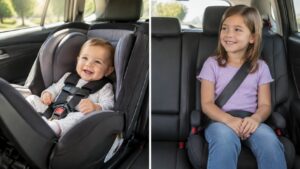
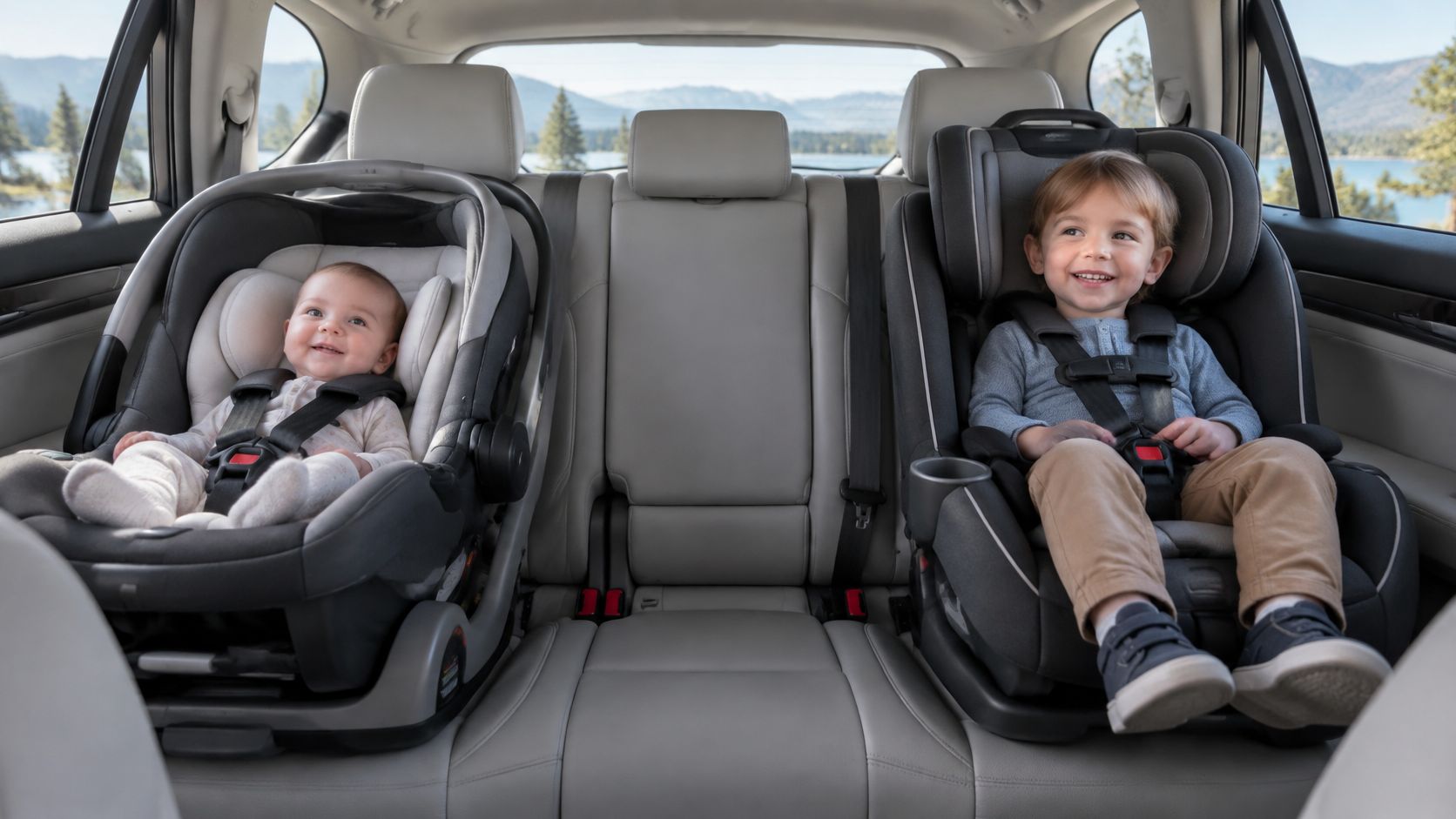
The popular advice to turn a child forward-facing on their second birthday is too simplistic. A birthday doesn't tell you whether your child still fits rear-facing, whether the supplied seat suits the vehicle, or whether anyone has installed it correctly. For family travel, facing direction and installation quality belong in the same decision.
The rear facing vs forward facing car seat question isn't a contest between a safe seat and an unsafe seat. Choose the highest protection your child still fits, then make sure the actual vehicle can accommodate that restraint properly. That matters more than leather upholstery, a premium badge, or a promise that a baby seat will be waiting.
Table of Contents
- Rear Facing vs Forward Facing at a Glance
- Crash Protection Numbers Parents Should Know
- The Size Limits That Trigger a Switch
- A Pre Ride Install Check That Prevents Misuse
- Legal Minimums Versus Safer Transfer Practice
- Cancun Family Transfers and the Final Booking
Rear Facing vs Forward Facing at a Glance
Rear-facing and forward-facing seats compared
| Decision point | Rear-facing | Forward-facing with harness |
|---|---|---|
| Best stage | Birth until the seat's rear-facing maximum | After the rear-facing height or weight limit is exceeded |
| Crash support | Shell spreads force across head, neck, and back | Harness and tether restrain a child who no longer fits rear-facing |
| Switch trigger | Stay until the manufacturer's height or weight limit | Don't switch on age alone |
| Typical convertible range | Use the exact model's stated rear-facing range | Use the model's separate forward-facing harness range |
| Required hardware | Correct recline and harness at or below shoulders | Internal harness, top tether, and harness at or above shoulders |
| Airbag rule | Rear seat only; never ahead of an active front airbag | Rear seat strongly preferred |
Non-negotiable: Use a rear seating position. Never put a rear-facing restraint in front of an active front passenger airbag.
Rear-facing is the default from birth because the seat shell supports the child's head, neck, and spine together. Forward-facing becomes appropriate when the child no longer fits the rear-facing configuration, provided the replacement configuration meets the child's size requirements.
The mistake is treating forward-facing as an upgrade. It's a change in restraint stage, not a reward for getting older, walking independently, or wanting a better view.
Read the rows that determine the ride
Convertible describes a seat that can change orientation. It doesn't mean both orientations are equally appropriate for your child today. The manufacturer sets separate requirements for each mode, and those requirements can differ between seats that look almost identical.
For a child who has outgrown rear-facing, choose a forward-facing seat with a five-point harness and top tether. Don't confuse that with a booster, which positions the vehicle's belt rather than restraining the child with an internal harness.
Installation also changes with orientation. Harness positioning must suit the selected mode, and a forward-facing tether needs a designated vehicle anchor, not a convenient luggage hook.
Request a configuration, not a baby seat
A correctly installed forward-facing seat is appropriate after the rear-facing limit. Turning early because an available vehicle has a forward-facing seat is a different decision, and it gives up protection unnecessarily.
For airport travel, the child's measurements should determine the restraint request before the vehicle is dispatched. A sedan, SUV, or van must then accommodate that restraint alongside the passengers and luggage.
Weigh and measure your child before travel, then match your reservation to the relevant table row. Asking vaguely for a baby seat leaves too much room for the wrong restraint, wrong orientation, or wrong installation.
Crash Protection Numbers Parents Should Know
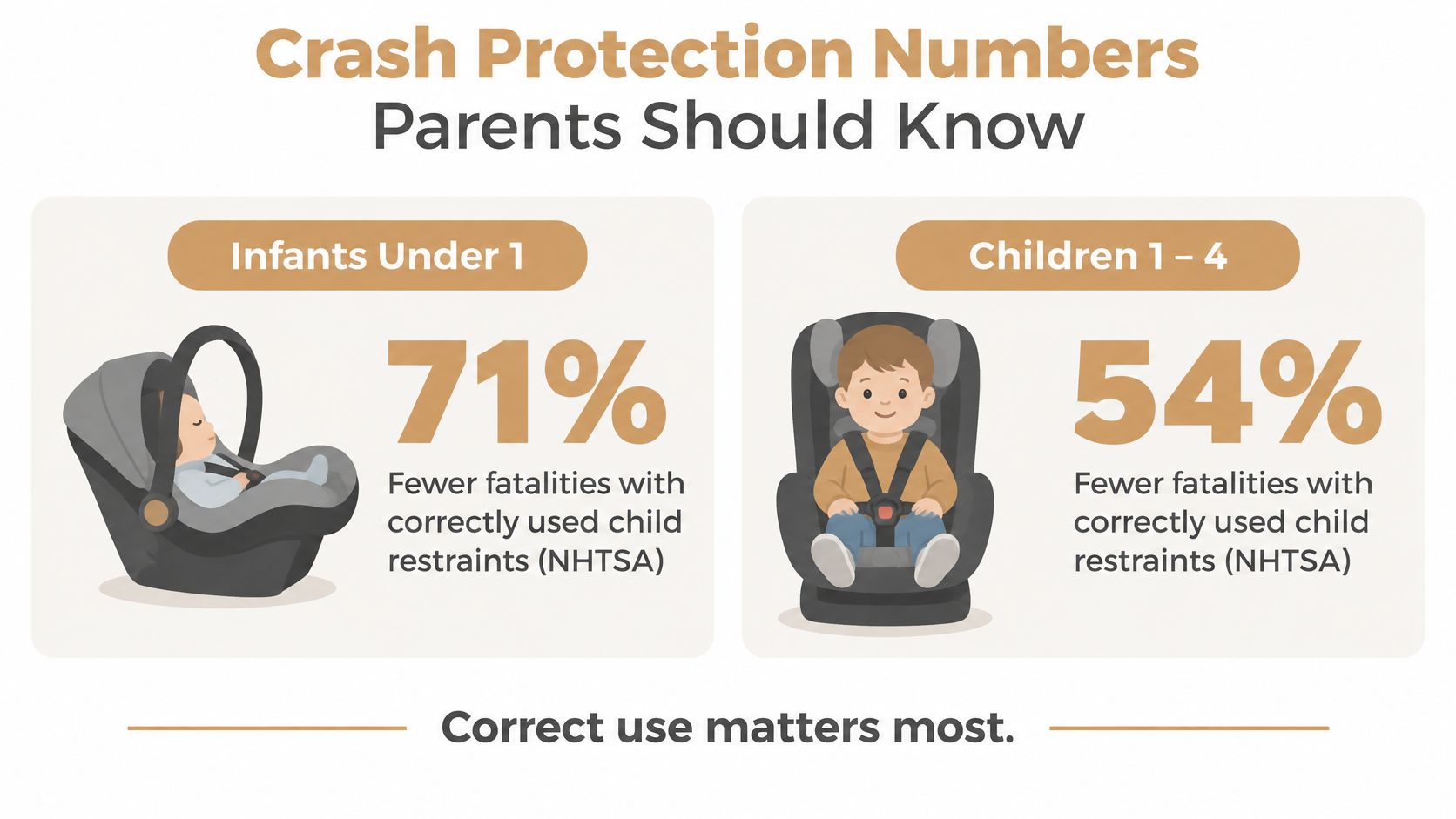
Those two big percentages are not a ranking of rear-facing against forward-facing. They measure a correctly used restraint against riding with nothing.
The NHTSA child-restraint evidence summary reports 71% fewer fatalities for infants younger than 1 and 54% fewer fatalities for children ages 1 to 4 with a correctly fitted child restraint versus no restraint. The same summary reports 78 to 82% lower injury odds for forward-facing restraints versus a lap-and-shoulder belt alone.
Reported crash-protection figures
| Restraint comparison | Reported reduction | Baseline |
|---|---|---|
| Infants under 1, correctly used restraint (NHTSA) | 71% fewer fatalities | Versus no restraint |
| Children ages 1 to 4, correctly used restraint (NHTSA) | 54% fewer fatalities | Versus no restraint |
| Forward-facing restraint (NHTSA) | 78 to 82% lower injury odds | Versus lap-and-shoulder belt alone |
Read the baseline before you rank seats
The age-group fatality cuts compare a correctly used restraint with no restraint, inside those ages. They do not score one facing direction against the other. The belt comparison uses injury odds, a different result. Subtracting the percentages does not estimate how much safer one orientation would be for a particular child.
Facing direction and installation quality are one decision. A rear-facing seat that is loose, twisted, or past its fit does not deliver the protection those fatality cuts describe. A forward-facing harness only earns its place when it is the right stage, tight, and attached to a real vehicle anchor.
Specify the orientation the child still fits, and require a correct install on that same ride. Direction without a solid install is an incomplete safety choice.
Private airport transfers are not taxi minimums
A local taxi rule may allow a forward-facing seat, or even a belt, once a child reaches a legal age or size. That is a floor for that vehicle class. On a private airport transfer you can set the restraint before the vehicle is sent, so do not treat the taxi minimum as the booking standard.
Read the forward-facing injury figures as a warning. An adult lap-and-shoulder belt is a poor stand-in for a harness the child still fits. Read the age-group fatality figures the same way: they support a restraint that is the right direction and correctly installed, not a reason to stay rear-facing after the seat's own limit.
The NHTSA summary also describes the American Academy of Pediatrics' shift from a fixed birthday to the highest rear-facing height or weight the manufacturer allows. Put that limit in the transfer request: stage, direction, and a proper install for this child's current size. If the child is still inside the rear-facing maximum and the ride is a private SUV or van, ask for rear-facing and confirm the install. If the child has passed that maximum, ask for a forward-facing harness, not a booster and not an adult belt.
The Size Limits That Trigger a Switch
Start with the label on the seat you'll use. Not the seat you own at home, not a sibling's previous model, and not a photograph showing a similar-looking carrier.
When each restraint stage applies
| Stage | Usual orientation | Common limit to check | Move on when |
|---|---|---|---|
| Infant-only carrier | Rear-facing only | Model-specific weight, standing height, and head-clearance requirements | Child reaches that carrier's limit |
| Convertible seat | Rear-facing first | Manufacturer's rear-facing height and weight maxima | Either rear-facing maximum is reached |
| Forward-facing harness | Forward-facing | Manufacturer's harness height, weight, and fit requirements | Harness height or weight limit is reached |
| Booster | Forward-facing with vehicle belt | Manufacturer's minimum size requirements and the child's ability to sit correctly | Vehicle belt fits properly without the booster |
A carrier becoming too small doesn't automatically mean it's time to face forward. A suitable convertible seat can provide the next rear-facing stage, subject to its own fit requirements.
Likewise, reaching a forward-facing harness limit doesn't automatically make every booster appropriate. The child must meet the booster's requirements and remain correctly positioned throughout the journey, including when tired.
Check the limits in a useful order
- Identify the exact model. Read the manufacturer label and the relevant manual, including the instructions for the selected orientation.
- Compare current measurements. Check height and weight separately. Passing the weight check doesn't cancel a failed height check.
- Check seated fit. Follow the model's head-clearance and harness-position requirements rather than judging by appearance.
- Choose the next permitted stage. Confirm that the child meets its minimum requirements and that the vehicle supports the installation.
Premature transitions aren't just a theoretical concern. NHTSA's 2023 National Survey of the Use of Booster Seats found that approximately 11% of children younger than 1 weren't riding rear-facing, mostly because they had been turned forward too early; appropriate restraint use in the relevant surveyed group was 69.1%, down from 73.2% in 2021.
Those findings support a measurement-based decision, not a rushed change before a holiday. A rental seat or transfer seat deserves the same scrutiny as the seat in your own car.
A tall, light toddler needs a height decision
Say your toddler remains below a seat's rear-facing weight maximum but has reached its rear-facing height limit. The remaining weight allowance doesn't make that configuration suitable.
Conversely, outgrowing an older sibling's compact carrier doesn't establish that every rear-facing option has been exhausted. Check whether an appropriate rear-facing convertible fits both your child and the booked vehicle.
Height can end a restraint stage before weight does. That's why a reservation containing only the child's age is incomplete.
A Pre Ride Install Check That Prevents Misuse
A seat facing the recommended direction can still be installed badly. Loose attachment, incorrect recline, and poorly positioned harness straps aren't minor details to overlook because the chauffeur is ready to leave.
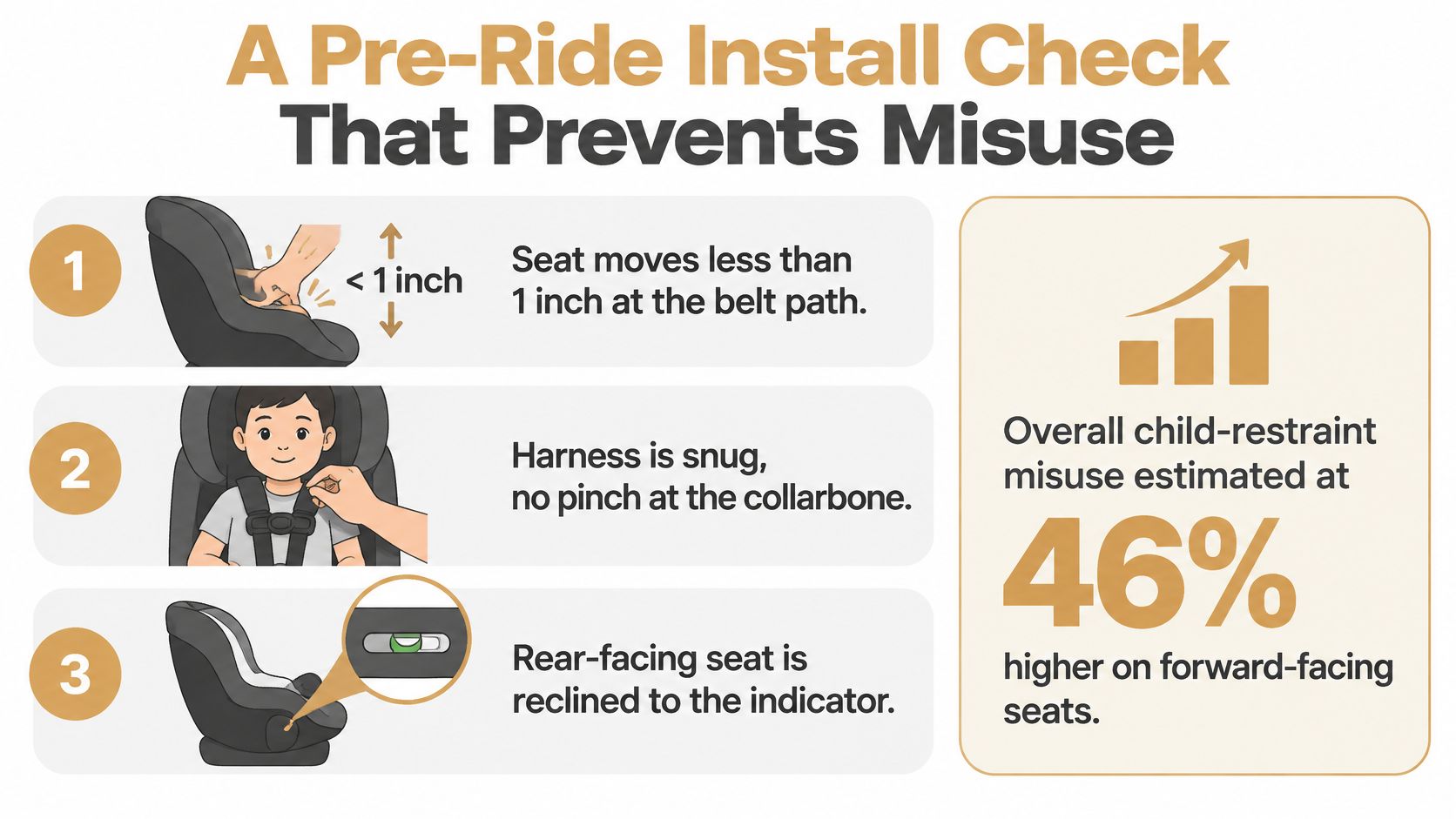
NHTSA has estimated overall child-restraint misuse at 46%, with higher misuse for forward-facing seats, and its child-restraint misuse study identifies installation and positioning errors that parents need to check before departure. A correctly used forward-facing seat after the rear-facing limit is preferable to a loose rear-facing installation, but the answer isn't to turn a child early. It's to correct the installation or change the vehicle.
Make the check before anyone starts driving
Confirm approval and fit. Check that the seat is approved for use at the destination and accommodates the child's current height and weight. An unfamiliar seat needs its own instructions, not assumptions borrowed from your home model.
Choose a rear seating position. Keep a rear-facing restraint away from an active front passenger airbag. Don't accept a front-seat installation merely because luggage has occupied the usable rear space.
Test attachment at the belt path. Grasp the seat where the belt or lower-anchor strap passes through and check for looseness, following the manual's movement criterion. Don't judge installation tightness by pulling the top of a rear-facing shell.
Read the recline indicator. Set rear-facing recline according to the seat's indicator and instructions. A sloping SUV cushion can make a seat look reclined even when its indicator says otherwise.
Position and tighten the harness. Use straps at or below the shoulders rear-facing and at or above the shoulders forward-facing, as the manual specifies. Remove slack, check that you can't pinch excess webbing at the collarbone, and position a chest clip at armpit level when the seat has one.
Remove puffy coats. Secure the harness against the child's normal clothing. Put a blanket over the secured harness if warmth is needed.
Recheck after loading luggage. Bags shouldn't push the restraint out of position or obstruct buckling. Secure cargo rather than wedging it against the child seat.
Vehicle space helps only when it's usable
Different belt geometry, inaccessible buckles, and hurried loading can undermine an otherwise suitable restraint. For a forward-facing installation, identify the designated top-tether anchor before attaching anything.
Our guide to traveling in a Yukon SUV can help you consider passenger and baggage space, but a larger cabin doesn't certify a particular installation. Confirm the seating layout needed for your actual restraints.
Parents should watch the installation check even when a chauffeur fits the seat. You know your child's measurements and fit, and you shouldn't discover a mismatch after the vehicle leaves the airport.
Legal Minimums Versus Safer Transfer Practice
A legal taxi exemption answers only whether a ride is allowed. It does not decide facing direction or installation quality. Those belong in the same choice: which restraint, which way it faces, and whether it is fitted correctly.
The Road Safety Authority's child-passenger guidance describes Ireland's taxi exemption from the child-restraint requirement. Other places write their own exceptions. Do not carry an Irish taxi rule, or any foreign taxi exception, over to a Cancun taxi, hotel shuttle, or private airport transfer. Those ride types do not share one obligation.
Legal taxi exceptions versus safer practice
| Place or ride | What the rule may allow | Safer family practice |
|---|---|---|
| Ireland taxis | Taxi exemption from the child-restraint requirement | Request a correct seat anyway, then check direction and installation |
| Other jurisdictions | Exemptions differ and should not be assumed | Confirm the rule for that ride type before you rely on it |
| Prebooked airport transfer | Local minimum depends on destination law | Name orientation, seat count, and rear-seat installation in the reservation |
Put the restraint into the reservation
"Car seat available" does not name the approval standard, orientation, recline, harness height, or who installs the seat. On a private transfer, book the safer setup even when a local taxi could legally skip a restraint.
For a Cancun car service, set the child-seat requirement before pickup. Send the child's measurements so restraint type, model, orientation, size limits, and installation are settled before the curb, not argued there.
Cancun also limits how you get a vehicle. Cancun Airport's transportation guidance states that transport must be pre-arranged or purchased through an authorized airport transportation channel rather than hailed like a typical city taxi, and advises travelers to retain confirmation details and verify authorized vehicle identification.
Keep that confirmation. Match the driver and vehicle to it. Put facing direction and install quality in the same request as the seat count. Refuse a rear-facing seat in front of an active passenger airbag, even on a short ride.
Before you confirm pickup, lock four items: which vehicle, which restraint, which direction, and who installs it. If the supplied setup is wrong, fix it before the vehicle leaves. Legal permission is not a safety plan.
A taxi minimum is not the same recommendation as keeping a child rear-facing, correctly installed, for as long as the seat still fits.
Cancun Family Transfers and the Final Booking
For a private airport ride, make the recommendation specific to the child and vehicle. These are the configurations to request:
- Infant within the carrier's limits. Choose a rear-facing seat in the rear of an SUV or van that accommodates the installation and luggage. Check recline again after loading.
- Toddler within a convertible's rear-facing limits. Keep the child rear-facing and request a vehicle that fits the restraint. A hotel shuttle offering only a lap belt isn't an equivalent substitute.
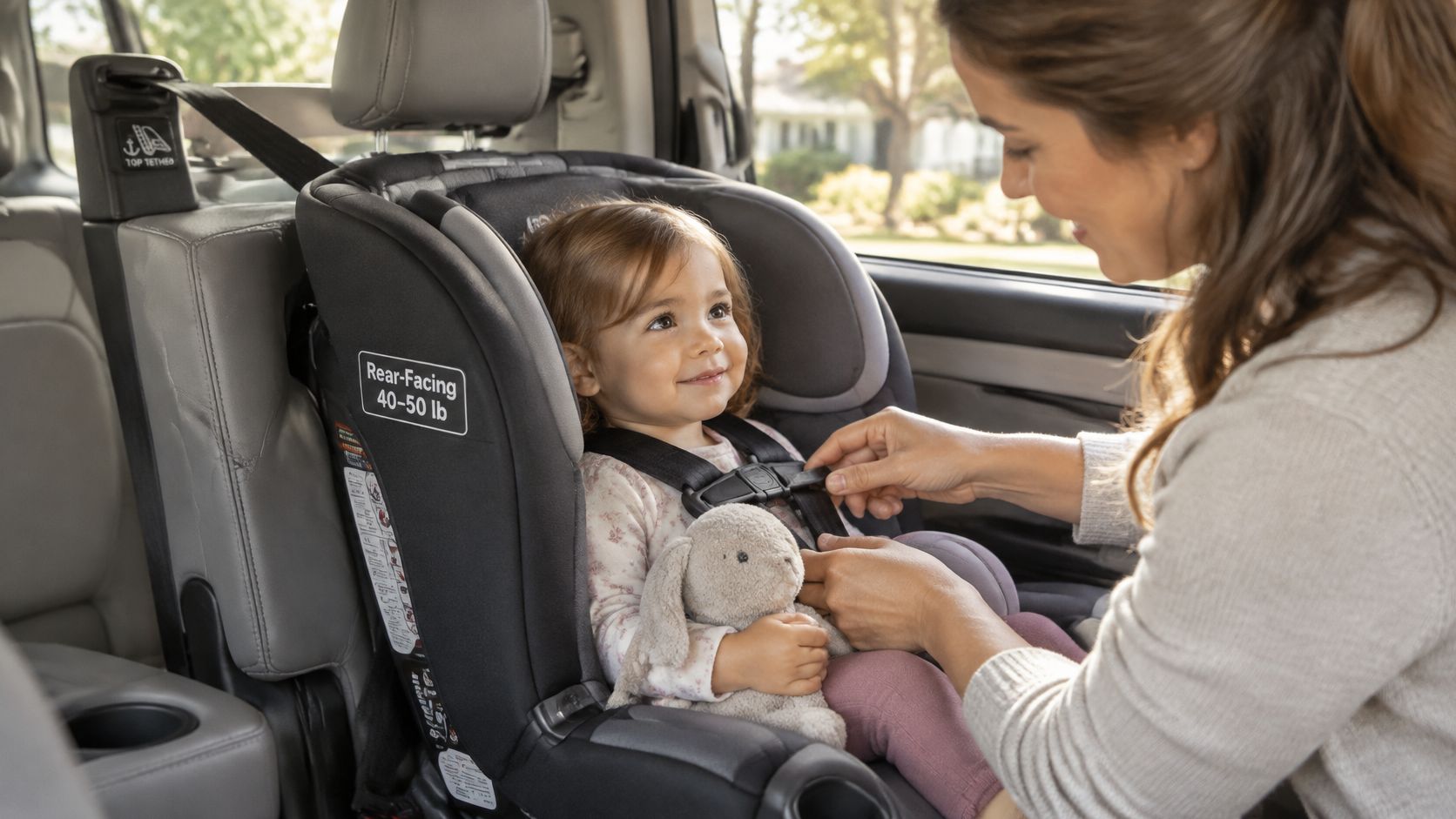
- Child who has outgrown rear-facing. Request a forward-facing internal harness with a top tether. Don't select a booster by default just because it's easier to carry.
NHTSA's car-seat guidance supports this size-based progression: keep children rear-facing to the manufacturer's maximum rear-facing height or weight, then use a forward-facing harness and tether. For a chauffeured ride, match those requirements to the exact seat model before booking.
Book the space and the correct pickup
For Cancun airport transportation, specify the strollers and bags as well as the passengers. A sedan may not accommodate multiple installed restraints plus bulky gear, so choose luxury transportation for its usable seating and cargo layout, not its badge.
Our luxury private transportation in Cancun includes premium vehicles and concierge coordination. When comparing private transportation Cancun airport options, insist that the proposed vehicle suits the child-seat configuration before considering welcome amenities.
Terminal details also matter. Cancun International Airport's terminal overview identifies Terminal 3 as primarily serving international airlines and Terminal 2 as handling domestic and many international flights.
Don't plan to improvise a terminal change with sleeping children and bags. The airport ground-transport guide lists the inter-terminal shuttle as operating from 07:00 to 22:00, approximately every 20 to 30 minutes.
Send a complete seat request
We provide free infant gear on board, with baby seats available on request. A customer reported receiving two car seats for their little children, and Precious wrote, “they went above and beyond by providing baby car seats for us.” Those comments describe helpful service, not a guarantee that every available seat fits every child.
For Cancun luxury airport transfers, send the number of children, each child's weight in pounds or kilograms, height, required orientation, number of restraints, and rear-seat-only installation. Include the flight number, terminal, destination, stroller details, and luggage count.
On arrival, keep the confirmation number accessible, verify the driver and vehicle permit badge, inspect the installation, and remove bulky clothing before tightening the harness. Request the same orientation for the return journey unless the child has reached a new seat limit.
Unique Private Transportation offers private airport transfers, premium vehicles, and child-seat coordination, with free infant gear provided on board. Visit Unique Private Transportation and send your child's height, weight, required orientation, flight details, and luggage list so we can coordinate a suitable restraint and vehicle before pickup.