

December through April is Cancún's strongest weather window, with March and April the driest months at about 36 mm and 43 mm of rain. Heat tolerance and seaweed risk can still change which dates work best for your trip.
September receives more than six times March's average rainfall, according to The Weather Network's Cancún climate guide. That difference matters when you're committing to an outdoor ceremony, a long archaeological excursion or a tightly timed arrival.
But a dry forecast doesn't guarantee a comfortable day outdoors or a clear shoreline. The useful answer to a Cancún best time search starts with what you'll do after landing: stay beside a resort pool, walk exposed ruins, move between destinations or coordinate a group with luggage and child seats.
Table of Contents
- Best Month by Weather and Heat
- Storm Season From May to December
- Seaweed Risk and Beach Conditions by Date
- Crowds, Hotel Demand and Prices Through the Year
- Best Time by Traveler Type
- Airport Transfers and Car Service Before You Land
- Choose Your Dates and Book Your Transfer
Best Month by Weather and Heat
Start with the drier months, then decide how much heat your itinerary can handle. A shaded resort day is different from a long walk at Chichén Itzá followed by a cenote visit. Your best dates depend on both the weather and what you plan to do after landing.
Use the month-by-month guide to shortlist dates, not to predict a particular afternoon. Monthly averages describe typical conditions; they cannot promise sunshine on your travel day.
Cancún weather by month
Weather2Travel's Cancún climate guide reports January through April rainfall of about 69, 55, 36 and 43 mm. March and April each have about three rainy days. For May through September, Atlas Ranger's weather and heat guide gives typical highs of roughly 33–34°C (92–94°F) and humidity around 76–81%.
Historical figures need to be read separately from typical monthly conditions. Climate Yearbook's 2024 Cancún record reports a February average low of 20.1°C, the year's lowest, and a May average high of 32.5°C, the year's highest. Those figures describe 2024, not long-term typical highs.
| Month | Rain | Typical highs | Storm risk |
|---|---|---|---|
| January | About 69 mm | About 28°C | Outside the broad storm window |
| February | About 55 mm | About 28°C; 20.1°C average low in the 2024 record | Outside the broad storm window |
| March | About 36 mm; about three rainy days | About 30°C | Outside the broad storm window |
| April | About 43 mm; about three rainy days | About 32°C | Outside the broad storm window |
| May | Wetter pattern begins; May's rainfall varies | 32.5°C average high in the 2024 record | Season begins |
| June | Wet-season conditions; rain becomes more frequent | Roughly 33–34°C | Rising |
| July | Wet-season conditions; rain remains a planning factor | Roughly 33–34°C | Rising |
| August | Wet-season conditions; rain remains a planning factor | Roughly 33–34°C | High |
| September | Heavy-rain month | Roughly 33–34°C | High, nearing the broad seasonal peak |
| October | Heavy-rain month | Hot and humid | Peak of the broad storm window |
| November | Wetter-season transition | Warm, with less intense heat than midsummer | Easing |
| December | Drier window begins | Warm and generally milder than the hottest months | Broad storm window closing |
The storm-risk column is a broad planning guide, not an official hurricane calendar or a forecast. Treat it as context for flexibility, not as a prediction for your dates.
Heat changes the itinerary
Heat affects more than the time spent sightseeing. It can make the walk from the terminal, a wait outdoors and the exposed approach to a ruin tiring, even when air conditioning is available between stops.
Families with young children should account for stroller shade, rest stops and walking distances. Older or heat-sensitive travelers should judge a day by its longest exposed stretch, rather than by the comfort of the hotel. Wedding parties also need to consider formal clothing and outdoor waiting.
Practical rule: Choose your month around the hardest outdoor activity you want to enjoy, not the easiest afternoon at the resort.
For hot-weather touring, schedule early departures and put the longest walks first. Keep lunch in a shaded or indoor spot, carry drinking water and leave the afternoon flexible. Before booking transport, ask whether the vehicle has working rear air conditioning and enough space for passengers and luggage.
Beach-only travelers may find hotter dates easier to manage if they are comfortable alternating swimming with indoor breaks. Corporate groups and excursion-heavy travelers have less flexibility when meetings, admissions and restaurant reservations are fixed. In those cases, judge the dates by the most demanding day in the schedule.
The useful question is specific: Which month suits my planned activities, heat tolerance and airport transfer plan?
Storm Season From May to December
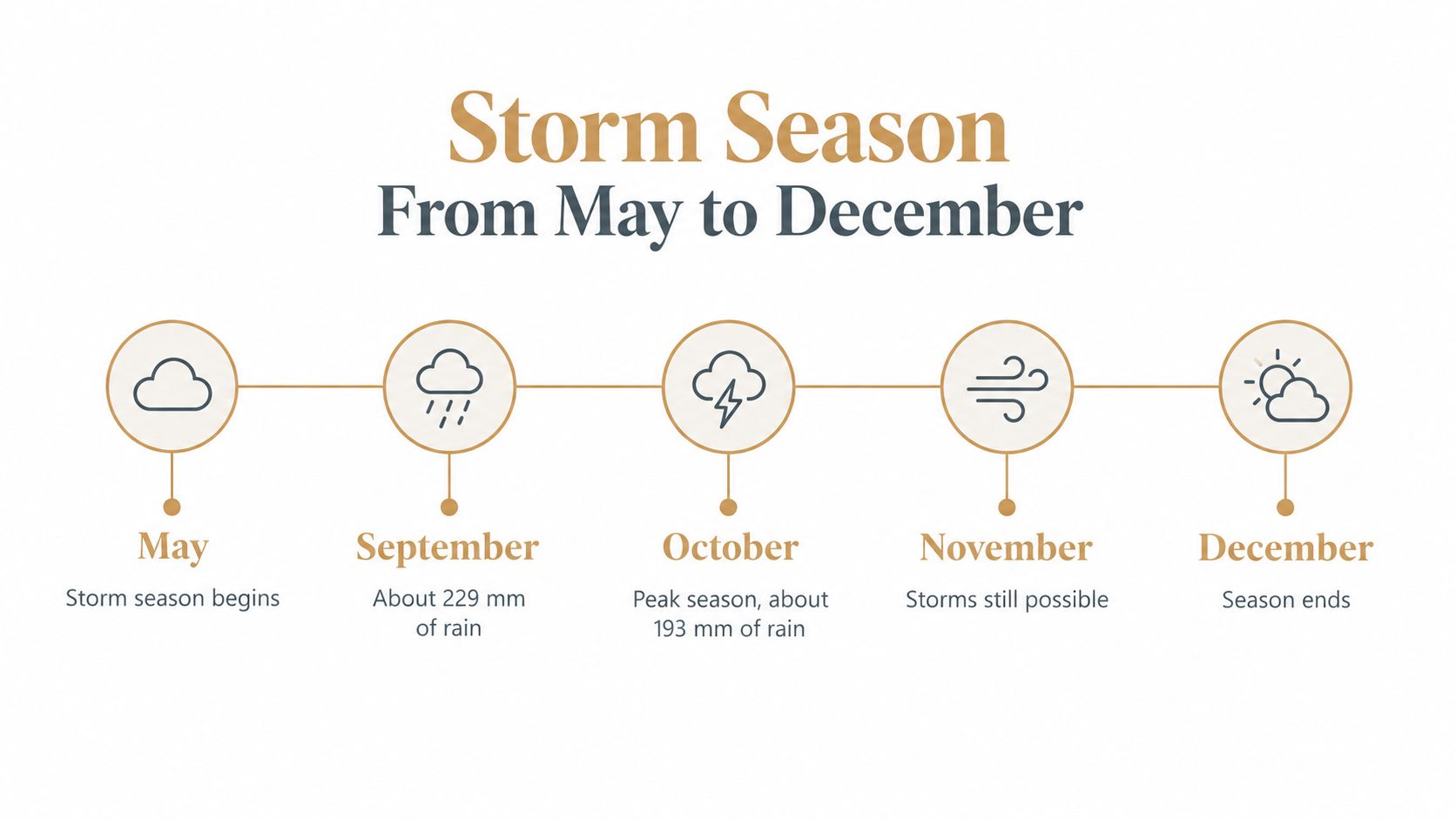
October deserves particular attention for storm planning: Time and Date's Cancún climate information underpins the broad May-to-December storm window and an October peak, with the accompanying monthly series putting October rainfall at about 193 mm and September at about 229 mm, each with roughly 13–14 rainy days.
September's higher rainfall total doesn't make it a contradiction to identify October as the broader storm peak. Rainfall accumulation and tropical-storm disruption aren't the same measure. Likewise, that broad weather window shouldn't be treated as the official hurricane-season definition.
The timeline shows the planning progression rather than a prediction for your travel dates.
Plan for disruption, not permanent rain
Early-season travel calls for a backup plan; later-season travel calls for more tolerance of changes. Don't treat the seasonal peak as a list of identifiable dangerous days you can avoid months ahead. You can choose a lower-risk window, but you can't select a storm-free wedding date from climate averages.
Wet-season rain often arrives in intense bursts rather than lasting all day. A usable morning or afternoon is common, but a tropical system can affect roads, marine services and flights together. That's why a ferry connection followed immediately by an international departure is a fragile arrangement.
Build the protection into the reservation:
- Choose changeable rooms. Read the cancellation deadline and whether refunds return to your card or become a credit.
- Check weather coverage. Buy insurance that addresses the cancellations you're concerned about, and understand exclusions before paying.
- Protect the flight home. Keep a buffer day before an international departure when an island stay or weather-sensitive connection comes first.
- Give fixed events an indoor option. A wedding needs a workable ceremony room, not just permission to move under a small awning.
For prepaid hotels and excursions, Expat Global Medical's a guide to protecting prepaid trips is useful context when comparing cancellation protection. Don't assume a change of mind, a forecast warning and an actual service cancellation receive identical treatment.
When the wetter season makes sense
Choose it when a truly lower total price, greener scenery or unavoidable travel dates justify the uncertainty. Keep airport pickups adjustable and avoid buying tightly stacked ferry, tour and flight arrangements.
A discount isn't much of a saving if you'll spend the holiday worrying about every weather alert. Flexible travelers can use this season well; travelers who need an outdoor event to happen exactly as scheduled should be more conservative.
Seaweed Risk and Beach Conditions by Date
A dry-season date does not guarantee a clear beach. Sargassum depends on marine conditions as well as the calendar, and conditions can vary between stretches of shoreline. Use month-by-month guidance to narrow your dates, then check recent evidence from the specific beach where you plan to stay.
Viviana Arango's weather and sargassum guide reports approximately 93,000–96,000 tonnes collected across the Mexican Caribbean in 2025. That regional total cannot predict how much seaweed will reach a particular resort, how long it will stay or whether swimming will be comfortable. Treat it as broad context, not a beach-by-beach outlook.
A photograph shows the setting, not the conditions you'll find when you arrive.

Protect the part of the holiday you value
If the beach is the main reason for your trip, seaweed can disrupt the plan. Travelers with an attraction-focused itinerary have more alternatives, including cenotes, Chichén Itzá, shopping and cultural visits. Outdoor coastal stops such as Tulum still need weather planning.
Before you commit, check the details that affect your stay:
- Beach exposure. Ask for recent images of the hotel's own beachfront, not a nearby stretch.
- Cleanup arrangements. Find out how the resort handles seaweed and what beach access looks like during cleanup.
- Alternative water activities. Check lagoon or island options, but don't assume they'll be free of seaweed or weather disruption.
- Cancellation flexibility. Confirm whether you can change your hotel or dates close to departure.
Diving may be a worthwhile alternative in its own right. You can explore Cozumel with Diving Escapades, but check marine conditions and transport arrangements before booking. An island excursion is not a guaranteed escape from weather disruption.
A beach-first booking needs flexible cancellation terms because shoreline conditions can change.
When a clear beach is a priority, avoid restrictive packages. Build an inland day into the itinerary for each beach day, as a useful alternative rather than a prediction of how often seaweed will appear. Choose dates by weighing heat tolerance and seasonal guidance against current beach conditions, then make sure your fallback is an activity you would genuinely enjoy.
Crowds, Hotel Demand and Prices Through the Year
A large hotel supply doesn't mean your preferred room or vehicle will be easy to secure. Cancún's municipal government reported more than 45,000 hotel rooms in January 2024 and identified the destination as having Mexico's highest monitored hotel occupancy level at that time.
That finding describes a particular period, not a permanent occupancy ranking. For booking purposes, the lesson is simpler: don't confuse a large destination with unlimited availability in the location, room category or vehicle class you want.
Recognize the expensive weeks
Holiday and spring-break travel usually bring stronger demand, busier roads and less room to negotiate. The dry-season weather advantage is something many other travelers want too.
Late April and early December are worth comparing against peak dates. Wet-season offers can also be attractive, but compare the full booking conditions rather than treating a discounted headline rate as equivalent to a flexible reservation.
Expect the crowding to appear in practical places:
- Airport queues. Immigration, baggage collection and the terminal exit can take longer than your flight itinerary suggests.
- Beach access. Popular stretches feel busier even when your hotel itself is quiet.
- Restaurant bookings. Reserve places that matter to the trip rather than relying on walk-in availability.
- Tour inventory. Preferred departure times and private arrangements can sell out before generic tour availability does.
Compare the same holiday properly
Price the same room category, meal plan and cancellation policy across three date options. Include airport transport, baggage costs and any extra night needed to make the flights work. Otherwise, you may be comparing different holidays rather than different dates.
Check local event calendars and the relevant school-break dates before assuming the week after spring break will be quieter. Different markets travel on different calendars. Midweek arrivals are worth testing, but they don't guarantee a cheaper stay.
Book lodging and private transfers before a peak period if you need adjoining rooms, child seats or coordinated group vehicles. Those requirements reduce your options faster than a simple room search suggests.
Booking judgment: Pay the peak premium when your dates are fixed or the occasion justifies it. If neither applies, compare nearby dates before accepting the busiest week's price.
Best Time by Traveler Type
Best window by traveler type
| Traveler type | Best window | Why it fits | Main trade-off |
|---|---|---|---|
| Leisure beach travelers | Late February to April | Dry-season conditions and warm beach weather | Spring-break crowds and seaweed checks |
| Families with young children | January to March | More comfortable outdoor routines and lower rainfall | Book early and plan shaded pool time |
| Luxury travelers | Mid-January to April | Better conditions for private tours and coordinated pickups | Preferred vehicles and rooms book early |
| Heat-sensitive or older travelers | December to March | A more manageable balance of heat and humidity | Warm days still need midday breaks |
| Wedding and corporate groups | March to April | A stronger window for outdoor schedules | Fixed dates can mean premium rates |
| Budget or flexible travelers | Late May to June or late November | Opportunities to compare lower-demand offers | Storm contingency and refund terms matter |
These are itinerary recommendations, not guarantees of afternoon sunshine or hotel discounts. Pick the row that describes the least flexible person in your group. A heat-sensitive grandparent or a child who needs a quiet midday break can affect the schedule more than the adults who are happy outdoors all day.
How the trade-offs work in practice
Say a family of four arrives in March with a stroller and needs two car seats. The seasonal choice supports outdoor mornings and beach time, but the parents still need to reserve the correct seats, declare the stroller and leave room for luggage. Spring-break demand makes an improvised vehicle search a poor arrival plan.
An April luxury couple might prioritize private visits to Tulum and Chichén Itzá rather than spending every day at the hotel. Their best booking combines an early excursion departure, a comfortable vehicle and enough flexibility to shorten a stop if the heat becomes tiring. They should expect to compare premium room and vehicle availability rather than assume a higher budget guarantees their first choice.
For a hypothetical wedding party of 40 guests, the date decision is also a dispatch decision. Separate flight arrivals, mobility needs, luggage and ceremony transfers need a shared manifest and a named coordinator. A favorable weather month helps, but it doesn't replace an indoor ceremony alternative.
Match the window to the route
A week at a beach resort allows you to rearrange activities without changing hotels. A multi-destination itinerary has more commitments, more luggage movements and fewer opportunities to recover from a missed connection.
Before choosing dates, list the places you genuinely want to visit. This guide to exploring Cancún and the surrounding region can help distinguish a resort-centered stay from a trip built around regional excursions.
Then test the traveler-table recommendation against storm exposure and beach priorities. The right month is the one that supports your group's real schedule, not just the destination's most flattering weather description.
Airport Transfers and Car Service Before You Land
Your transfer plan should fit both the season and your route. Rain or heat can make waiting outside less comfortable, so settle the pickup details before you travel. The Cancún Airport FAQ says ordinary street taxis and unapproved cabs cannot collect arriving passengers. It also notes that a free shuttle connects Terminals 2, 3 and 4.
Confirm the ride before departure
- Prearrange an authorized service. Avoid relying on unsolicited offers inside the terminal.
- Confirm the destination fare. Provide the full hotel or vacation-home address, since route length affects the fare.
- Save the confirmation. Keep your booking number and terminal meeting instructions available offline.
- Share your flight number. Ask whether the operator monitors delays and how a late arrival affects pickup.
The airport taxi guidance says authorized vehicles display a windshield permit badge, and drivers carry airport identification and wear a uniform. It warns that unauthorized solicitors may lack licensing and insurance.
Use this checklist for preparing for airport transfers and car services before leaving home.

Quote the route, not just the airport
A third-party booking listing gives examples of roughly $29.99 to the Hotel Zone, $69.99 to Playa del Carmen and $127 to Tulum. These figures from one transportation booking listing illustrate how fares vary by route, not what your party will necessarily pay.
The airport transportation page lists private service to hotels, resorts and vacation homes operating around the clock. Confirm late-arrival arrangements with your specific operator; service terms can differ.
For luxury transportation or a Cancún car service, state your luggage needs, whether you require baby seats or bilingual assistance, and whether you expect a terminal meet-and-greet. Search phrases such as “private transportation Cancun airport” and “Cancun luxury airport transfers” do not confirm the vehicle or pickup arrangements. Get those details in writing.
Choose point-to-point transportation for a defined journey if you do not need a chauffeur waiting during an outing. For the return trip, smoother Cancun departures for leisure travelers offers airport-side planning guidance before departure day.
Choose Your Dates and Book Your Transfer
December through April remains the strongest starting point for most trips. May through November is better suited to flexible or budget-conscious travelers who accept weather uncertainty and can adapt their beach plans.
Make the booking decision in order
- Shortlist suitable windows. Choose alternatives that fit your traveler type rather than committing immediately to the cheapest flight.
- Test the outdoor schedule. Identify the longest walk, the most exposed attraction and who'll need a slower pace.
- Allow for storm disruption. Add a buffer day where a wet-season connection could jeopardize your flight home.
- Check beach exposure. If beach time is the priority, review the actual hotel frontage and recent conditions.
- Compare equivalent rates. Test three date options using the same room, meal plan and cancellation conditions.
- Protect prepaid commitments. Favor flexible lodging and understand which transport and excursion payments are refundable.
- Confirm the airport pickup. Provide your flight number, passenger details and luggage requirements, then save the meeting instructions.
An advance transfer booking fixes the arrival arrangement even when other holiday decisions remain open. Review luxury transportation rates and route options against your actual destination, whether that's Cancún, Playa del Carmen or Tulum, and request a written quote.
Finish with a usable arrival plan
Set a reminder to review the forecast and seaweed information 30 days before departure, then check again closer to travel. That earlier review is a planning checkpoint, not a reliable long-range forecast.
Before paying for Cancún airport transportation, confirm who monitors your flight, where you'll meet and how you'll contact dispatch if mobile data doesn't work. Book the transfer with those answers in writing.
Unique Private Transportation offers chauffeured airport transfers, live flight tracking, bilingual drivers and terminal meet-and-greet, with baby seats available on request. Once you've chosen dates that suit your heat tolerance and beach plans, visit Unique Private Transportation for a route-specific quote and a confirmed arrival plan.