You've just landed at Cancun International Airport, your bag's heavier than it felt at home, and the last thing you want is to guess which SUV waiting curbside will make the ride to your hotel feel calm. That's where what is a premium SUV stops being a glossary question and becomes a travel decision. A premium SUV is an SUV built to deliver the utility you expect, plus the quiet, materials, technology, and status you usually associate with a luxury car.
The easiest way to think about it is this. A standard SUV gives you height, space, and everyday usefulness. A premium SUV keeps those traits, then adds a more refined cabin, better road manners, stronger standard equipment, and a more polished passenger experience. The original Range Rover set that idea in motion on 17 June 1970, pairing permanent four-wheel drive, genuine off-road ability, and better on-road refinement in one vehicle Land Rover's Range Rover heritage note.
If you want to see how owners think about keeping that refined look and feel intact, Lionheart Detailing ceramic coating is a useful example of the kind of finishing work people often pair with premium vehicles.
Table of Contents
- Defining a Premium SUV in Everyday Language
- Size Classes and Where Premium Trim Fits
- How a Premium SUV Differs from a Standard SUV
- Safety Technology That Travels With You
- What a Chauffeured Premium SUV Ride Actually Feels Like
- Why a Premium SUV Is a Smart Choice for Airport Transfers and Tours
- Choosing the Right Premium SUV for Your Trip
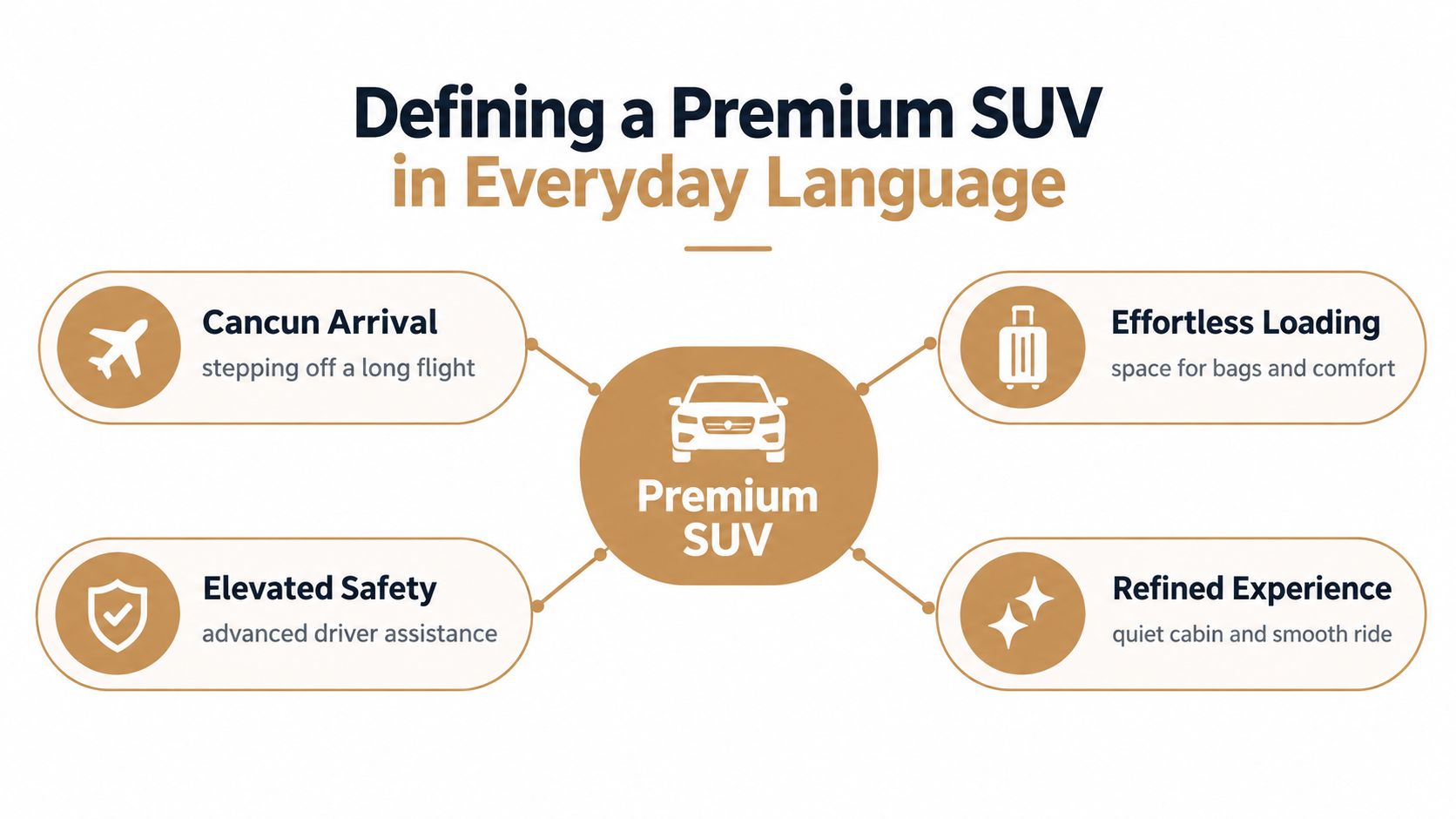
Defining a Premium SUV in Everyday Language
A premium SUV is the vehicle you choose when a regular SUV feels too plain for the trip you have in mind. It still gives you upright seating, useful cargo space, and the higher driving position travelers want, but it adds a quieter cabin, better ride comfort, and a more finished feel.
For a first-time visitor in Cancun, the difference shows up fast. One SUV may get you and your luggage from the airport to the hotel. A premium SUV is designed to make that ride feel calmer, more controlled, and less tiring after a flight.
The three things that make it premium
Start with utility. The vehicle still has to carry people and bags without making the trip awkward. Then comes refinement, which you notice in the cabin materials, the way bumps are absorbed, the amount of road noise that stays outside, and the quality of the tech you touch every day. The third piece is brand positioning, because buyers pay for a vehicle that sits above the mainstream class in comfort and presentation.
Size alone does not decide the label. A large SUV can still feel basic inside, while a smaller one can feel genuinely upscale if the seats, controls, and ride quality are done well. The category grew out of vehicles like the early Range Rover, which showed that drivers could have off-road ability and a pleasant highway ride in the same vehicle.
Practical rule: If luggage is easy to load, the cabin stays calm, and the SUV still feels sure-footed on rough pavement or long highway stretches, you are in premium territory.
That matters for travel in Cancun and the Riviera Maya. A premium SUV is often the better fit for airport transfers, family travel, and chauffeured tours because it gives passengers more comfort without giving up the usefulness people expect from an SUV. For drivers who want the outside paint and trim to stay as polished as the cabin feels, Lionheart Detailing ceramic coating is one example of the kind of care people pair with these vehicles.
The wider market also reflects that shift toward higher-end SUVs industry estimate. Premium SUVs have become a common luxury choice for travelers who want practicality first, then a better ride on top.
Size Classes and Where Premium Trim Fits
Premium isn't a size class, it's a layer applied across several sizes. That's why you'll hear people talk about compact premium SUVs, midsize premium SUVs, three-row premium SUVs, and full-size premium SUVs. Each one solves a different travel problem, and the premium part changes what matters most inside that class.
A compact premium SUV usually focuses on quietness, easy parking, and a higher-quality cabin than a regular compact SUV. A midsize premium SUV balances everyday maneuverability with more rear-seat comfort and better highway composure. In a three-row premium SUV, the selling point is often access to the third row, usable space for kids or occasional adults, and enough luggage room to keep a family trip from feeling cramped. Full-size premium SUVs usually lean into chauffeur-friendly rear legroom, large cargo capacity, and a more relaxed ride at speed.
| Premium SUV classes at a glance | Typical passengers | Best use for travelers |
|---|---|---|
| Compact | 2 to 4 | Quick city transfers, couples, light luggage |
| Midsize | 4 to 5 | Airport runs, small families, day trips |
| Three-row | 6 to 7 | Family vacations, group arrivals, mixed luggage |
| Full-size | 6 to 8 | Chauffeured tours, big luggage loads, VIP transfers |
The difference is felt most clearly on long highway drives between Cancun, Playa del Carmen, and Tulum. A compact premium SUV may feel tidy and upscale, but a three-row or full-size model usually gives travelers more breathing room and less seat-shuffling when bags, people, and child seats all need space at once.
A premium badge doesn't rewrite physics. It improves the way each size class handles comfort, noise, and equipment.
That's why premium SUVs show up so often in airport transfer fleets. Operators can match the size to the trip instead of forcing every traveler into the same vehicle. For some riders, that means a compact vehicle is enough. For others, the extra room in a larger premium SUV is what turns a transfer into an easy start to the trip.
How a Premium SUV Differs from a Standard SUV
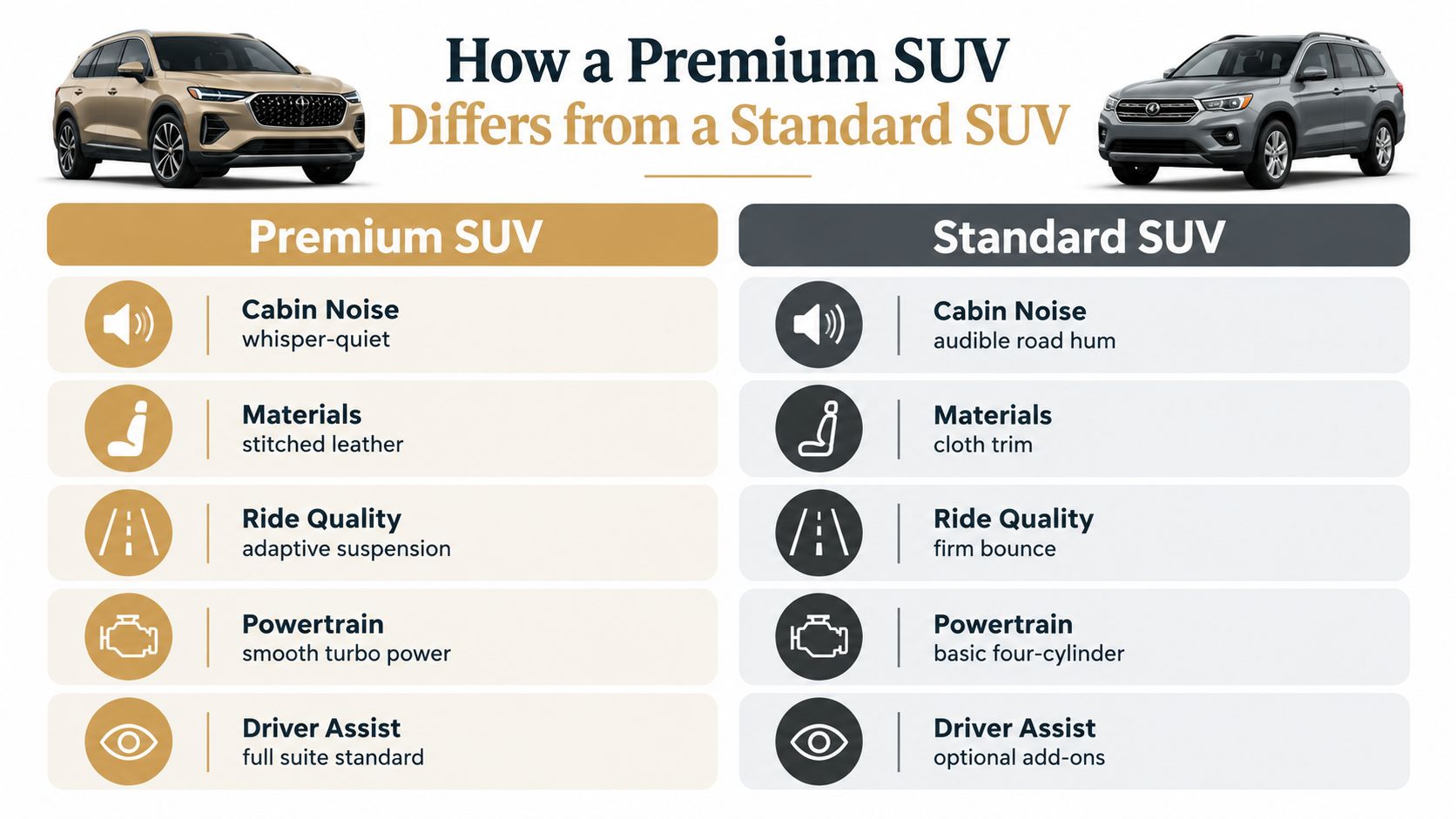
A standard SUV can get you from the airport to the resort just fine. A premium SUV does the same trip with less noise, less jostling, and more attention to the details passengers notice right away, especially on the road from Cancun to Playa del Carmen or Tulum.
What changes inside the cabin
Premium SUVs typically add acoustic insulation, higher-quality seat materials, better trim, more refined suspension tuning, and stronger powertrains Consumer Reports overview. Those changes matter because they shape the ride, not just the brochure. Less wind, tire, and powertrain noise makes conversation easier. Better suspension tuning softens rough pavement, speed bumps, and uneven hotel entrances. Stronger engines help the SUV merge and pass with less strain when the cabin is full of people and luggage.
The cabin also feels different in small ways that add up over a long transfer. Premium SUVs often use leather or suede touchpoints, wood or aluminum trim, panoramic roofs, and multiple digital displays. That does not just make the vehicle look upscale. It gives passengers a calmer place to sit, especially after a flight or before a chauffeured tour. For a fuller look at how premium vehicles compare with regular transportation, see why luxury transportation is so much better than regular transportation.
The price gap only makes sense if the trip changes
The gap between premium and mass-market brands has narrowed to 29 points on a 1,000-point scale, down from 66 points in 2008 J.D. Power note. In plain language, many mainstream SUVs now offer a respectable ride for less money. That is why the premium price has to justify itself in the seat, the cabin, and the way the vehicle handles a long day of travel.
For a short airport transfer with two bags, a solid mainstream SUV may be enough. For a quieter highway ride, better seating, and a more polished arrival at a resort or business stop, premium starts to make sense.
Safety Technology That Travels With You
In a premium SUV, safety is not only about a stronger body shell. It is also about the systems that watch the road while you are thinking about family, luggage, or the hotel curb. Common equipment includes forward-collision warning, automatic emergency braking, blind-spot monitoring, adaptive cruise control, lane-keeping or lane-centering assistance, rear and side cross-traffic alerts, and surround-view cameras safety overview.
What Those Systems Do on the Road
Forward-collision warning alerts the driver when traffic ahead slows or stops suddenly. Automatic emergency braking can apply the brakes if a crash seems close. Blind-spot monitoring helps during lane changes, especially on busy highways or when a larger SUV blocks part of the view. Surround-view cameras are useful in tight hotel entrances, crowded curb areas, and uneven parking lots where the front corners of the vehicle are hard to judge.
NHTSA and IIHS rate safety in different ways. NHTSA uses a five-star program that looks at frontal, side-impact, and rollover performance. IIHS examines crash protection, crash-prevention systems, headlights, restraints, and related factors. That difference matters for any family or fleet booking, because a badge alone does not show how a vehicle performed.
The Size Trade-Off Deserves Attention
Premium SUV comfort has a second side that deserves attention. Larger SUVs bring higher hood lines, bigger blind spots, and more mass. That is not only a parking issue. SUV design has been linked to more serious pedestrian outcomes, and transportation research notes that pedestrians crossing at intersections were twice as likely to die when struck by an SUV during a left turn than when struck by a car IEA commentary citing IIHS summary.
IIHS research also found that pedestrian-fatality odds rise by about 2.8% for every additional inch of hood height.
That is why a responsible premium-SUV choice should account for visibility, camera coverage, and real-world maneuverability, not only leather and screens. In Cancun airport transfers, family outings, and chauffeured tours through the Riviera Maya, those details shape how safe and easy the ride feels for everyone in the vehicle.
What a Chauffeured Premium SUV Ride Actually Feels Like
The difference starts before the vehicle moves. A proper chauffeur service tracks the flight, times the pickup, and sends the driver to the terminal with instructions already set. By the time the traveler steps outside, the SUV is ready, the luggage space is clear, and the seat temperature isn't fighting the Cancun heat.
From terminal to highway without friction
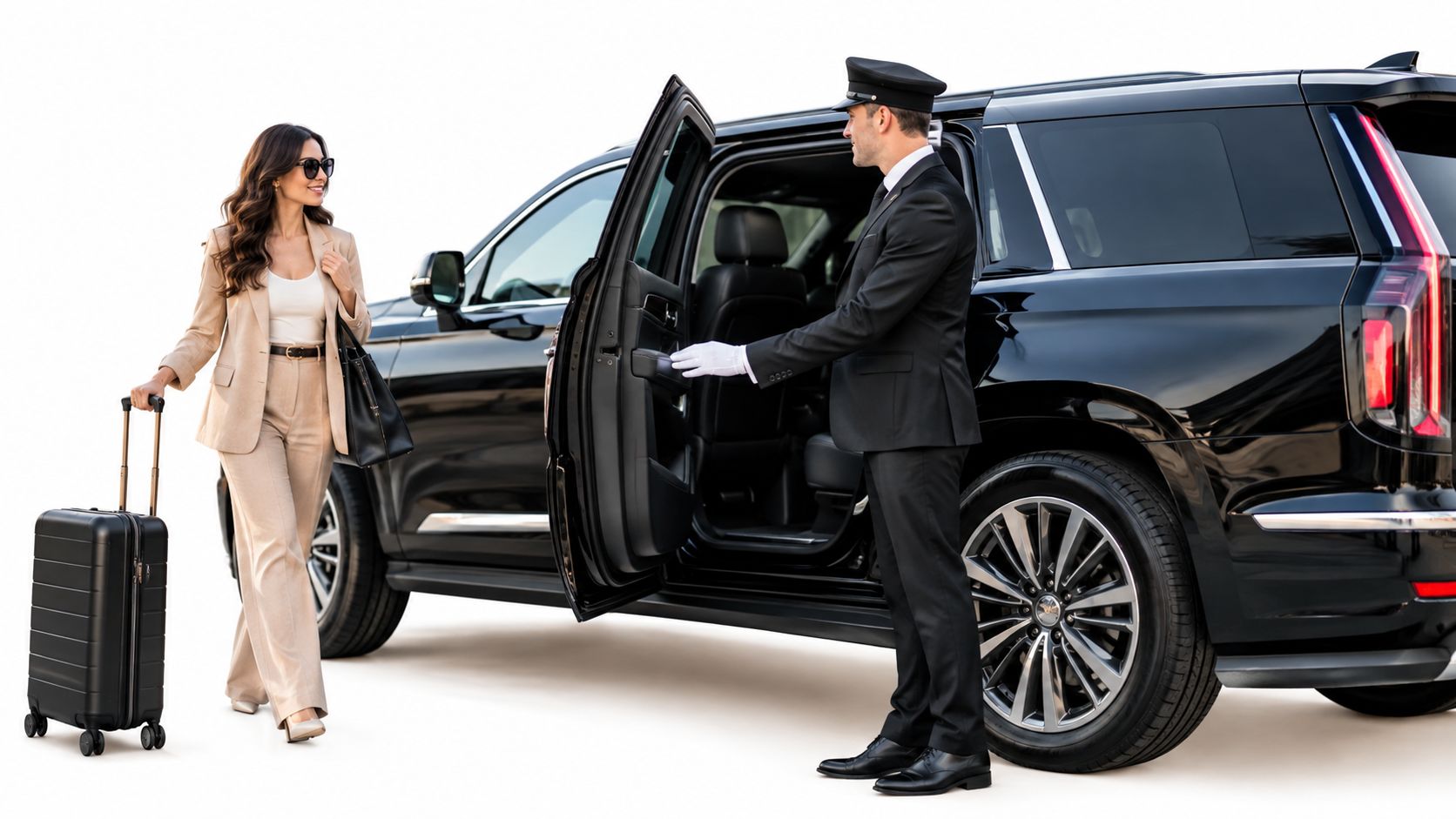
On a good airport transfer, the chauffeur meets the traveler, helps with the bags, and keeps the process simple from curb to hotel. That's where Unique Private Transportation's dedicated chauffeur service fits naturally into the conversation. It's the kind of service used for point-to-point transfers, hourly bookings, and multi-stop days when a traveler doesn't want to reset the plan every time the itinerary changes.
The ride itself should feel unhurried. Climate control is already working. The cabin stays quiet enough for a normal conversation. Bottled water and other small comforts are there before anyone asks. When families travel with baby seats, those seats should already be fitted correctly instead of being handled as an afterthought.
Why the chauffeur model changes the vehicle experience
A rented SUV and a chauffeured premium SUV can be the same size and still feel completely different. With a chauffeur, the driver handles luggage, watches the route, and coordinates timing. With flight tracking, a delayed arrival doesn't turn into a scramble. With bilingual coordination, guests don't have to improvise their way through pickup details.
The vehicle matters, but the handoff matters just as much. A calm transfer is usually the result of planning you don't see.
For a couple heading to a resort, the experience feels like privacy and ease. For a family, it feels like less lifting and fewer decisions. For a multi-stop tour, it feels like the same vehicle can stay with you while the day unfolds instead of forcing a new pickup each time you move.
Why a Premium SUV Is a Smart Choice for Airport Transfers and Tours
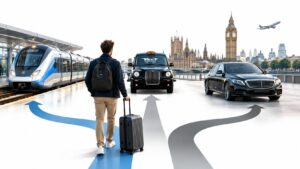
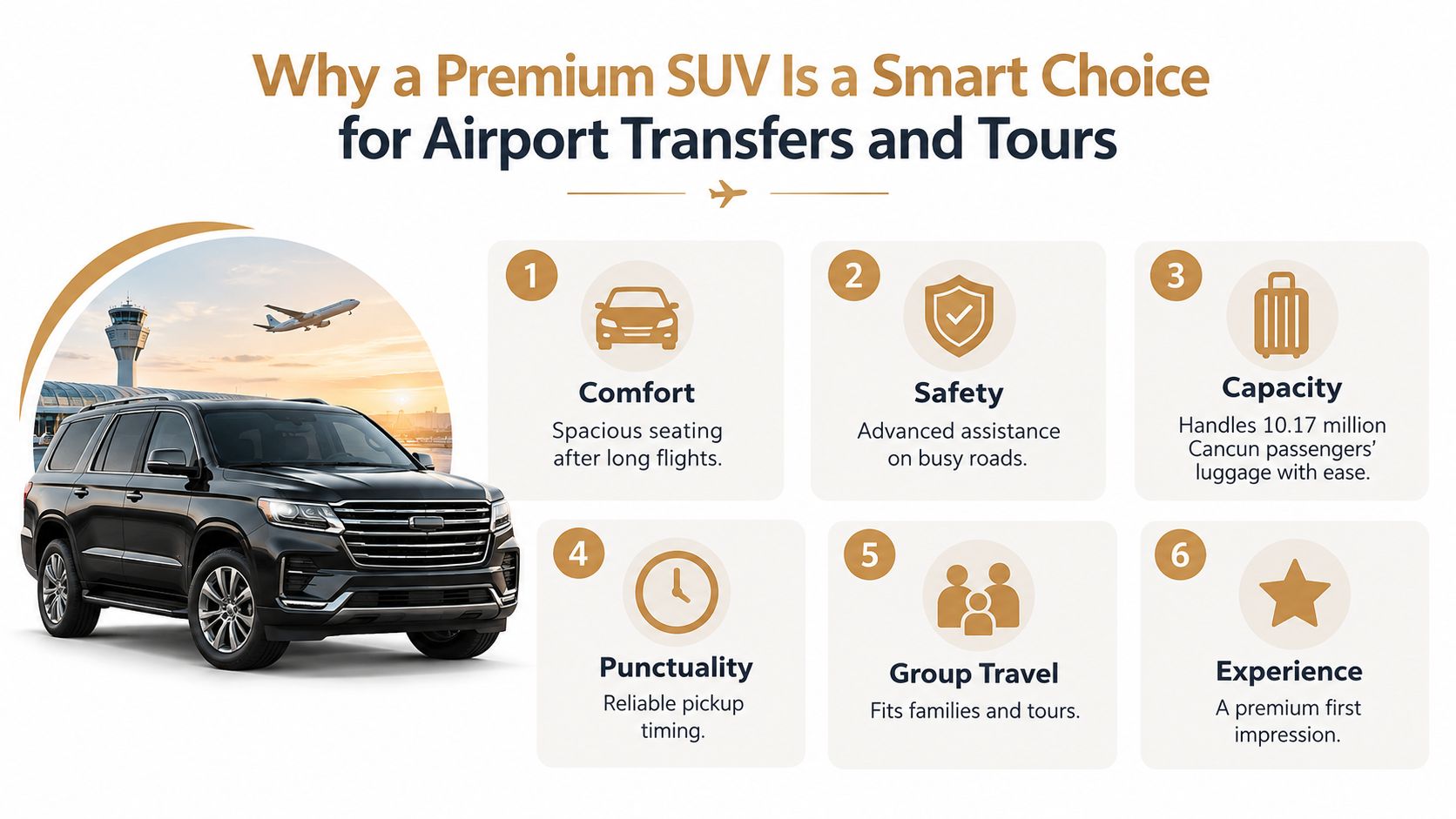
A premium SUV is the right fit when the trip has more moving parts than a simple point-to-point ride. That includes airport arrivals with luggage, family pickups, resort transfers, and guided day tours where comfort and space matter from the first mile to the last. For readers who want a clearer definition of what point-to-point service means, the contrast helps explain why premium SUVs are chosen so often for cancun airport transportation.
Cancun's airport traffic makes that choice easy to understand. Cancún International Airport handled 10.17 million international passenger arrivals in 2024, nearly one-third of all international arrivals in Mexico, and 4.5 million international air passengers from January through May 2025, equal to 33.8% of the country's international arrivals during that period Quintana Roo tourism data. In a place that busy, structured private transportation Cancun Airport service helps reduce curbside confusion and keeps pickup plans easier to follow.
Where the premium SUV earns its keep
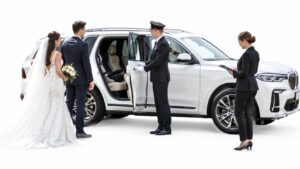
Premium SUVs work well for airport transfers, weddings, and corporate travel because they move people and luggage without making the cabin feel cramped. They also fit luxury private tours, where guests may carry bags, coolers, or day-trip gear and still want room to sit comfortably between stops. A single vehicle can handle a family arrival in the morning and a Riviera Maya tour later the same day.
For travelers comparing luxury transportation options, the key question is simple: does the vehicle improve the ride, or only the booking label? A premium SUV usually makes sense when comfort, timing, and cargo space all matter together. A smaller vehicle can still work for one traveler or a light transfer. Once there are several passengers, child seats, or a long airport run, the extra room becomes easy to feel.
Choosing the Right Premium SUV for Your Trip
Start with the number of people. A couple with carry-ons doesn't need the same SUV as a family of five with a stroller and checked bags. Then look at luggage volume, child-seat needs, and whether the trip includes multiple stops. If you're moving between airport, hotel, dinner, and a second property, a premium SUV with generous cargo room is easier to live with than a tighter cabin.
A simple way to decide
- Passenger count: Match the cabin to the actual people riding, not the idealized version of the trip.
- Luggage and gear: Count the suitcases, not just the passengers. Bags take space quickly.
- Child seats: Check whether the vehicle can take pre-fitted child seats without squeezing the second row.
- Trip length: Longer highway rides reward quieter cabins and better seats.
- Stops and timing: Multi-stop days work better with a chauffeur and a vehicle that can stay with you.
- Budget: Pay for the attributes you'll feel, not for features you'll never use.
For a cancun car service booking, the most useful filters are still the same ones covered above, cabin quietness, standard safety technology, and real cargo space. If those line up with your trip, premium is probably justified. If they don't, a simpler SUV may be the smarter buy.
The right vehicle is the one that makes the transfer disappear into the background.
If your arrival, family trip, or tour plan needs that kind of calm, compare the trip details against what a premium SUV really delivers, then book the option that fits the people, bags, and timing involved.
Unique Private Transportation provides premium SUV transfers, point-to-point rides, and private tours across Cancun and the Riviera Maya with live flight monitoring, meet-and-greet service, and bilingual coordination. If you want a smoother airport arrival or a more comfortable day on the road, visit Unique Private Transportation and compare the vehicle and service options against your travel plans.