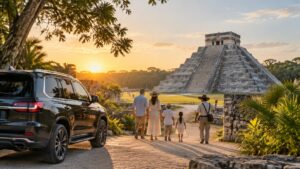

Kantun Chi is an ecopark and cenote system located in the heart of the Riviera Maya, just off Federal Highway 307 between Tulum and Playa del Carmen. Unlike a single sinkhole, this destination is a jungle complex featuring a network of open-air cenotes, freshwater lakes, and natural caverns. Visitors come here primarily for guided cave snorkeling—often called the "swim-through" experience—as well as family-friendly swimming in the shallower lakes and canopy ziplines. The park is significantly more accessible than many "hidden" jungle sites, offering changing rooms, lockers, food service, and clear trail signage.
From my review of visitor itineraries, the biggest quality gap in typical travel guides is the lack of clear practical logistics. You get actionable details on tickets, timing, and transport. It specifies exactly where the park sits, how long you should budget, and what the physical demands of the cenote circuits involve.
History of Kantun Chi
The name Kantun Chi comes from the Yucatec Maya language, roughly translating to "Source of the Stone" or "Stone Spring." While the ancient Maya certainly utilized these water sources for ritual and fresh water, the park as a commercial ecotourism destination is a modern development. The wider region surrounding the park has a history of rapid, planned transformation. While Kantun Chi itself remained a quiet site for centuries, nearby Cancún’s history is unusual because it was built as a tourism destination rather than developing gradually as a traditional city. In 1970, the island area that would become the resort zone reportedly had only three residents, who were caretakers of a coconut plantation. Mexico formally launched the project as an Integrally Planned Center in 1974 through FONATUR, the country’s tourism-development agency. The first hotel opened in September 1974, and within roughly one year Cancún had added more hotels and received approximately 100,000 visitors (source).
For a deeper look at the cultural and geographic context of the region, the Articles – Virtual Tour Vacation Mexico series offers a compelling overview of how these natural wonders fit into the broader travel scene of the Yucatán.
How We Evaluated Kantun Chi for Visitors
To ensure this guide remains useful rather than promotional, we evaluated the destination against four specific visitor criteria:
- Logistical Clarity: Can a traveler reach the site without a rental car, and are the directions unambiguous?
- Activity vs. Expectation Match: Do the advertised activities (snorkeling, ziplining) match the physical reality for non-experts?
- Family Suitability: Are the water depths and terrain manageable for children under 12 or non-swimmers?
- Value for Time: Does the ticket price justify the hours spent at the park compared to nearby alternatives like Gran Cenote or Calavera?
This evaluation prioritizes practical decision-making over scenic description. If a section of the park is seasonal or requires a high level of swimming proficiency, we flag it specifically so you can decide whether it fits your itinerary.
What to Expect at Kantun Chi
Walking into Kantun Chi feels less like entering a pool and more like stepping into a humid, green cathedral. The park is dense with vegetation, and the temperature inside the cave systems is consistently cooler than the jungle exterior. You will typically be issued a locker for your belongings before you begin, which is important because you cannot bring bags into the water.
The main attraction is the guided snorkeling tour through the "Cenote de las Maravillas" and adjacent caverns. Unlike open-water snorkeling, this is a swim-through experience where you pass through submerged tunnels and arches. The water is remarkably clear, but it is also dark in the tunnel sections. Guides provide helmets with mounted lights, which illuminate the fossilized coral and rock formations that have been sealed underwater for millennia. Outside the tunnels, the open-air cenotes are brighter and home to small freshwater fish, though feeding them is strictly prohibited to maintain water quality.
For those who prefer to stay dry, the park offers elevated walkways that allow you to view the cenotes from above. There are also zipline courses that traverse the jungle canopy, offering a different perspective of the park grounds. Amenities are functional rather than luxurious: there are showers, changing rooms, a restaurant serving basic Mexican fare and cold drinks, and souvenir stands. I found the shade structure to be adequate, but given the tropical sun, arriving early is the only way to beat the midday heat.
How to Get to Kantun Chi
Kantun Chi is located at kilometer 103 on Federal Highway 307, the main road running south from Playa del Carmen to Tulum. It is situated approximately halfway between the two towns, making it a convenient stop for anyone moving along the corridor. The entrance is well-signposted from the highway, but finding parking can be chaotic during peak hours (11:00 AM – 2:00 PM), as the lot is relatively small compared to the volume of tour buses and rental cars.
Public transport is limited; while colectivos (shared vans) run along Highway 307, they do not stop at the park entrance, leaving you with a kilometer hike on a busy road. Taxis are available from nearby towns but can be expensive for a round trip. For most travelers, especially those coming from the Hotel Zone or Playa del Carmen, private transportation is the most stress-free option. To get to Kantun Chi from your hotel using Unique Private Transportation, contact Unique Private Transportation to arrange a pick-up. They will pick you up directly from your hotel and provide comfortable transportation to Kantun Chi. During your ride, you can sit back, relax, and enjoy the views of the surrounding area. Once you arrive at Kantun Chi, Unique Private Transportation will drop you off right at your desired location. This eliminates the need to find your way on unfamiliar roads or worry about parking fees.
The demand for such transport is driven by the sheer scale of tourism in the region. NASA reports that the destination now accommodates approximately 2 million visitors annually and generates roughly one-quarter of Mexico’s tourism revenue. Other reported figures indicate that Cancún received a record 21 million tourists in 2023, exceeding an earlier projection of 20.5 million. Although these figures use different definitions—annual visitors to the wider destination versus airport or regional tourism activity—they illustrate the scale of demand surrounding the resort zone. Consequently, traffic on Highway 307 can be heavy, making a dedicated driver a significant time-saver.
Things to Do at Kantun Chi
The activities at Kantun Chi are divided into two main categories: aquatic exploration and aerial adventure. Understanding the difference is key to booking the right ticket.
Cenote Snorkeling and Swimming
The highlight is the guided cave snorkeling tour. This is not a DIY swim; you must join a group led by a certified guide. The tour takes you through a series of submerged chambers. The physical effort is moderate—you are swimming horizontally, not diving—but you must be comfortable wearing a mask and snorkel in confined spaces. The water is refreshingly cool, which can induce shivering after 30 minutes if you are not acclimated. For families with younger children, there are shallower swim areas where kids can float and play without the need for a guide, though supervision is always required.
Ziplining and Canopy Tours
If you want to avoid getting wet, the zipline course is the primary alternative. The course features multiple lines of varying lengths across the jungle canopy. This is suitable for children over a certain height and weight. It is a high-energy activity that contrasts sharply with the serene pace of the cenote swimming.
Hiking and Nature Walks
Between the major attractions, there are paved and dirt trails that wind through the jungle. These paths are home to howler monkeys, iguanas, and various bird species. While not a dedicated "hiking" destination, these walks provide a nice buffer between the crowded main cenote and the quieter cabin areas. I found these trails to be the best spot for capturing photos of the lush vegetation without competing with snorkeling crowds.
Frequently Asked Questions
Where exactly is Kantun Chi located?
It is located at kilometer 103 on Federal Highway 307, between Playa del Carmen and Tulum in the state of Quintana Roo, Mexico. It is about 45 minutes north of Tulum and 25 minutes south of Playa del Carmen.
How much are the tickets?
Prices fluctuate by season and whether you bundle activities (e.g., snorkeling + zipline). It is advisable to check their official social media channels or ticketing partners for current rates, as on-site prices may differ from online pre-booking.
What are the opening hours?
Kantun Chi generally operates daily with standard park hours, but the last entry time is typically a few hours before sunset. However, hours can shift during the rainy season or for private events, so verifying close to your date is essential.
How long should I plan to spend there?
For the full experience—including changing, the guided snorkel tour (approx. 45–60 minutes), and time at the beaches or cabins—budget at least 3 to 4 hours. If you are only doing the zipline course, 2 hours is usually sufficient.
Is Kantun Chi family-friendly?
Yes, but with caveats. The open swimming areas are great for kids. The cave snorkeling is generally safe for children who can swim and are not claustrophobic, though minors usually require a parent or guardian to accompany them. The zipline has strict height and weight restrictions. Non-swimmers should stick to the surface-level cabins and boat tours if available.
Do I need to bring my own snorkel gear?
The park provides helmets with lights, masks, and snorkels as part of the guided tour. However, if you have a strong preference for your own mask (to prevent fogging or for hygiene), you are welcome to bring it. Lockers are available for your dry clothes and gear.