

Cancún stays warm year-round, with monthly mean temperatures ranging from approximately 23.4°C (74.1°F) in January to 28.5°C (83.3°F) in July, while the comfortable dry season generally runs from November through April and the hotter, wetter season from May through October. The Atlantic hurricane season officially runs from June 1 through November 30, so the best month depends on how you balance heat, rain, flexibility, and outdoor plans.
You may be looking at a hotel calendar, comparing flight prices, or trying to decide whether a family excursion will be comfortable in the afternoon. A monthly temperature number alone won't answer the practical questions. Will your child tolerate a long transfer after landing? Should you schedule Chichén Itzá early? Is a tropical shower a reason to cancel a ferry connection, or just a reason to carry a dry bag?
The useful way to read Cancún average monthly weather is to connect climate averages with decisions. Temperature affects comfort, rainfall affects roads and luggage, humidity changes how heat feels, and storm risk influences airport transfers, weddings, regional tours, and ferry plans.
Table of Contents
- Understanding Cancún Climate Year-Round
- Monthly Weather Averages Detailed Breakdown
- Dry Season Versus Wet Season Explained
- Best Months to Visit Based on Travel Goals
- What to Pack for Different Seasons
- Hurricane Season Realities and Planning
- Weather Impact on Transportation and Tours
- Quick Reference Decision Guide
Understanding Cancún Climate Year-Round
You land in Cancún, step out of the airport, and feel the difference right away. In January, the air usually feels warm and manageable. In September, the same short walk can feel heavier because heat, humidity, and rain are more likely to shape the day.
That contrast matters because Cancún average monthly weather is not just about picking a beach day. It affects transfer comfort, tour timing, what you pack in your carry-on, and whether you plan outdoor activities for midday or early morning. Long-term patterns in Cancún's monthly climate data show a steady warm-up through the year, with monthly mean temperatures rising from 23.4°C in January to 28.5°C in July. Average daytime highs climb from 27.6°C in January to 32.8°C in August, while nighttime minimums generally stay between 19.2°C and 25.0°C.

Two seasonal patterns matter most
The clearest pattern is the drier, more comfortable season from November through April. December through February usually bring average highs around 27.6–28.4°C and lows near 19–20°C. For travelers, that often means easier walking conditions, more pleasant evening meals outdoors, and less stress if a day includes a long transfer or an early excursion departure.
Then comes the hotter, wetter season from May through October. June through August are the hottest months, and humidity works like an extra layer over the forecast, making queues, ruins visits, and loading luggage feel more tiring than the temperature alone suggests. These tips for staying cool and hydrated are especially helpful for families, older adults, and anyone spending long hours outside.
The shift between seasons is gradual, not abrupt. March averages 24.7°C, April 26.3°C, and May 27.7°C. If you are arranging cancun airport transportation, your month of arrival should shape pickup timing, bag protection, and how much you schedule right after landing. For route ideas and area planning, travelers can review our detailed Cancún destination guide with route and itinerary planning before mapping out each day.
Monthly Weather Averages Detailed Breakdown
A monthly table is useful only if it helps you make decisions. In Cancún, the pattern matters more than any single number. A family booking airport pickup, a couple planning long beach days, and a traveler heading to ruins or a ferry all read the same averages differently.
The figures below focus on the parts that change your day most directly: afternoon heat, overnight lows, and rainfall. Sea temperature is not included here because a repeated “warm” label does not help you decide what to pack or how long you will want to stay in the water.
| Month | Avg High °F | Avg Low °F | Rainfall mm |
|---|---|---|---|
| January | 81.7 | 66.6 | 56.4 |
| February | 82.0 | 67.0 | 42.7 |
| March | 83.7 | 68.0 | 45.4 |
| April | 86.5 | 72.0 | 37.1 |
| May | 89.6 | 75.0 | 84.4 |
| June | 90.7 | 76.0 | 145.6 |
| July | 91.8 | 76.5 | 111.4 |
| August | 91.0 | 77.0 | 115.1 |
| September | 89.6 | 76.5 | 223.1 |
| October | 88.9 | 75.5 | 242.1 |
| November | 85.5 | 72.0 | 112.5 |
| December | 83.1 | 68.5 | 79.5 |
January through April
January through April is the easiest part of the year for many travelers to work with. January averages 81.7°F for the high, 66.6°F for the low, and 56.4 mm of rainfall. February stays similar, with slightly less rain at 42.7 mm, which is why beach clubs, walking areas, and full-day outings often feel simpler to schedule in late winter.
March keeps that comfortable rhythm, with a high of 83.7°F and 45.4 mm of rainfall. April steps up to 86.5°F and posts the lowest rainfall figure in the table at 37.1 mm. That combination often sounds mild on paper, but the sun is still strong. Many visitors make the mistake of dressing for the air temperature and forgetting that reflective sand, open boats, and long hotel transfer waits increase exposure fast.
May through August
May is where the year starts to feel different in practical terms. The average high reaches 89.6°F, and rainfall climbs to 84.4 mm. June rises to 90.7°F with 145.6 mm of rainfall. July and August bring the hottest daytime profile, with highs of 91.8°F and 91.0°F.
This is the part of the calendar where humidity works like an extra layer of clothing. A ten-minute wait for transport can feel much longer than it would in January. If you are planning outdoor ruins, walking tours, or midday transfers, start earlier, carry more water than you think you need, and make sure your cancun car service has dependable air conditioning, especially if children, older adults, or formalwear are involved.
September through December
September and October are the rainiest months in the table at 223.1 mm and 242.1 mm. Rainfall climate averages for Cancún show how wide the gap is compared with spring. For travelers, that changes logistics more than it changes the whole trip. Covered pickup points, dry bags, and flexible timing matter more in these months than trying to predict every shower.
November, at 112.5 mm, still feels transitional. December drops to 79.5 mm and cools to an average high of 83.1°F. Use these numbers as climate patterns, not day-by-day promises. Before you commit to a boat departure, a long regional drive, or an all-day outdoor plan, check the short-term forecast as well as the monthly average.
Dry Season Versus Wet Season Explained
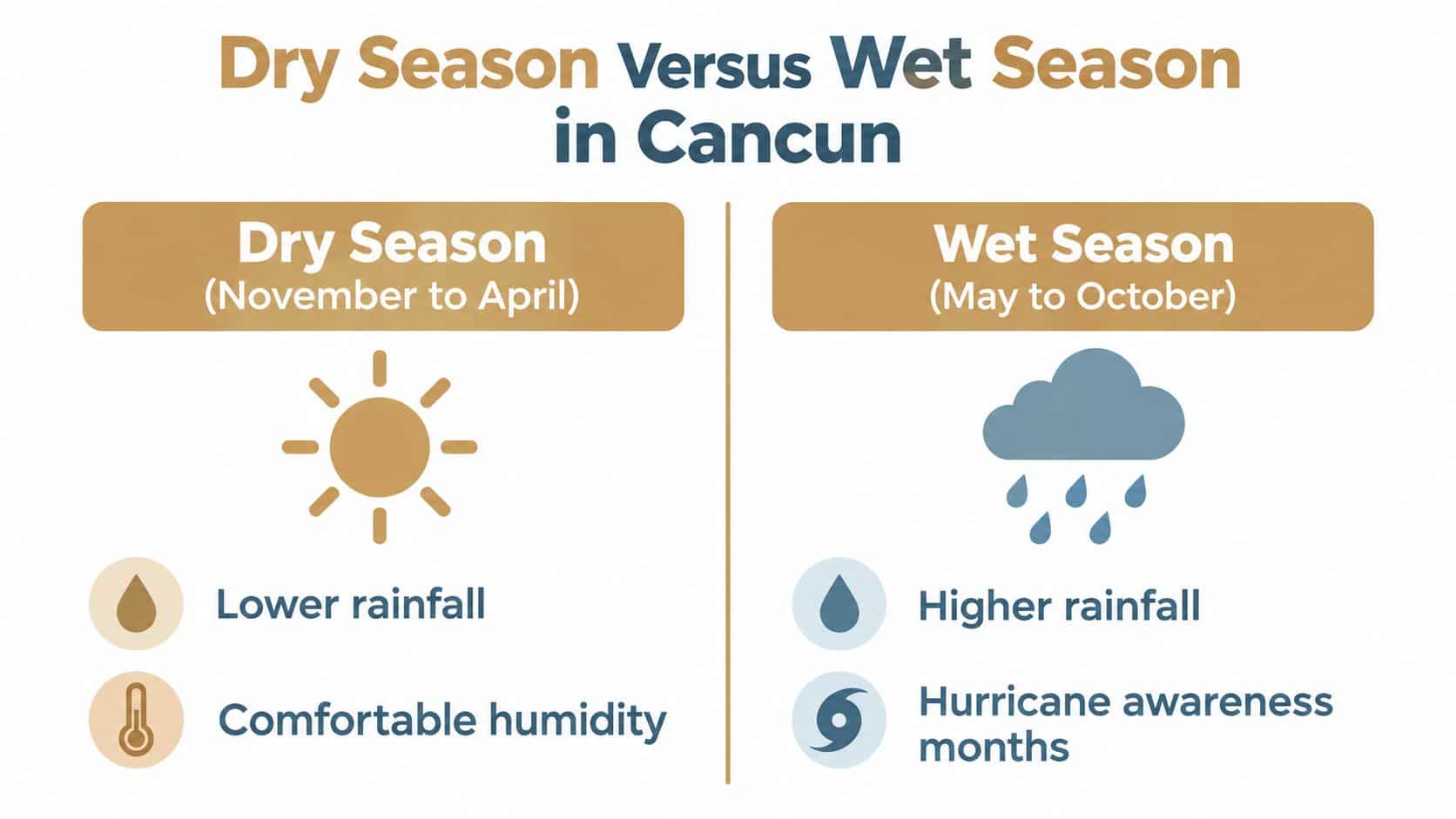
You land in Cancún with a morning boat trip booked, a beach bag packed, and dinner plans at sunset. The season you choose shapes how easy that day feels. November through April usually gives you the simplest setup for outdoor plans. May through October can still be rewarding, but it asks for more flexibility, more shade breaks, and a better backup plan if showers interrupt the day.
Read the averages in three steps
Check temperature first. January and February usually feel easier for long walks, archaeological sites, and transfers with children or older adults. July and August bring the strongest daytime heat, so the same outing often needs an earlier start, lighter clothing, and more time in air conditioning.
Check rainfall next. Spring tends to give you wider dry windows, while early autumn brings a much higher chance that rain will affect timing. That does not mean constant rain all day. It means weather has more influence on practical choices such as whether you need covered pickup, a dry bag for electronics, or a tour schedule that can shift by a few hours. Cancún precipitation averages
Check the activity, not just the month. A short swim or relaxed beach stop can work in either season because it is easy to pause and reset. A ferry departure, wedding ceremony, or full-day inland excursion gives you less room to adapt, so season matters more for those plans.
A simple way to read the seasons is to treat the dry season as easier for scheduling and the wet season as more demanding for logistics.
Humidity is often the part travelers underestimate. Cancún climate and comfort conditions show why warm months can feel heavier than the temperature alone suggests. Humidity works like an extra layer you cannot take off. In practical terms, that changes what you pack and how you move through the day. Quick-dry clothes, water, sun protection, and air-conditioned transport matter more from May through October.
Best Months to Visit Based on Travel Goals
The “best” month changes with the traveler. A family with a stroller may value mild mornings and predictable outdoor windows more than a couple willing to adjust plans around passing showers. A business traveler may care less about beach conditions than about arriving cool, dry, and presentable for a meeting.
| Travel goal | More suitable pattern | Why it may fit |
|---|---|---|
| Family beach days | November through April | Milder temperatures and lower average rainfall |
| Long archaeological excursions | January through April | More comfortable conditions for extended outdoor exposure |
| Warm-water activities | Year-round | Cancún remains warm throughout the year |
| Flexible-value travel | May, November, or other shoulder periods | Warm conditions with a greater need for weather flexibility |
| Weddings and fixed events | Drier-season dates | Fewer weather-related adjustments on average |
| Business travel | Cooler dry-season months | Easier transitions between air-conditioned vehicles and outdoor spaces |

Families often find the dry season simpler because a beach morning, lunch reservation, and transfer can follow one another without as much weather-related reshuffling. That doesn't make summer unsuitable. It means parents should plan shaded breaks, keep spare clothes accessible, and avoid treating the hottest afternoon hours as the only time for a major excursion.
Couples planning snorkeling, sailing, or a beach ceremony should compare the event's flexibility with the season's rainfall pattern. Travelers unfamiliar with tropical water conditions can also review practical snorkeling preparation tips from Captain Cook Snorkeling Tours, then confirm local marine conditions before departure.
For a broader cultural and regional itinerary, this guide to exploring Cancún and the Mesoamerican region can help you balance beach time with inland travel. If your dates are fixed, choose the transportation and activity plan that can absorb weather changes rather than chasing a supposedly perfect month.
What to Pack for Different Seasons
A good Cancún packing list works like a small travel system. One part protects you from sun, heat, and sudden rain outdoors. The other keeps you comfortable in heavily air-conditioned cars, hotels, restaurants, and meeting spaces.
Dry-season packing
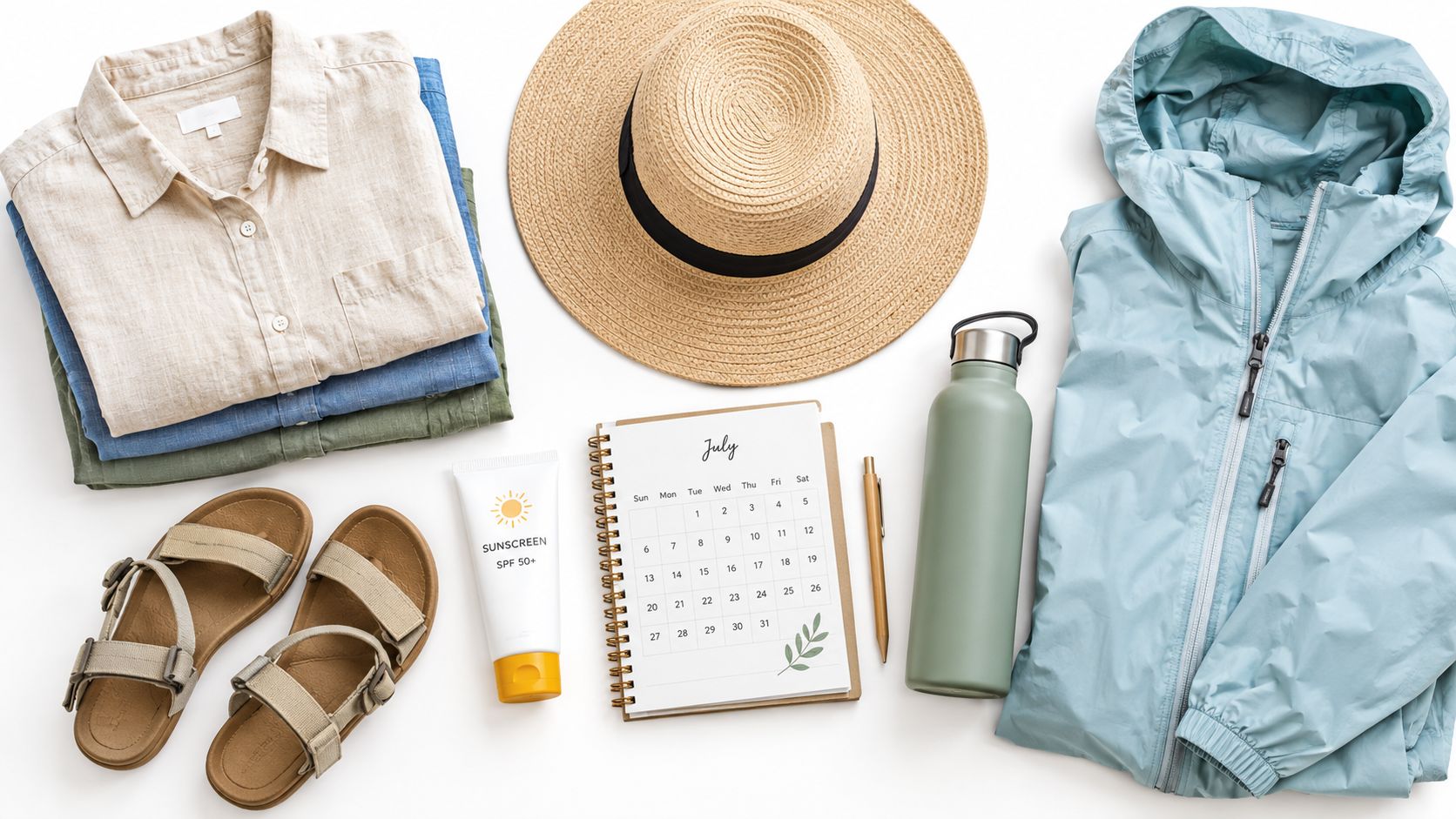
From November through April, start with breathable shirts, lightweight shorts or trousers, sandals, walking shoes, sunglasses, and a broad-brimmed hat. Those basics cover beach time, city walking, and transfers without making your bag heavy. Add a light layer for January and February evenings, since those cooler periods can feel surprisingly crisp after a day in the sun.
Wet-season packing
From May through October, switch some of your bag space from extra outfits to moisture control. Quick-dry clothing, extra socks, a compact rain shell, and a waterproof pouch for phones and documents make day-to-day travel easier. September and October usually call for the most rain planning, so pack for wet transfers, damp swimsuits, and the chance that one shower turns into several short downpours. A waterproof tote for busy travelers helps separate towels, electronics, and dry clothes from anything soaked or sandy.
Keep sunscreen, insect repellent, refillable water containers, and prescription medication in your hand luggage. That setup matters if your room is not ready yet or your airport transfer runs long.
Families usually do best with familiar infant supplies, lightweight clothing changes, and confirmed car-seat arrangements before pickup. Older adults may prefer a portable fan, steady hydration, and plans that reduce long waits outdoors. Business travelers should pack a breathable meeting outfit, a protective cover or garment bag, and a second shirt for hotter months. A light layer stays useful all year because indoor cooling can feel much colder than the street outside.
Hurricane Season Realities and Planning
The Atlantic hurricane season officially runs from June 1 through November 30, according to seasonal travel guidance for Cancún. That calendar describes the period requiring awareness, not a guarantee that a storm will affect your trip.
Separate three different situations:
- Ordinary tropical thunderstorms: These may disrupt a beach hour, wet luggage, slow roads, or change the timing of a tour. They often call for shelter and patience rather than full itinerary cancellation.
- Tropical-storm disruption: Stronger wind and rain can affect road travel, ferry departures, airport operations, and outdoor events. Flexible departure windows become more valuable.
- Major hurricane risk: This is less common but carries much greater consequences. Travelers should monitor official advisories, understand accommodation policies, and consider travel insurance that addresses weather-related interruption.
September and October deserve the strongest contingency planning because they combine the highest rainfall averages with a greater likelihood of tropical-weather disruption. Travel-planning guidance on Cancún's wet season also highlights the importance of separating normal showers from tropical-storm and hurricane scenarios.
A clear morning doesn't guarantee a clear afternoon. Check official forecasts before ferry travel, coastal excursions, weddings, and long-distance drives, and ask providers how they handle cancellations or schedule changes. Keep indoor alternatives ready, protect passports and electronics, and avoid building a tightly timed itinerary around a single weather-sensitive activity.
A flexible plan is more useful than a simple “safe month” label. Climate averages describe patterns, while your actual trip depends on the forecast, route, and activity on that day.
Weather Impact on Transportation and Tours
Heat and rain affect transportation in ways travelers often notice only after landing. High humidity makes waiting beside a curb uncomfortable, wet roads can slow a regional trip, and a sudden shower can turn open-air luggage handling into a scramble. The right service arrangement reduces those friction points before they become problems.
Cancún International Airport's public transportation options vary by terminal and destination. ADO operates from Terminals 2, 3, and 4, while Terminal 1 doesn't have ADO service, and its buses travel to destination bus stations rather than hotels. Travelers continuing to a resort or private address need another connection, which makes prearranged private transportation cancun airport more practical for door-to-door arrivals, families with luggage, and groups with fixed schedules, as explained by ADO's Cancún Airport route information.
Match the transport choice to the weather task
| Situation | Weather-related concern | Useful planning response |
|---|---|---|
| Airport arrival | Heat, rain, luggage exposure | Meet-and-greet, covered loading, direct vehicle |
| Family transfer | Child comfort and extra bags | Air conditioning, child seat confirmation, spare clothing |
| Ferry connection | Wind, rain, and schedule changes | Check conditions before departure and allow flexibility |
| Regional excursion | Heat exposure and road delays | Earlier departure, water, shaded stops, time buffer |
| Wedding transport | Fixed timing and formal clothing | Coordinated pickups and contingency routing |
A cancun car service also solves the last-mile problem that station-based buses create. One scheduled vehicle can carry the group and luggage directly to a resort, ferry terminal, private address, or regional destination without asking tired travelers to arrange a second ride in changing weather.
For a deeper look at how premium ground transport can support complex itineraries, review this guide to luxury private transportation in Cancún. The useful question isn't only whether a vehicle is comfortable. Ask whether the operator tracks flight changes, communicates pickup instructions clearly, protects luggage during rain, and can adjust timing when weather affects the road.
Quick Reference Decision Guide
Choose your travel window by ranking priorities rather than searching for one universal answer. If comfort and outdoor reliability come first, look toward the drier months. If your dates fall in the wetter period, keep the itinerary adaptable and make transportation part of the weather plan.
| Your priority | Decision |
|---|---|
| Mild evenings and easier outdoor days | Favor January through April |
| Lower average rainfall | Compare February through April |
| Tolerance for heat and showers | May through August can work with flexible timing |
| Strongest rain contingency planning | Prepare carefully for September and October |
| Transitional conditions | Consider November or December |
| Fixed wedding or business schedule | Favor the drier pattern and confirm backup transport |
Use this short checklist before booking:
- Activity timing: Put archaeological visits, walking tours, and long outdoor excursions earlier when heat is a concern.
- Rain protection: Carry a waterproof pouch, spare clothing, and a bag that shields electronics.
- Vehicle comfort: Confirm air conditioning, luggage capacity, child seats, and pickup instructions.
- Weather monitoring: Check real-time forecasts and official advisories close to every ferry, flight, and coastal plan.
- Schedule flexibility: Leave room for road delays, tropical showers, and changes to weather-sensitive activities.
- Traveler needs: Plan differently for infants, older adults, formal business travelers, and large wedding groups.
The central lesson from Cancún's monthly climate is simple: temperatures stay inviting, but comfort and logistics change through the year. Luxury transportation and unique private transportation aren't just about style when weather is hot or unsettled. Direct pickup, climate-controlled vehicles, luggage assistance, and responsive scheduling can make the difference between a smooth arrival and a tiring first afternoon.
Unique Private Transportation provides private airport transfers, point-to-point travel, chauffeured service, and customized tours across Cancún, the Riviera Maya, and nearby destinations. Visit Unique Private Transportation to arrange weather-aware cancun luxury airport transfers, family-friendly pickups, wedding transportation, or a comfortable regional itinerary with concierge coordination.