
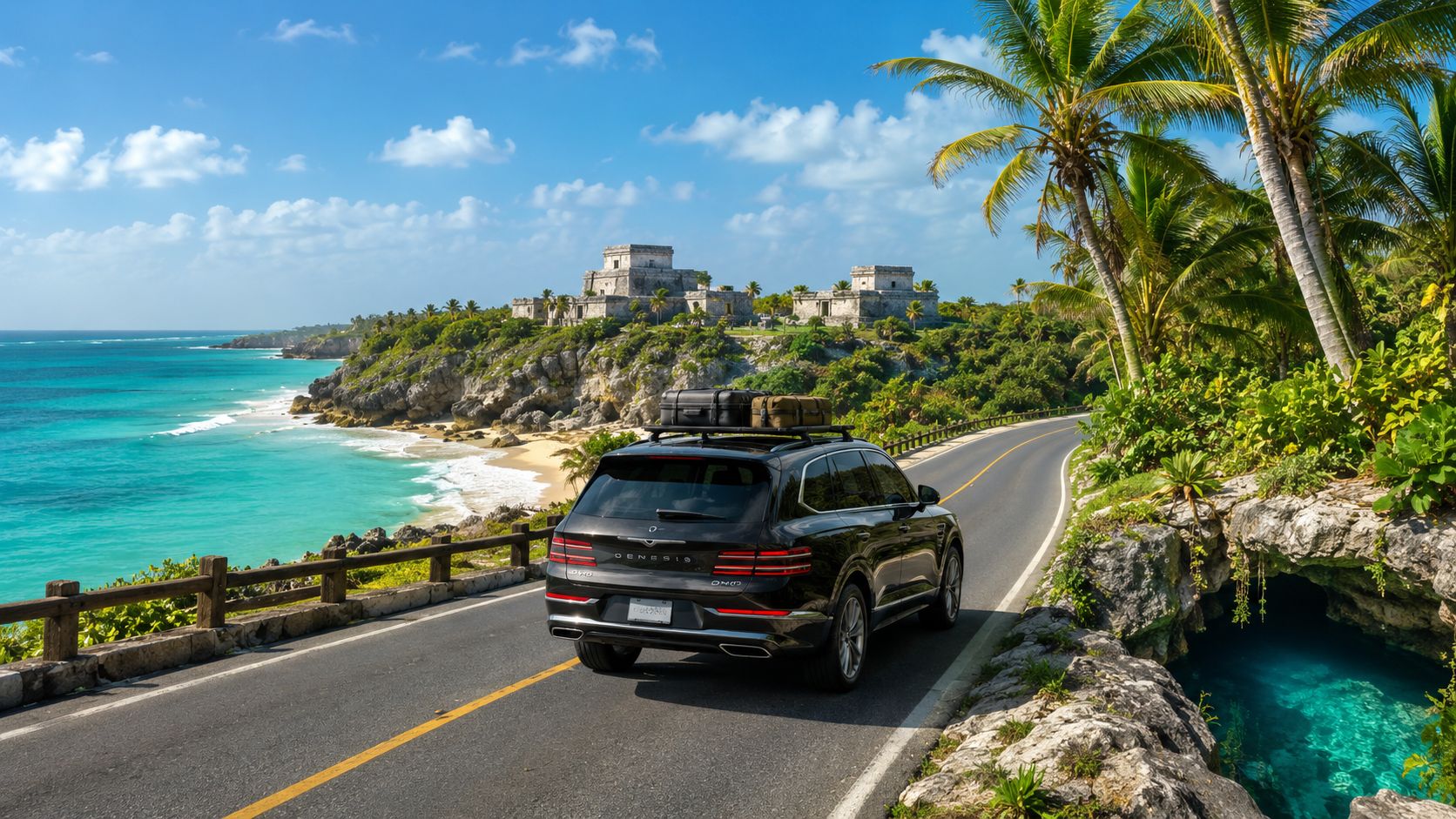
You've just landed at Cancún International Airport, your bags are beside you, and Tulum looks close enough on the map for a quick afternoon escape. Then the practical questions begin. How long will the road take? Will you reach the ruins before the last entry? Are the cenote and beach stop really included, or will they add time and cash costs later?
The best Cancun Tulum tours treat the route as a logistics puzzle, not a list of attractions. Distance, departure time, vehicle comfort, airport coordination, crowd patterns, and seasonal demand all shape the experience. Plan those pieces well, and the drive becomes a relaxed part of the Riviera Maya day instead of the reason your itinerary feels rushed.
Table of Contents
- Why Cancun Is the Starting Point for Every Tulum Tour
- How Long the Cancun to Tulum Journey Really Takes
- Private vs Group Cancun Tulum Tours and Which Fits You
- Must See Stops to Combine on Your Tulum Day Trip
- Choosing Comfort and Vehicle Options for the Road
- Booking Tips for Smooth Cancun Airport Transportation
- Plan Your Best Cancun Tulum Tour with Confidence
Why Cancun Is the Starting Point for Every Tulum Tour
After landing at Cancún International Airport, the first decision is not which attraction to visit. It is how to organize the southbound road time before the day fills with stops, queues, and return logistics. Cancún is the region's main international arrival point, so many Tulum itineraries begin at the airport or a Cancún hotel and continue along the Riviera Maya corridor.
Datatur recorded 10,041,700 international tourists arriving through Cancún Airport in 2023, followed by 9,723,864 in 2024 and 9,408,423 in 2025. Across those years, the airport handled around 10 million international arrivals annually, helping explain why tour operators and private transport companies offer so many Cancún to Tulum routes. The reported Cancún arrival figures and gateway context also places Cancún among Mexico's top foreign-passenger airports in 2025.
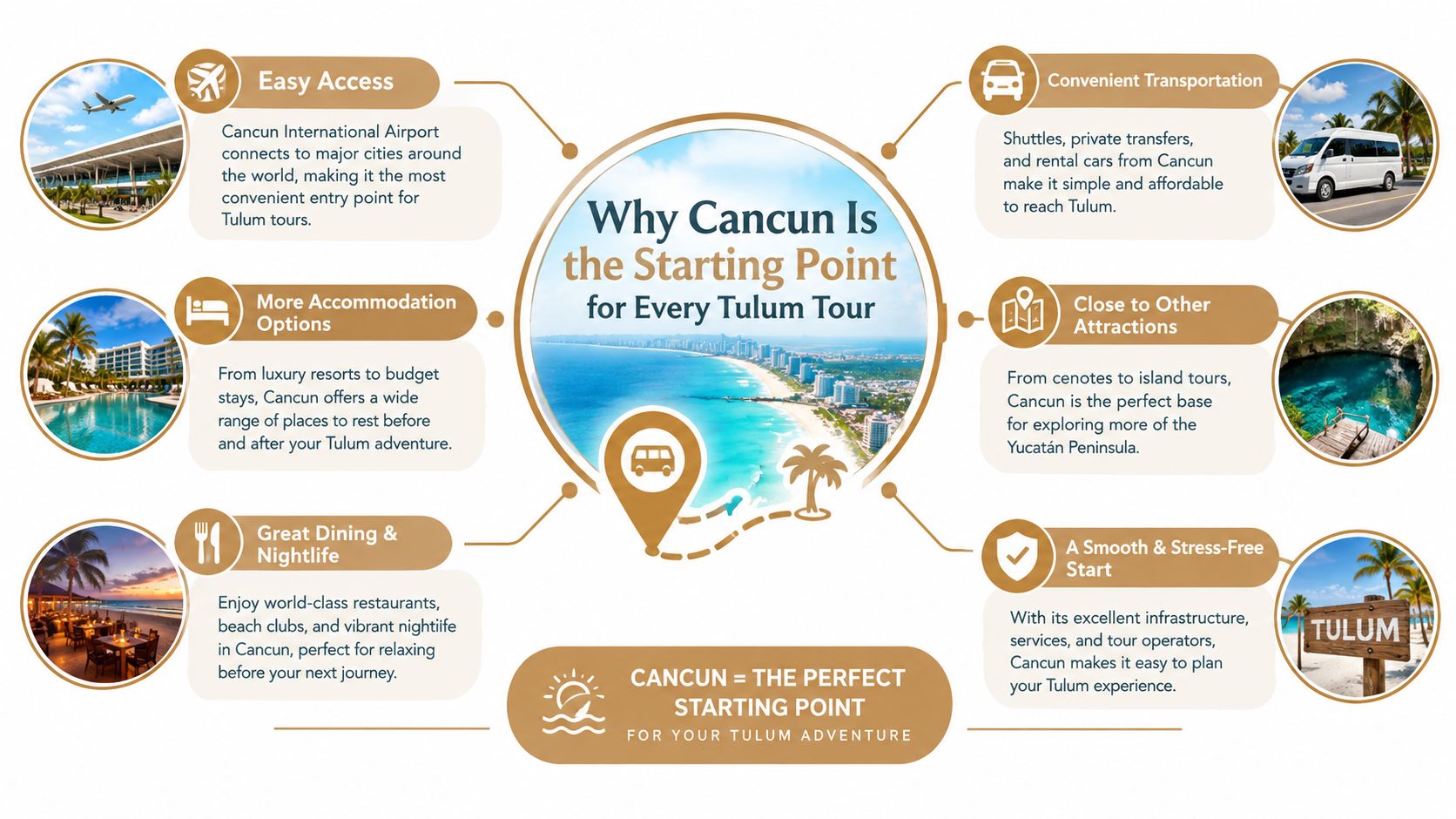
The corridor matters more than the map
Quintana Roo's tourism system grew over decades, from 339,000 visitors in 1974 to more than 12 million in 2010. During that period, Cancún reached 3 million visitors and the Mayan Riviera reached 3.8 million. That growth made Cancún a major gateway for travel farther south, while Tulum developed as part of a connected regional route rather than an isolated stop.
Because Cancún is the front door, build your Tulum plan around a single southbound transfer window and a fixed return time, not around map distance. A traveler can start from the airport, a Cancún resort, or a private multi-stop itinerary, but each option uses a substantial portion of the day on the road.
The transport format changes the hidden time cost. A group bus may collect passengers from several properties before heading south. A private vehicle can meet you at the airport or hotel, load your luggage once, and follow a schedule based on your arrival, chosen stops, and return plan. That control can also help when popular dates fill early or crowd peaks make a fixed group schedule harder to adjust.
Practical rule: Treat Cancún to Tulum as a destination transfer with sightseeing attached, not as a short local taxi ride.
The gateway also affects the range of choices. Travelers can select shared day trips, private transportation Cancun Airport services, or custom itineraries. The useful question is how much control you want over departure timing, comfort, stops, and the return journey.
How Long the Cancun to Tulum Journey Really Takes
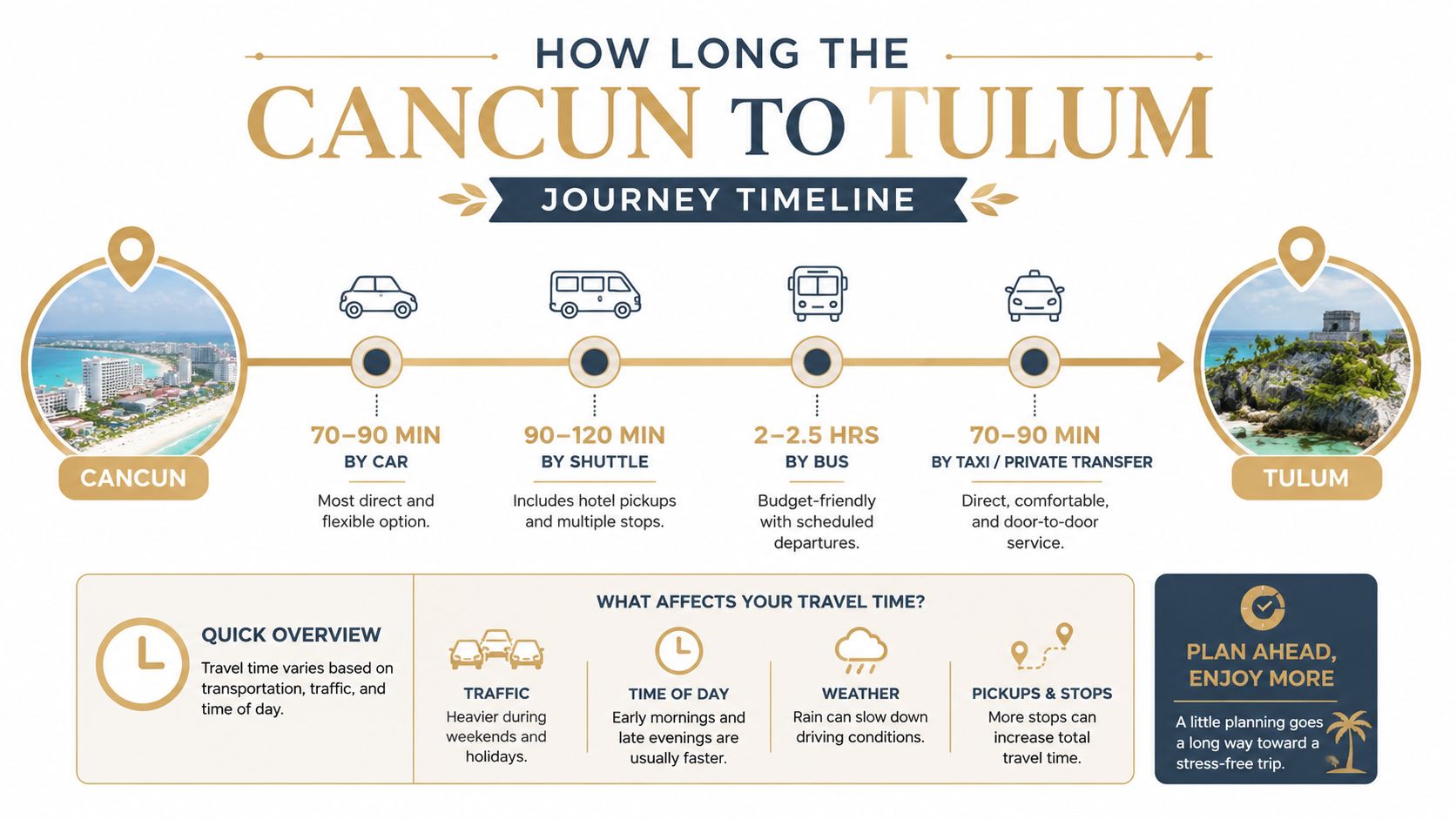
A flight lands at Cancún, luggage takes time, and the Tulum ruins still have a closing window. That sequence makes the trip a logistics puzzle involving road time, comfort, and arrival timing. The useful planning figure is a 2.5 to 3 hour land-travel window from Cancún to Tulum, shaped by your starting terminal, traffic, pickup pattern, and route. Published Cancun to Tulum route guidance places direct ADO bus service at about 2 hours 40 minutes, while wider estimates run from roughly 2 hours 35 minutes to 3 hours 5 minutes.
The highway works like a corridor with checkpoints. A private vehicle passes through most of them in one continuous movement. A shared shuttle pauses at hotel entrances, terminal changes, luggage areas, and additional pickups. The distance stays constant, but each stop changes how much sightseeing time remains.
Build the day around windows
Use three planning steps:
- Start with the fixed event. The Tulum Archaeological Zone has published visiting hours of 8:00 to 17:00, with last entry at 15:30, according to the site's published timing guidance. Work backward from that window rather than setting an arrival time first and hoping the schedule fits.
- Reserve the road window. Keep the full 2.5 to 3 hours available for the southbound journey, especially when an airport arrival connects to a timed attraction.
- Protect the return. Leave room for parking, walking, meals, changing clothes, and the northbound ride. Reaching Tulum on schedule does not prevent stress if the return trip has no buffer.
An airport pickup adds its own steps. After landing, you still need to leave the terminal, collect bags, meet the driver, and begin the drive. A direct private vehicle reduces uncertainty at that handoff. A shared service may add stops before the main journey begins, and that hidden time can make a later itinerary feel rushed.
Why departure time changes the experience
Travel guidance identifies 10:00 to 14:00 as a crowd peak. A late departure can therefore create two costs: more time spent traveling during the day and an arrival during a busier period, when strong sunlight may also make photography less comfortable.
For a private tour, an early start gives the archaeological zone priority. The remaining schedule can then accommodate a cenote, lunch, or beach stop without compressing every activity into the final part of the day. Group tours may sell out seasonally while keeping a fixed departure pattern, so private transportation can be useful when your arrival time, crowd priorities, and return window need to work together.
Private vs Group Cancun Tulum Tours and Which Fits You
A private tour makes the most sense when your day has a tight connection to a flight, young children, limited energy, or a specific return time. A group tour may suit travelers who prefer a ready-made schedule and shared experience. The practical difference is control over the clock. Group departures serve everyone in the vehicle, while private transportation lets the route fit your arrival time, pace, and priorities.
Many group day trips from Cancún run 10 to 12.5 hours door-to-door, and listed prices may leave cash entry fees for the traveler to pay later, according to this roundup of Tulum tours from Cancún. Compare the whole day, not only the advertised price. Hotel pickups, waiting, queues, site fees, meals, and the return journey can all affect the final experience.
Compare the trade-offs directly
| Feature | Private Tour | Group Tour |
|---|---|---|
| Departure time | Set around your hotel, airport arrival, or preferred early start | Follows the operator's shared schedule |
| Route | Can combine selected stops with less backtracking | Uses a preset itinerary |
| Time at attractions | Adjusted to your interests and energy level | Usually follows the group's timetable |
| Vehicle experience | Dedicated vehicle, luggage space, and requested amenities | Shared seating and fixed onboard arrangements |
| Pickup process | One planned meeting point and direct coordination | Multiple passenger pickups may add waiting |
| Costs to confirm | Custom quote with inclusions clarified before booking | Package price may exclude later cash fees |
| Best fit | Families, couples, business travelers, and guests with fixed plans | Travelers who prefer a structured shared excursion |
Private transportation treats the itinerary like a route with adjustable pieces. A family with young children can pause, change the order of activities, or return to the vehicle without waiting for strangers. A couple might choose an early ruins visit and a slower lunch. A business traveler may value a dependable return more than a long attraction list.
Group tours work well for travelers who enjoy meeting others and want someone else to set the schedule. Ask for the door-to-door duration, pickup sequence, inclusions, entry costs, and expected return time before booking. Some tours also sell out during busy seasons, while private transportation can offer more flexibility when your dates and timing are less forgiving.
The cheaper-looking itinerary is not always the lighter day. Count every hour and every required payment before comparing formats.
A private vehicle can also solve hidden costs after a flight. Luggage, arrival time, and energy level become part of the plan rather than factors the group schedule must absorb. That flexibility matters when one delayed handoff or extra pickup could shorten the rest of your Tulum day.
Must See Stops to Combine on Your Tulum Day Trip
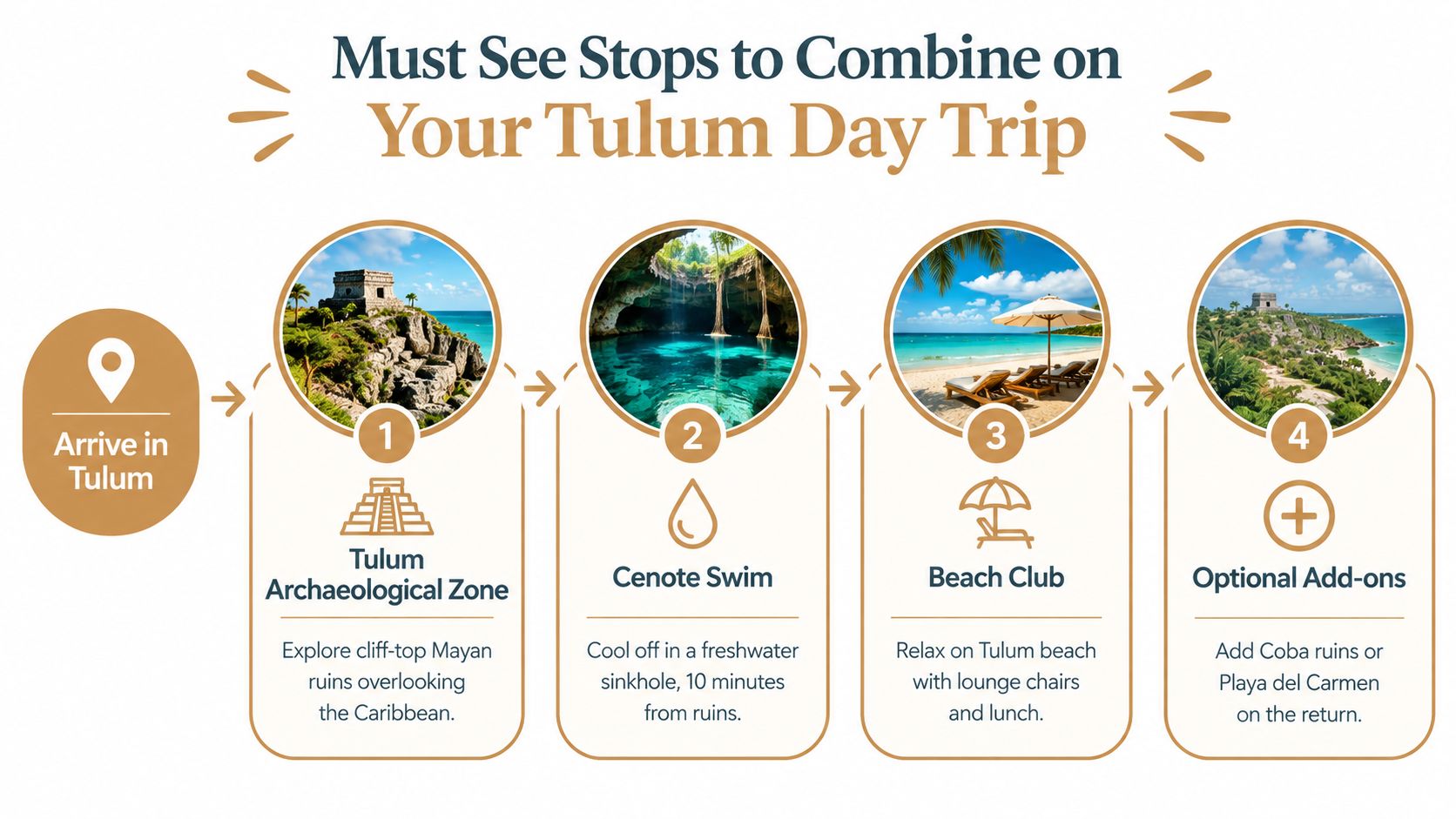
Tulum works best as a route, not a random list. Once the timing is set, the day is easier to shape. Start with the ruins, then move to a cenote, then end at the beach. Treat Coba or Playa del Carmen as a swap, not an add-on, when the schedule needs room to breathe.
That order keeps the hardest stop at the front of the day and the most flexible stop at the end. It also matches how energy works on a first-time Tulum outing. You handle walking and history while attention is fresh, cool off in the water after, then leave space for a slower finish.
A practical sequence for the day
Start with the Tulum Archaeological Zone. Arrive early so the cliff-top setting is still calm and the walk feels unhurried. A visit commonly takes around 60 to 90 minutes, while a fuller site experience can extend to 2.5 to 3 hours, so time your arrival for an early start.
Continue to a cenote. Freshwater swimming gives the itinerary a reset after the ruins. Confirm lockers, life jackets, food, and entry charges before you book, because “cenote stop” can mean different things from one tour to another.
Plan lunch and the beach around your priorities. Some travelers want a full meal and shaded seating. Others want a short beach visit and more time in the water. A private vehicle gives you room to make that choice without asking a whole bus to change pace. For route ideas, private Tulum transportation options can help you match the day to your schedule.
Use optional add-ons carefully. Coba or Playa del Carmen can add variety, but every extra stop eats into the return window. Pick one only if it fits the route and the length of day you want. Adding more places without removing anything else is how a relaxed itinerary turns into a rushed one.
Families may place the cenote after the ruins, when children need movement and cooling down. Couples often prefer the beach later, with lunch as the handoff. Travelers focused on archaeology should protect the first part of the day for the site and keep later stops optional instead of guaranteed.
Choosing Comfort and Vehicle Options for the Road
A Cancun to Tulum trip can look simple on a map and still feel long if the vehicle is wrong. The route is straight, but comfort changes how that time feels, especially after a flight or before a full day in the sun. A good transfer works like a well-packed carry-on, everything has its place, and nothing slows the day down.
Start with the needs of the group, not the word “luxury.” A couple with light bags may be fine in a premium SUV. A family with an infant needs space for a stroller and a correctly installed baby seat. A wedding group or corporate team may need several coordinated vehicles instead of one large cabin.

Match the vehicle to the people
Before you book, check a few practical details.
- How much luggage is traveling? Airport arrivals usually carry more than a normal sightseeing group, so confirm cargo space instead of assuming every bag will fit easily.
- Are children or infants coming? Request baby seats ahead of time and confirm where they will be installed.
- Does anyone need a pet-friendly setup? Say so during booking so the operator can prepare the right vehicle.
- Will you work or make calls en route? Onboard Wi-Fi can matter more than decorative finishes for a corporate traveler.
- Do guests need bilingual assistance? English and Spanish communication can make airport coordination, timing at attractions, and changes during the day easier.
Premium SUVs and Escalade-class vehicles suit travelers who want a quieter, roomier ride. A touring van often works better for larger parties, because passengers can share the trip without squeezing luggage into the cabin. Refreshments, cold towels, music preferences, and Wi-Fi matter only when they fit the group's actual use.
Reliability belongs in the decision too. Ask whether passenger insurance is included, whether the vehicles are inspected and maintained, and how support works outside normal office hours. A polished interior cannot fix unclear pickup instructions or a dispatcher who does not respond.
For travelers who want the trip organized around a dedicated vehicle and selected stops, luxury private tours can help frame the discussion around both transport and sightseeing. The right choice is the vehicle that lets everyone arrive ready to enjoy Tulum.
Booking Tips for Smooth Cancun Airport Transportation
Cancún Airport transportation operates in a fixed-fare zone market, so compare the exact destination and service type rather than expecting every ride to work like a metered city taxi. The airport's published transportation page lists $29.99 USD from Cancún Airport to the Hotel Zone, $69.99 USD to Playa del Carmen, and $127 USD to Tulum. The official airport transportation pricing page provides those zone examples.
The airport's scale makes prebooking practical. An official airport source says more than 29 million passengers traveled to Cancún and the Riviera Maya in 2025, while ASUR traffic reporting shows Cancún handled about 30.4 million passengers in 2025 and more than 2.8 million in December alone. Cancún Airport's official passenger and transportation information illustrates why arriving without a clear pickup plan can add unnecessary uncertainty.
Confirm the details that protect your day
Before paying, check:
- Flight details: Give the operator the correct airline, flight number, arrival date, and terminal information so a monitored transfer can adjust to a delay.
- Meeting instructions: Confirm whether the driver meets you inside the terminal, at a designated exit, or at another airport pickup point.
- Fare inclusions: Ask about luggage assistance, waiting policy, tolls, attraction entries, child seats, and requested refreshments.
- Payment security: Use a secure online payment process and retain the confirmation, contact number, and emergency messaging channel.
- Return timing: If you're touring Tulum on the same day, confirm the planned departure from the destination and the expected arrival back in Cancún.
Travelers who want broader situational awareness can also explore real-time monitoring at transit hubs while coordinating airport movement. It doesn't replace a confirmed driver, but it can help you understand how live conditions influence an already busy travel day.
Seasonality adds pressure. Reporting on Quintana Roo describes hotel occupancy around 88.3% during the New Year period and about 1.2 million visitors over Semana Santa 2026, while peak periods can lead transport, trains, flights, and rental cars to sell out in advance. The seasonal travel report supports booking earlier when your dates overlap with those periods.
A point-to-point service is useful when the trip has a clear origin and destination but still needs coordinated timing. Learn how operators define point-to-point transportation before comparing a direct transfer with a multi-stop tour.
Plan Your Best Cancun Tulum Tour with Confidence
A family leaving Cancún at sunrise, visiting Tulum, and returning for an evening flight is solving a timing puzzle, not choosing attractions. Build the day around the least flexible part first, then fit the stops and vehicle to the people traveling.
Use this sequence:
- Set the route. Cancún is the practical launch point for the corridor. Reserve a realistic 2.5 to 3 hour planning window for the journey instead of judging distance from the map alone.
- Choose the format. Group tours simplify booking. A private itinerary gives you more control over departure time, stops, and pace, which helps when crowd peaks or seasonal sell-outs make fixed schedules harder to manage.
- Protect the ruins. Tulum's archaeological zone is open from 8:00 to 17:00, with 15:30 last entry. An early arrival usually leaves more room for a comfortable visit.
- Match the vehicle. Confirm passenger space, luggage capacity, child-seat needs, Wi-Fi, refreshments, and language support before booking.
- Confirm the transfer. Review flight monitoring, meeting instructions, fare inclusions, payment security, and the return schedule before travel day.
A good Cancun Tulum tour works like a well-packed route: the fixed item goes first, while flexible stops fill the remaining space. Private transportation can remove hidden waiting time and adjust the pace for families, couples with a fixed return, wedding groups, or business travelers managing an airport connection.
Unique Private Transportation offers private airport transfers, point-to-point travel, and customized Riviera Maya tours with premium vehicles, bilingual coordination, live flight monitoring, and requested amenities such as baby seats and refreshments. Visit Unique Private Transportation to arrange a Cancun airport transfer or build a private Tulum itinerary around your arrival time, group, and preferred stops.