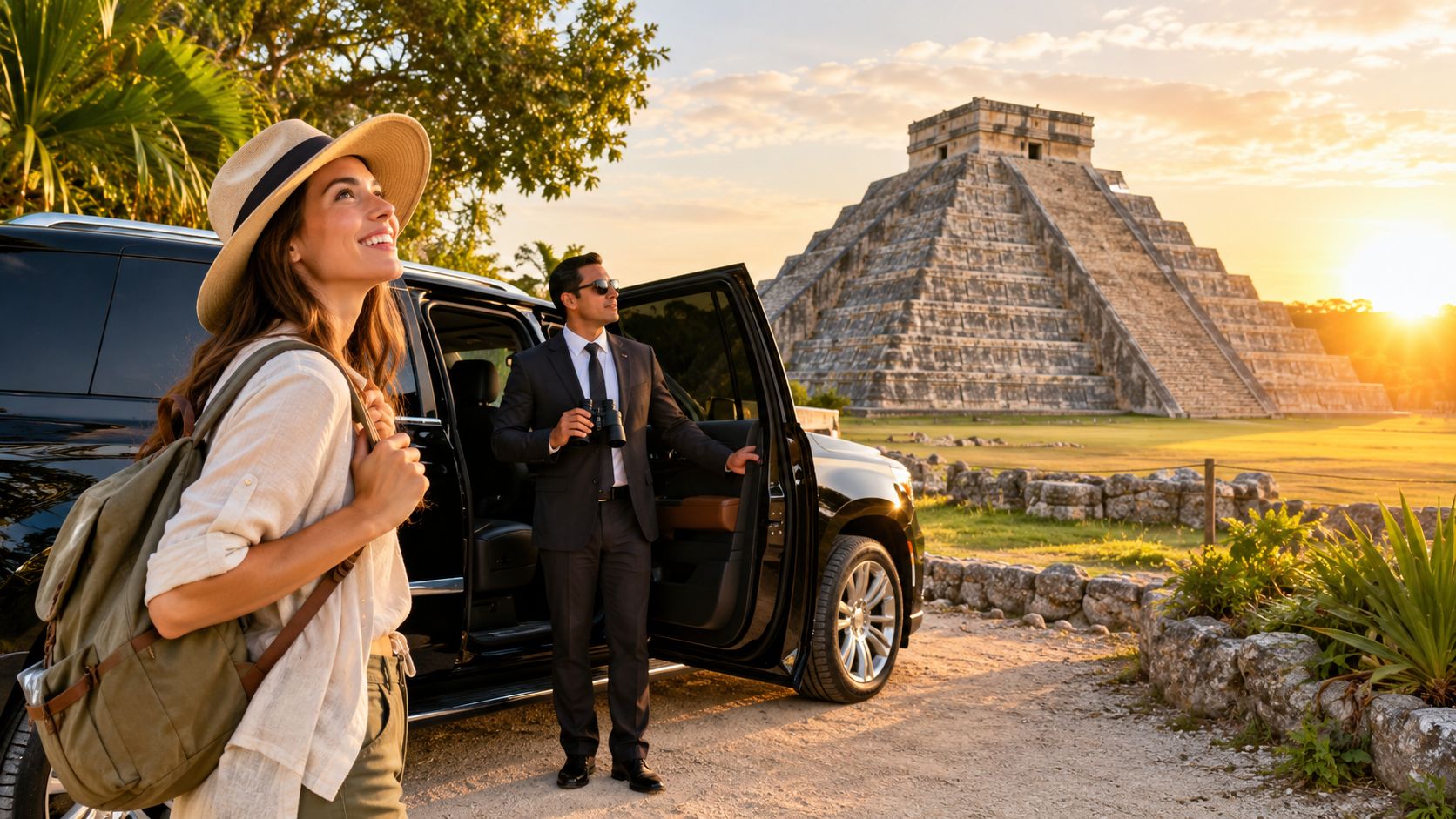
At 6:00 AM, a Cancun hotel lobby has two very different moods. One group waits beside a shared coach, checking whether everyone has arrived. Another group walks straight to a private SUV, loads the day bags, and leaves on its own schedule. Both groups are heading to Chichén Itzá, but only one controls the first decision that shapes the entire day, arrival time.
In 2026, a Chichén Itzá private tour isn't mainly about showing off a nicer vehicle. It's about managing a destination with strict entry windows, tighter photography rules, changing access conditions, and visitor numbers that still operate at enormous scale. The site recorded 2,248,197 visitors in 2024, an average of about 6,159 visitors per day, according to reporting on Chichén Itzá reservations and attendance. The private format earns its cost when it removes waiting, backtracking, and rushed decisions.
Table of Contents
- The Private Tour Decision in 2026
- What a Chichén Itzá Private Tour Actually Includes
- Travel Times and Routes from Cancun and the Riviera Maya
- Itinerary Options for Cenote and Valladolid Add-Ons
- Access Rules, Hours, and Site Restrictions in 2026
- Recommended Timing by Traveler Type
- What to Bring and Coordinate with Your Driver
- Common Mistakes and Pre-Trip Decisions
The Private Tour Decision in 2026
The wrong question is, “Can I get there more cheaply on a group bus?” The useful question is, “What does paying for control change during the day?”
A shared excursion has a fixed departure, a fixed route, and a fixed return. If breakfast runs late, another hotel adds a pickup, or the group spends too long at a souvenir stop, your time at the ruins gets squeezed. A private SUV gives your party a dedicated vehicle and driver, so the route starts with your priorities instead of a schedule built around strangers.
That matters because Chichén Itzá's grounds are busy even when the annual total moves downward. Attendance from January through August 2026 reached 1,338,700 visitors, a decline of 206,684 visitors, or 13.4%, compared with the same period in 2025, as reported by Yucatán Magazine. A lower total doesn't guarantee a quiet morning. Holidays, weather, tour-bus patterns, and seasonal demand still concentrate people at the same gates and viewpoints.
What the premium buys
The private vehicle doesn't create a private pyramid. You'll still follow site rules, stay outside restricted areas, and share the archaeological grounds with other visitors. What you buy is the ability to arrive early, stay as long as your group needs, skip an unwanted stop, and place a cenote or Valladolid where it makes sense rather than where a coach operator has room.
My recommendation is straightforward. Book private if your group includes young children, older travelers, photographers, couples celebrating something important, or anyone who dislikes being rushed. It also makes sense for groups arriving from Tulum, where a poor departure time can turn a long drive into a tiring site visit.
A dedicated Cancun car service can also connect the airport, hotel, and Yucatán route without forcing you to arrange separate legs. For travelers comparing options, luxury private tours are most useful when they include actual route planning, not just a premium vehicle.
Practical rule: Pay for private transportation when timing and flexibility matter more to you than the lowest advertised fare.
What a Chichén Itzá Private Tour Actually Includes
Read the inclusions before you compare prices. “Private tour” can mean a chauffeur-only day, a fully guided archaeological visit, or a vehicle transfer with optional stops. Those are different products.
A standard chauffeured arrangement should clearly identify the following:
- Dedicated vehicle: Your group has the vehicle for the booked itinerary rather than sharing seats with unrelated travelers.
- Professional driver: The driver manages the road, parking, pickup points, and route changes. A chauffeur isn't automatically an archaeology guide.
- Hotel pickup and return: Confirm whether pickup covers your Cancun hotel, Riviera Maya resort, private villa, or airport arrival.
- Route flexibility: You can usually choose between a direct visit, a cenote stop, Valladolid, lunch, or a shorter return route.
- Comfort provisions: Some premium services include cold water, onboard Wi-Fi, cold towels, baby seats on request, or extra luggage capacity. Confirm each item in writing.
- Luggage storage: This is valuable if the day starts at the airport, ends at another hotel, or includes a checkout before the ruins.
Separate the booking from the entrance
Your transportation quote isn't the same as your archaeological admission. The federal INAH entrance fee is listed as 831 pesos in the supplied 2026 tour planning information, and it should be shown separately from the vehicle price. Cenote admission, meals, optional guide services, and gratuities may also sit outside the transport booking.
Ask one direct question before paying: “Who explains the ruins?” A chauffeur can deliver you efficiently, point out practical details, and coordinate the day. A site-licensed guide provides the historical interpretation inside Chichén Itzá. Travelers who want deeper context should request a certified, SECTUR-registered guide add-on rather than assuming the driver fills that role.
This distinction also helps when you're researching broader regional routes. A practical guide to choosing Central America tours can help you compare a single archaeological day with a more expansive cultural itinerary, but your Chichén Itzá quote still needs its own line-by-line confirmation.
Don't accept “all inclusive” without a written breakdown. Confirm vehicle class, guide status, entry fees, cenote admission, meal arrangements, child seats, waiting time, and the exact return point.
Travel Times and Routes from Cancun and the Riviera Maya
Your pickup point determines whether the day feels controlled or rushed. From Cancun, use the 180D toll road for a time-sensitive private tour. The free highway suits travelers who want towns and local stops, but it gives the driver less control over arrival time.
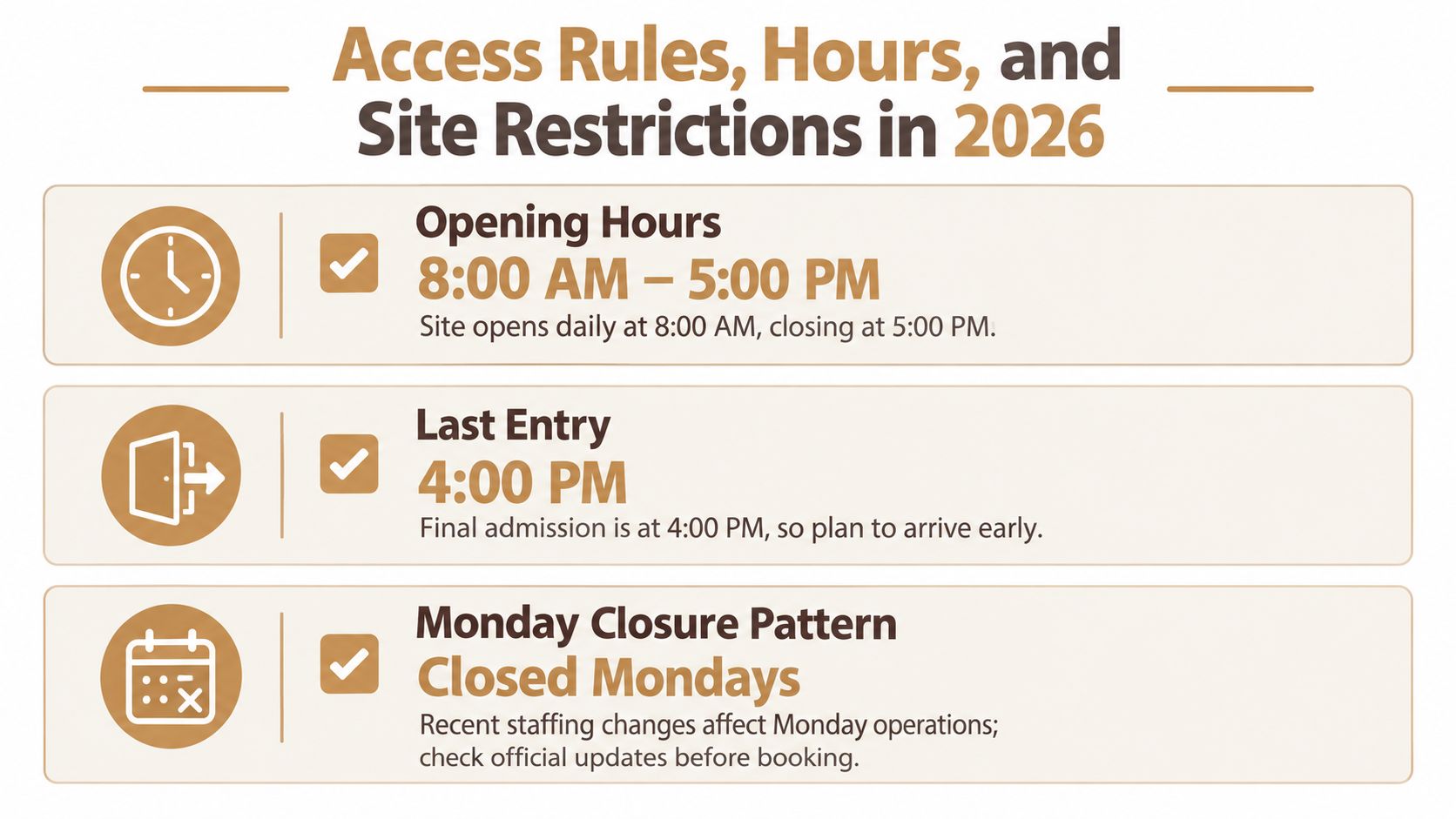
Plan around the opening period, not the last entry. The site generally operates from 8:00 AM to 5:00 PM, with last entry at 4:00 PM. A late arrival cuts into your usable visit and can disrupt a reserved cenote or lunch.
Leave early. Cancun pickups around 6:30 to 7:00 AM target arrival near opening. Puerto Morelos and Playa del Carmen require earlier departures, and Tulum travelers should leave at 5:30 AM or earlier for an opening-slot arrival.
The Tren Maya provides a non-driving option near Chichén Itzá. It works for travelers who prefer rail logistics, but a private vehicle remains the better fit for groups combining hotel pickup, the ruins, a cenote, and a return transfer. One driver coordinates the full route instead of making you connect separate transport legs.
Drive Times to Chichén Itzá by Origin
| Origin | Distance (km) | Drive Time | Recommended Departure |
|---|---|---|---|
| Cancun | Qualitative regional distance | Early morning road transfer | 6:30 to 7:00 AM |
| Puerto Morelos | Qualitative regional distance | Longer than Cancun | Before the Cancun departure window |
| Playa del Carmen | Qualitative regional distance | Longer Riviera Maya transfer | Early morning, before peak road activity |
| Tulum | Qualitative regional distance | Longest listed Riviera Maya route | 5:30 AM or earlier |
The table avoids false precision. Drive time changes with the selected road, hotel location, weather, roadworks, and planned stops. Give your chauffeur the exact terminal, hotel, resort entrance, or villa. A private transportation Cancun airport provider should build the pickup plan from that location, not from a city-center estimate.
That coordination is what the private format buys: an earlier start, a route matched to your priorities, and fewer delays between the ruins and any later stop.
Itinerary Options for Cenote and Valladolid Add-Ons
A direct Chichén Itzá visit is not automatically incomplete. In many cases, it's the smarter choice. The right itinerary depends on whether your group wants archaeological depth, a swim, a cultural town, or the shortest possible return.
| Itinerary | Stops | Total Duration | Best For | Main Tradeoff |
|---|---|---|---|---|
| Direct site-to-site | Chichén Itzá, return transfer | A focused full-day outing | First-time visitors with one priority | Less variety |
| Cenote combo | Chichén Itzá, Ik Kil or Suytun, return | A longer full-day outing | Travelers wanting ruins and swimming | Later return and added driving |
| Cenote plus Valladolid | Chichén Itzá, cenote, Valladolid walk and lunch | The most extended option | Return visitors and culture-focused groups | More time on the road, more fatigue |
Shape one, direct and focused
Choose the direct plan if Chichén Itzá is the reason you came. Give the ruins roughly three hours, then return without adding another major stop. This works well for travelers with evening plans, people sensitive to heat, and families who don't want to turn one attraction into an endurance event.
The benefit is pacing. You can pause at the Great Ball Court, spend time with a guide, and leave before the group starts asking whether there's still another stop.
Shape two, ruins plus a cenote
The cenote combination is the strongest all-around choice for many first-time visitors. Place Ik Kil or Suytun after the archaeological visit, and protect a swim window of ninety minutes. That gives the group time to change, swim, dry off, and rejoin the vehicle without pretending the stop takes only a few minutes.
Cenote crowds commonly build around midday, so reservations and routing matter. Use a cenote planning guide for Casa Tortugas if you're comparing swimming locations and want to understand how different cenote experiences fit into a private route.
Shape three, cenote and Valladolid
Add Valladolid when your group values atmosphere as much as the headline attraction. A one-hour colonial-center walk and lunch can sit between the swim and the drive home. This shape suits repeat visitors, couples, and groups that want the day to feel like a regional experience rather than a round-trip transfer.
The cost is energy. Children may enjoy the water but resent another walking stop. A chauffeur chains these stops by geography, not by a generic checklist. The best route avoids returning along the same roads, protects the reserved swim slot, and decides in advance whether Valladolid means a short walk, a proper meal, or both.
Access Rules, Hours, and Site Restrictions in 2026
A private vehicle cannot change the archaeological site's rules. It can put you at the gate with the right equipment, help you arrive before the largest queues, and protect the time-sensitive parts of the day.
Chichén Itzá generally opens from 8:00 AM to 5:00 PM, with last entry at 4:00 PM, according to published site-hour information. Some areas start clearing earlier. Yucatán Today notes that staff may begin clearing sections such as the Observatory around 4:30 PM. Chichén Viejo has separate access controls, with limited days or time slots.
Plan for the rules, not the ideal photograph
Climbing El Castillo is banned. Recent reporting describes fines reported as high as US$16,000, a 50-foot buffer around the structure, and temporary closures affecting some areas in 2025, as detailed by The Cancun Sun's coverage of new Chichén Itzá rules. Plan around those restrictions unless official guidance changes.
Drones, tripods, large bags, and selfie sticks may cause problems at screening. Food and alcohol may also be restricted. Leave climbing, tripod setups, and close-up El Castillo shots out of your photography plan. Bring a compact camera or phone, follow staff instructions, and ask your guide where photography is permitted.
The entrance process slows when large groups arrive together. An early private pickup gives you more room for ticket checks and bag screening, but it does not guarantee immediate admission. Federal and state charges are separate from the private vehicle package, so verify the current ticket structure before departure.
Monday operations can change with staffing and site management. Confirm opening patterns, interior access, photography rules, and ticket requirements about two weeks before travel. Your driver should also verify whether any requested sub-site operates on your chosen date.
Recommended Timing by Traveler Type
Departure time should reflect the people in your vehicle, not a generic tour template. A family with a tired toddler needs a different day from a couple carrying camera equipment, even if both want the same ruins.
Families with young children
I recommend a 6:00 AM pickup, arrival near 8:30 AM, a cenote stop around 12:00 PM, and a hotel return near 4:00 PM. The vehicle becomes part of the family strategy. Children can nap during the long road segments, snacks stay organized, and the group isn't forced to wait for unrelated passengers.
Keep the archaeological visit focused. A good guide can explain the major structures without turning every stop into a lecture, then the cenote gives children a physical change of pace.
Couples and photographers
A 7:15 AM pickup usually gives couples enough time to reach the site before the later morning becomes uncomfortable, while preserving room for a slower visit. Stay through the change in late-morning light if photography matters, but remember that tripods and drones are restricted and El Castillo has a buffer zone.
An optional Valladolid stop can provide a more relaxed visual setting later in the day. I'd choose it only if the couple enjoys walking and doesn't have a fixed evening reservation.
Small groups of four to six
An 8:00 AM departure can work for a flexible group that values a less aggressive start. Spend longer at the site, place the cenote around midday, and add Valladolid if everyone agrees to a slower return.
Season matters. For a winter-solstice visit, start earlier to get ahead of the tour-bus wave. In summer, shift the cenote to a later swim window if heat makes an immediate midday stop unpleasant. Earlier is easier, but the right departure matches the actual day you booked.
What to Bring and Coordinate with Your Driver
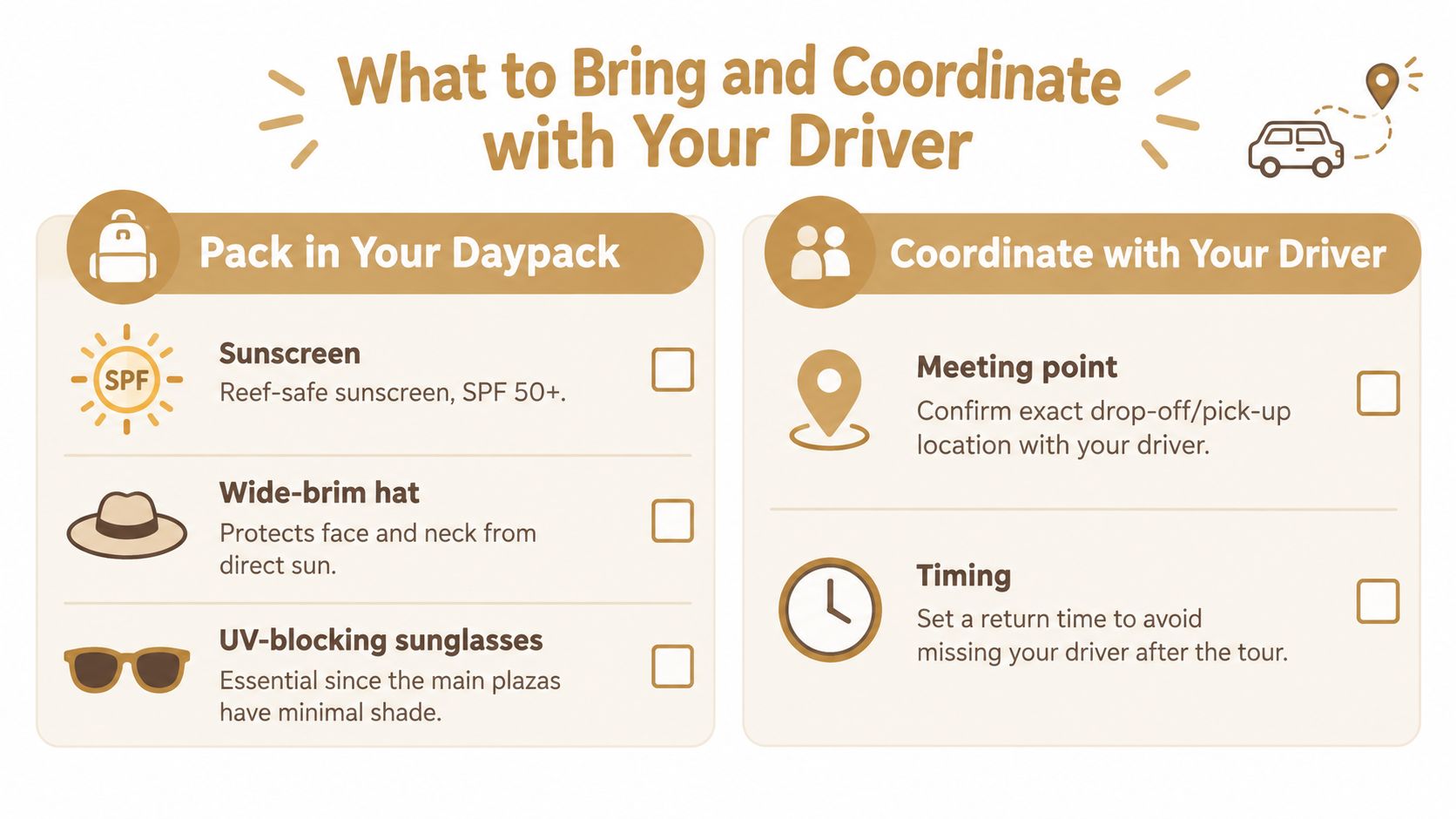
Treat the day pack like a short trail kit, not a beach bag. The main plazas have little shade, the limestone can be uneven, and a cenote adds wet clothing to an already long day.
Pack these essentials:
- Sun protection: Reef-safe sunscreen, a wide-brim hat, and UV-blocking sunglasses.
- Footwear: Closed-toe shoes with grip work better on uneven surfaces and cenote ladders than loose sandals.
- Water and layers: Bring a refillable bottle, light long sleeves, and a microfiber towel.
- Dry storage: A dry bag protects phones, wallets, and cameras during the swim.
- Small cash: Keep pesos available for restrooms, artisan stalls, and an optional site guide.
- Power: A power bank helps if your group photographs throughout the visit.
Leave tripods, drones, selfie sticks, oversized backpacks, alcohol, and food in the vehicle or approved buffer areas. Entrance screening can reject items that seemed harmless at the hotel.
Confirm the operating details the night before
Send the chauffeur your final pickup window, cenote preference, swimming expectations, and return plan. I recommend confirming a 6:00 to 6:30 AM pickup when the itinerary targets an early site arrival, then agreeing on WhatsApp check-in points at the entrance, Cenote Ik Kil or Suytun, and Valladolid.
Request cold towels and stocked water if those amenities matter to your group. Decide whether dinner means a planned stop or a direct return, because that choice affects fuel planning, waiting time, and the driver's final route.
If you're reviewing how to stay safe abroad, include transport contacts, hotel details, and emergency information in your trip file. For a simple airport, hotel, or attraction leg, clarify whether you need point-to-point transportation or a vehicle waiting throughout the day.
Common Mistakes and Pre-Trip Decisions
Most disappointing private days fail before the booking email is sent. Travelers compare the headline price, then discover that the cheapest quote has unclear vehicle standards, no written insurance details, and a driver assigned through an unknown referral chain.
The second mistake is treating “private” as unlimited. A late hotel breakfast can erase the advantage of a dedicated vehicle. If you want an early site arrival, book a 6:30 AM pickup, not 7:30 AM, and tell the hotel the night before.
A third mistake is double-booking the wrong kind of professional. The chauffeur coordinates roads and timing. A certified archaeological guide handles interpretation. Use both when history matters, but don't assume one role automatically includes the other.
| Decision | Common Mistake | Smarter Choice |
|---|---|---|
| Vehicle and operator | Choosing the lowest quote without checking vehicle age, insurance, or driver accountability | Confirm the vehicle class, passenger coverage, maintenance standards, and who is responsible if a breakdown occurs |
| Departure time | Assuming a private car can recover a late start | Set the pickup around the desired entry window, then protect it from hotel delays |
| Guide service | Assuming the chauffeur is a site archaeologist | Book a certified site guide separately when interpretation matters |
| Cenote access | Arriving without checking reservation conditions | Confirm Ik Kil or Suytun availability before finalizing the route |
| Valladolid lunch | Assuming every restaurant follows the same schedule | Check Sunday hours for the specific colonial-center restaurant |
| Airport connection | Booking a same-day airport transfer after an ambitious tour | Keep the Chichén Itzá day separate from flight-critical transportation |
Don't combine a full excursion with a same-day flight unless the schedule has an unusually generous buffer. Airport transportation is a separate operational job, and a delayed road return can turn a pleasant cultural day into flight stress.
Before confirming, decide the vehicle class, guide requirement, cenote, lunch style, luggage plan, and return time. That preparation is what makes luxury transportation useful. You're not paying only for leather seats. You're paying for a day that has been designed before the first wheel turns.
Unique Private Transportation provides private airport transfers, point-to-point travel, and chauffeured Chichén Itzá itineraries from Cancun and the Riviera Maya, with options for vehicle planning, live flight coordination, and multi-stop routing. Visit Unique Private Transportation to request a private day built around your pickup location, access strategy, cenote choice, and preferred return.