
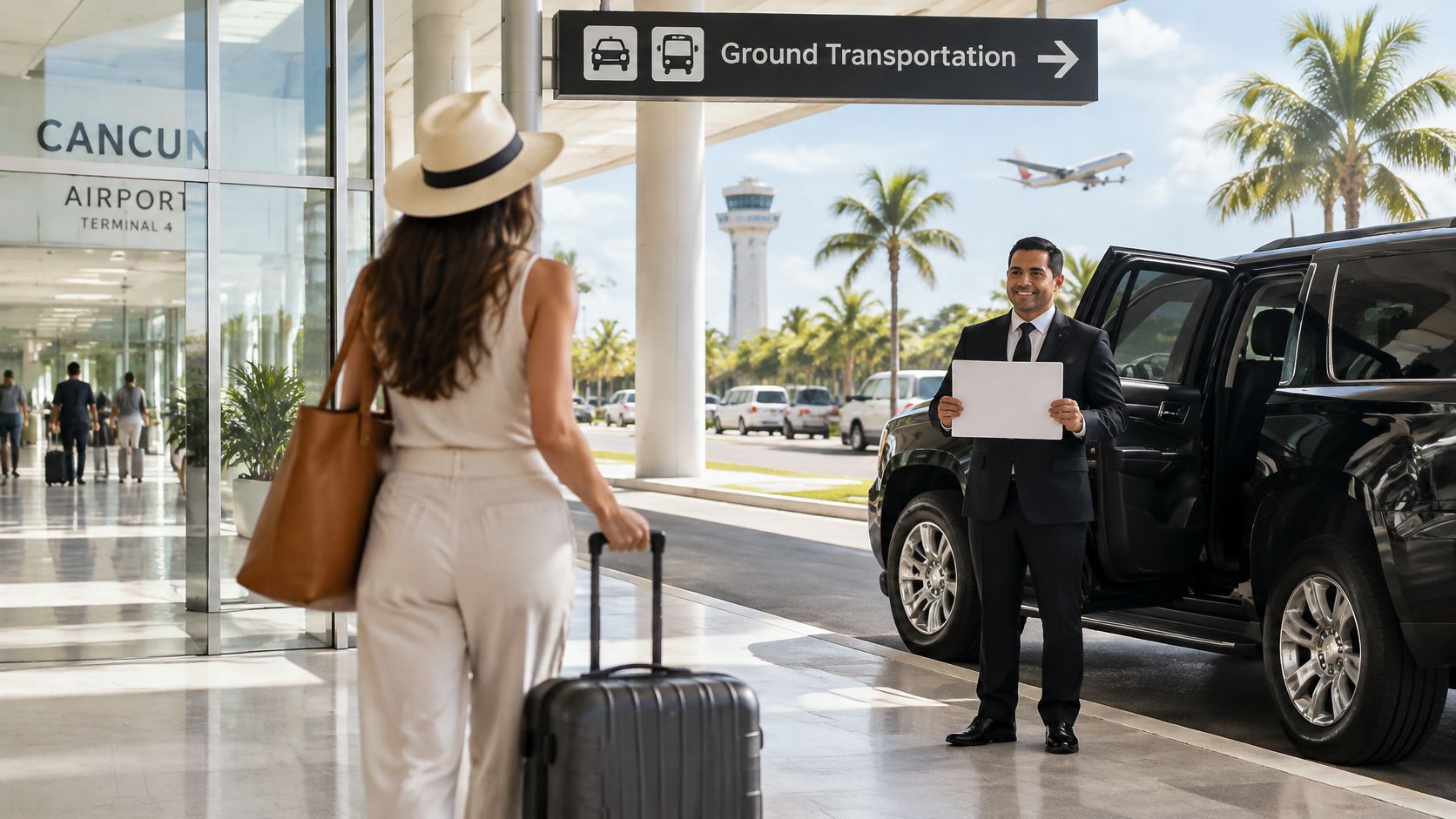
Do you know where your ride meets you at Cancun Airport Terminal 4, or just what time your flight lands? A reservation alone doesn't answer the questions that matter after arrival: which exit to use, how to identify your driver, and what happens if bags, immigration, or airport access take longer than expected.
Treat pickup as a verify-before-you-travel routine, not a curbside guess. Confirm the terminal, save the meeting instructions, and choose transportation that fits your luggage, party, and onward plans.
Table of Contents
- Terminal 4 at a Glance
- Confirm Your Terminal Before You Book
- Construction and Access Changes to Plan Around
- The Arrival Flow From Aircraft to Exit
- Immigration and Bag Timing by Traveler Scenario
- Ground Options and Where to Meet Your Driver
- Meet Your Driver With Flight Tracking
- Choosing a Private Transfer by Party Type
- Planning Your Departure Buffer
Terminal 4 at a Glance
What do Terminal 4's building details tell you about arrival planning? They provide useful context, but they do not predict how long your individual walk or exit will take.
Terminal 4 opened in October 2017 as part of an airport expansion that increased Cancun Airport's annual capacity from roughly 22 million to 31 million passengers, according to Mexico's Secretariat of Communications and Transportation. The expansion was intended to relieve pressure on the existing terminals and support continued tourism growth.
Terminal 4 key facts at a glance
| Detail | Value | What it means for you |
|---|---|---|
| Opened | October 2017 | Part of the airport-wide expansion |
| International gates | 14 gates with jetways | Gate-to-arrival walks can be long |
| Building area | About 79,381 square meters | Allow time to walk between gate and exit |
| Aircraft positions | 26, including contact and remote stands | Remote stands may involve a bus transfer |
| Stated annual capacity | About 9 million passengers | A capacity figure does not predict crowding for your arrival |
| Sustainability | LEED Gold certified | Identifies the building's green certification |
A jetway does not guarantee a short walk, and an aircraft position does not mean passengers enter the arrivals hall immediately. Your stand assignment, walking pace, and assistance needs all affect the time before you reach the exit.
The building's certification describes its environmental credentials, not passenger-processing speed. Annual capacity is also a broad planning figure, not a forecast of how busy arrivals will be when your flight lands. Use the table for context, then confirm the terminal named on your flight booking.
Confirm Your Terminal Before You Book
Check the terminal on your airline booking before reserving Cancun airport transportation. Check it again a few days before travel, and use the airline's latest flight information if an older confirmation differs.
A wrong-terminal booking creates an avoidable handoff problem. Don't assume a driver assigned elsewhere can appear at your exit without a revised dispatch plan.
Put the right information on the reservation
Send the transport provider a complete booking record:
- Flight details: Airline, flight number, arrival date, and terminal.
- Party details: Passenger count, checked bags, cabin bags, and oversized items.
- Assistance requirements: Child seats, mobility equipment, and any help needed between the exit and vehicle.
- Backup contact: A reachable phone number or messaging contact if your usual phone has no service.
- Destination: The full hotel, villa, office, or ferry-terminal name, rather than only the destination town.
Ask for the terminal number and exact meeting instructions on the written confirmation. Save the booking reference and a screenshot of the directions so you aren't dependent on mobile reception immediately after arrival.
Know what the terminal shuttle does
The Cancún Airport FAQ describes a free inter-terminal shuttle connecting Terminals 2, 3, and 4 approximately every 10–15 minutes, with marked stops outside the terminals. Don't pay for that terminal transfer.
The shuttle moves passengers within the airport complex. It isn't hotel transportation, a Riviera Maya service, or your reserved chauffeur.
Booking rule: Your confirmation should name both the arrival terminal and the meeting location. “Airport pickup” isn't specific enough.
Avoid booking without a terminal, assuming your driver expects you at another building, or treating the airport shuttle as your onward ride. If the airline changes your assignment, notify the provider before boarding rather than trying to repair the plan after landing.
Construction and Access Changes to Plan Around
A saved terminal map isn't a guarantee that the same curbside approach will work on travel day. Use maps to understand the airport, but use current provider instructions to find your pickup.
Por Esto's reporting on airport access works describes Terminal 4 expansion, access-road modifications, wider approaches, and traveler complaints about congestion. Published detail about temporary routes and completion arrangements remains limited, so a permanent meeting-point promise would be misleading.
Separate the road problem from the airport problem
Landside time covers the journey to or from the airport, access queues, and reaching the usable loading area. Airport processing time covers what passengers must do inside the terminal.
A clear road doesn't shorten an immigration queue. Equally, finishing baggage collection quickly doesn't mean a vehicle can immediately reach the loading area.
Before travel, make these checks:
- Confirm the assignment: Verify the airline and terminal against the latest flight information.
- Check the approach: Ask your driver to review the current access route and any loading restrictions.
- Protect the road margin: Allow additional landside flexibility when the provider expects congestion.
- Agree on a fallback: Decide how you'll receive revised meeting instructions if access changes.
- Protect onward plans: Tell the coordinator about a ferry, event, or connection before dispatch.
Don't ask a driver to improvise a pickup in a traffic lane because an old screenshot shows that location. If instructions change, have the provider identify a recognizable landmark and explain the walking route from your exit.
Keep your party together until the revised plan is clear. Splitting up to search for a vehicle usually makes communication harder.
The Arrival Flow From Aircraft to Exit
Follow the passenger route before looking for ground transportation. International and domestic arrivals don't have identical formalities, so follow the signs applicable to your flight rather than copying another group.
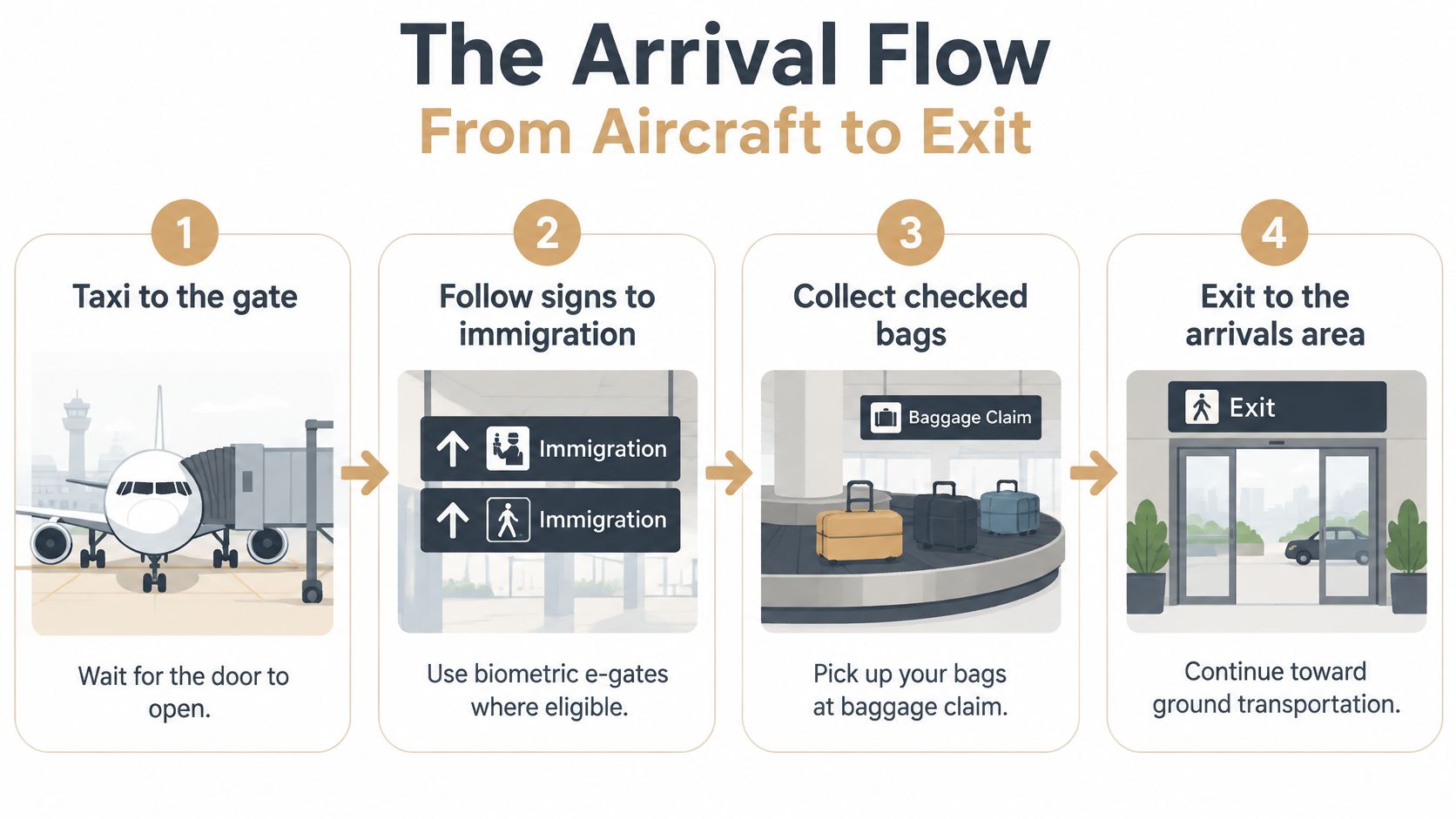
Follow the airport sequence
Taxi to the stand and wait to disembark. Touchdown doesn't mean the aircraft door is open. Wait for crew instructions, especially when passengers need a transfer from a remote stand.
Follow signs to immigration when arriving internationally. Have your passport accessible and use biometric e-gates only if you're eligible and directed to them. Domestic passengers should follow their own arrivals route rather than joining passport control unnecessarily.
Collect checked baggage. Check the carousel display against your flight, then account for every bag before leaving. Bags can arrive in separate batches, so check the flight display and airline instructions rather than assuming a pause means delivery has finished.
Complete customs formalities where applicable. Follow official directions and keep your luggage with you. Don't arrange for part of your group to meet the vehicle while others are still completing required checks.
Continue to the exit and the confirmed post-exit meeting area. If you've reserved a transfer, don't divert to the taxi counter. Locate the agreed representative before approaching a vehicle.
Send useful updates, not constant updates
If your booking supports messaging, a brief landing notification can establish that your phone is working. A message about delayed luggage or assistance is more useful than repeatedly reporting that you're still in line.
Send the decisive update once your party is through the required formalities and approaching the agreed meeting area. Describe your location using a sign or landmark, not “outside,” which can mean different places to you and the driver.
Immigration and Bag Timing by Traveler Scenario
Landing time isn't pickup time. The useful question is which arrival tasks your party still needs to complete, not how quickly another traveler once left the airport.
The Wikipedia airport overview describes a planned increase in Terminal 4 biometric e-gates from four to 20, alongside additional traditional immigration points. That is an expansion plan, not confirmation that every gate is operating or that every passenger can use one.
Arrival timing variables by traveler scenario
| Scenario | What changes the time | Buffer to plan |
|---|---|---|
| Domestic arrival, carry-on only | Exit and curbside queue only after disembarkation | Shorter processing buffer; set pickup around confirmed exit readiness, not assumed minutes |
| International arrival, checked luggage | Immigration, bag carousel, and customs | Longer; allow extra time at the carousel |
| Biometric-eligible traveler | E-gate eligibility and rollout at Terminal 4 | Potentially faster passport processing; retain allowance for bags and customs |
| Traveler with infant or mobility equipment | Bags, car seats, and assistance | Plan extra time for slower movement |
| Large group or wedding party | Several bag batches and coordinated pickups | Stagger pickup and allow a meeting buffer |
Match the buffer to the slowest required task
A domestic traveler with cabin baggage avoids several international-arrival tasks, but still needs to disembark and reach the meeting area. Don't translate that simpler route into a guaranteed number of minutes.
For international passengers with checked luggage, fast passport control can mean reaching the carousel before the bags. Biometric eligibility affects one stage of the journey, not the whole arrival.
Families should allow room for feeding, changing, stroller collection, and fitting everyone safely into the vehicle. A wheelchair or other mobility device may require a separate handover and careful loading.
Plan a group's departure around the last passenger who must travel with it, not the first passenger through immigration.
For wedding parties, decide whether everyone must leave together. Separate vehicles can help when guests arrive on different flights, but only if each departure group has its own passenger list and destination confirmation.
Give the driver your flight number so live tracking handles the flight-status side of coordination. Use passenger messages for information tracking can't reveal, such as missing luggage, an assistance delay, or a group member who hasn't reached the exit.
Ground Options and Where to Meet Your Driver
A pre-booked private transfer starts with a designated meeting area beyond the exit doors, not an unreserved taxi queue. The Terminal 4 airport information guide identifies post-exit transfer meetings, an official taxi counter inside arrivals, an ADO stop outside, and on-site rental-car desks.
Terminal 4 ground options and where to use them
| Option | Where to find it | How to use it | Best for |
|---|---|---|---|
| Pre-booked private transfer | Beyond the exit doors, in the designated meeting area | Look for the driver with your name and confirm the vehicle | Families, groups, and carefully coordinated connections |
| Official taxi counter | Inside arrivals | Buy a ticket at the counter, then follow directions to the taxi queue | Solo travelers without a booking |
| ADO bus stop | Outside the terminal | Check the destination and board at the marked stop | Light luggage and flexible timing |
| Rental-car desks | On-site in the terminal | Complete the agreement, then follow vehicle-collection instructions | Travelers planning to self-drive |
| Inter-terminal shuttle | Marked stops outside the terminal buildings | Use the complimentary terminal-transfer service | Moving between airport terminals only |
Match the option to your destination
For private transportation Cancun Airport bookings, check the representative's name sign against your reservation, then confirm the destination and vehicle before loading bags. A name sign helps identification, but it shouldn't replace a booking check.
A taxi is useful when you haven't reserved a ride and want direct transport. Confirm the destination and fare arrangements at the official counter before joining the boarding queue.
ADO suits travelers who can work around a scheduled route and arrange any final connection themselves. Check where the bus terminates; a town-center arrival isn't the same as delivery to a resort entrance.
Rental-car desks handle paperwork and collection instructions. Don't assume the car is parked beside the desk or that completing the rental agreement is the final step before driving.
The inter-terminal shuttle belongs to a different category altogether. It moves you to another airport building, not to your accommodation.
Coordinate the whole journey
A point-to-point transportation explanation helps distinguish a direct reserved journey from transport that requires additional connections. Confirm whether your booking ends at a hotel entrance, marina, ferry terminal, or another specific handoff point.
For itineraries involving an aviation leg and onward chauffeur service, integrated travel coordination with Approved Jets provides useful context for coordinating those handoffs. Each segment still needs its own confirmed arrival and meeting arrangements.
If you've booked a driver, go to the agreed post-exit meeting area first. Don't join the taxi queue, and keep your booking reference accessible on your phone.
Meet Your Driver With Flight Tracking
Closely grouped arrivals can produce uneven passenger flows at Terminal 4. Flight tracking helps a coordinator adjust vehicle positioning when an aircraft arrives early or late, but it cannot show whether you are still waiting for a stroller or resolving a baggage issue. Agree on how to report those delays before travel.
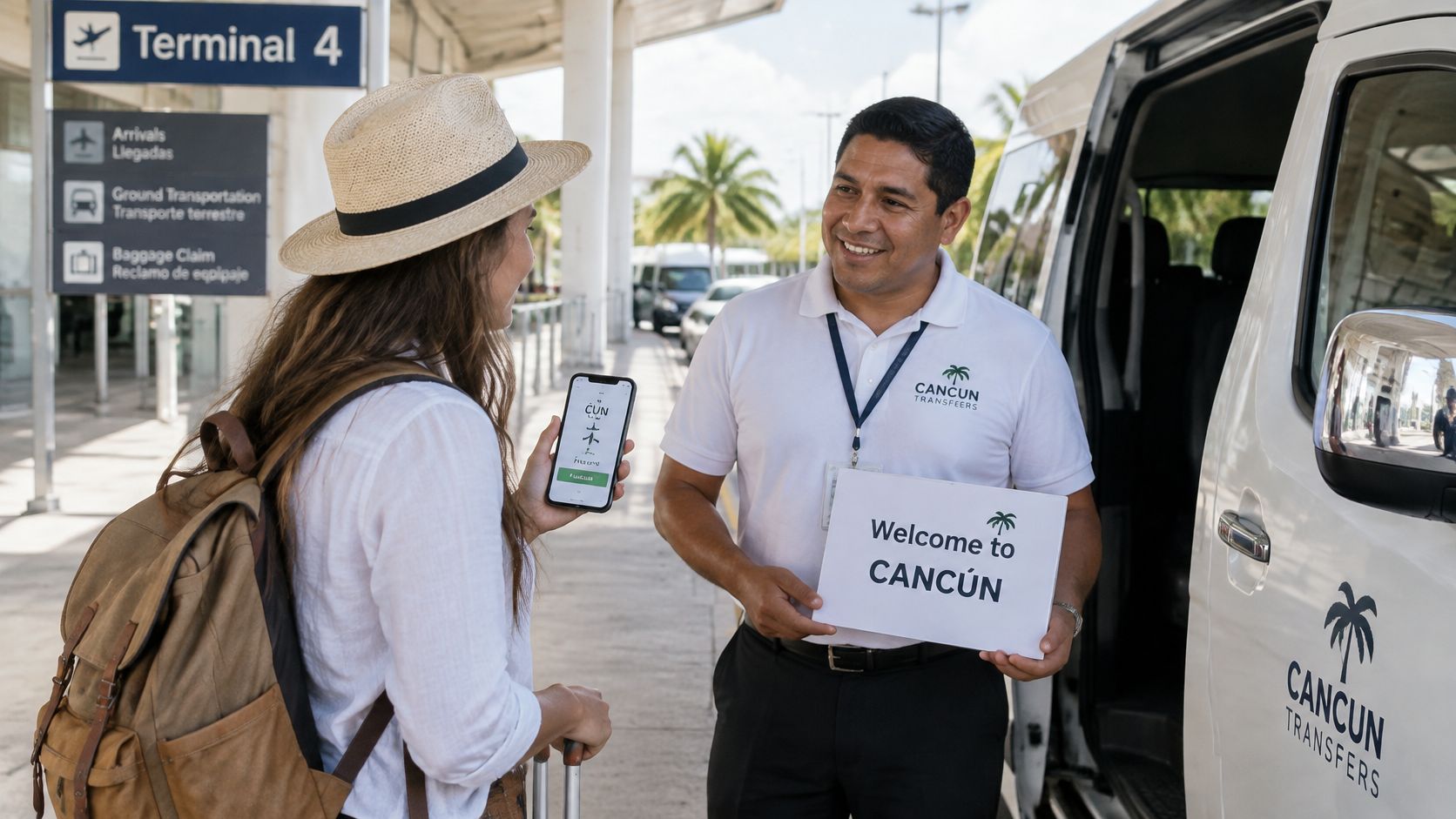
Use a shared handoff routine
- Send the flight number and terminal at booking. Recheck both before travel, especially if the airline changes your itinerary.
- Choose a contingency contact method. Confirm whether the coordinator will use messaging, a phone call, or a designated group leader.
- Let live tracking inform dispatch. Early or late arrivals should prompt a review of vehicle positioning rather than leaving the booking tied to the original timetable.
- Confirm the meeting point and name-sign arrangement. Ask where the representative will stand after you exit; don't expect a greeting at the taxi counter.
- Message when your party is ready. Agree on the wording and send it once everyone is together and prepared to meet.
Resolve exceptions without losing the group
For a wedding or corporate arrival, appoint one group lead to send the confirmation message. That person should know who is traveling in each vehicle and whether all luggage is present.
If you can't find the representative, stop at a recognizable location and contact the booking channel. Wandering around the loading area while sending changing location descriptions makes it harder to reconnect.
When comparing a Cancun car service, ask how the provider handles processing delays, unreachable phones, and changed meeting instructions. Confirm the waiting policy before payment, and keep the agreed contact method available after landing.
Choosing a Private Transfer by Party Type
Unique Private Transportation offers luxury SUVs, including Escalade-class models, alongside family, pet-friendly, wedding, and corporate transport arrangements. Compare these with taxis, buses, and self-drive options by looking at the people and luggage that must travel, not just the vehicle photograph.
Private transfer options by party type
| Traveler | Vehicle or service | Included or on request | Booking note |
|---|---|---|---|
| Couple or solo traveler | Luxury SUV, including Escalade-class models | Refreshments, cold towels | Confirm vehicle size when booking |
| Family with infant | SUV with fitted child seat | Baby seat on request | Request the appropriate child seat when booking |
| Traveler with a pet | Pet-friendly vehicle | Pet-friendly option | Confirm pet policy in advance |
| Wedding party or bridal group | Multi-vehicle, coordinated routing | Timed pickups and centralized confirmations | Confirm seats, luggage space, and vehicle count |
| Corporate or event group | Right-sized vehicles for the group | Passenger insurance | Confirm vehicle count and invoicing |
Request the details that affect suitability
For couples, a premium SUV can provide privacy and luggage flexibility, but confirm the actual assigned model rather than assuming a particular vehicle. Families should provide the child's size and required restraint type so the seat can be prepared appropriately.
Pet owners should disclose the animal, carrier, and luggage requirements. Wedding planners should send vehicle-by-vehicle passenger lists, while corporate coordinators should clarify billing details and whether guests need separate receipts.
Check luxury transportation rates and booking details against your actual itinerary. Seat capacity, cargo allowance, total price, and special-request availability remain items to confirm in writing.
Vehicle choice: Count people and bags separately. An available passenger seat doesn't prove there's room for another large suitcase.
Cancun luxury airport transfers suit travelers who want a chauffeur rather than responsibility for driving and parking. If independent touring is the priority, World Auto Hire's Find a rental car in Cancun is an alternative starting point; compare the full rental terms and vehicle-collection process before choosing.
Planning Your Departure Buffer
How much time should you leave before a Terminal 4 departure? Airport-wide passenger totals offer context, but they cannot predict your check-in queue or the drive from your hotel. ASUR-reported totals were 25.482 million in 2019, 30.343 million in 2022, and 32.750 million in 2023. The 2023 total was about 28% above 2019 and 8% above 2022, according to El Economista's airport expansion report.
Use your airline's deadline and current pickup estimate to set the schedule. Work backward from the flight:
- Airline arrival requirement: Check the carrier's check-in and bag-drop guidance for your specific flight.
- Terminal processing allowance: Allow time for luggage, assistance, security, and the walk to your gate.
- Current road journey: Ask your driver for an estimate from your accommodation under current departure conditions.
- Access contingency: Add margin for airport approaches, curbside queues, and unloading.
- Party preparation: Have bags, children's equipment, and every traveler ready before the vehicle arrives.
Confirm the pickup time with your provider the day before departure, then check conditions again before leaving. A hotel-to-airport estimate saved from an earlier trip may not reflect current traffic or access conditions.
For a large group, arrange room departures and baggage collection in advance. Loading cannot start efficiently while guests are still checking out.
A private driver can coordinate the ride and terminal drop-off. The buffer still needs to cover delays before departure and the airline's deadlines.
Unique Private Transportation offers private airport transfers with live flight monitoring, bilingual coordination, and terminal-to-vehicle meet-and-greet support. Visit Unique Private Transportation to request a Terminal 4 pickup, confirm vehicle and luggage requirements, and get current meeting instructions before you travel.