
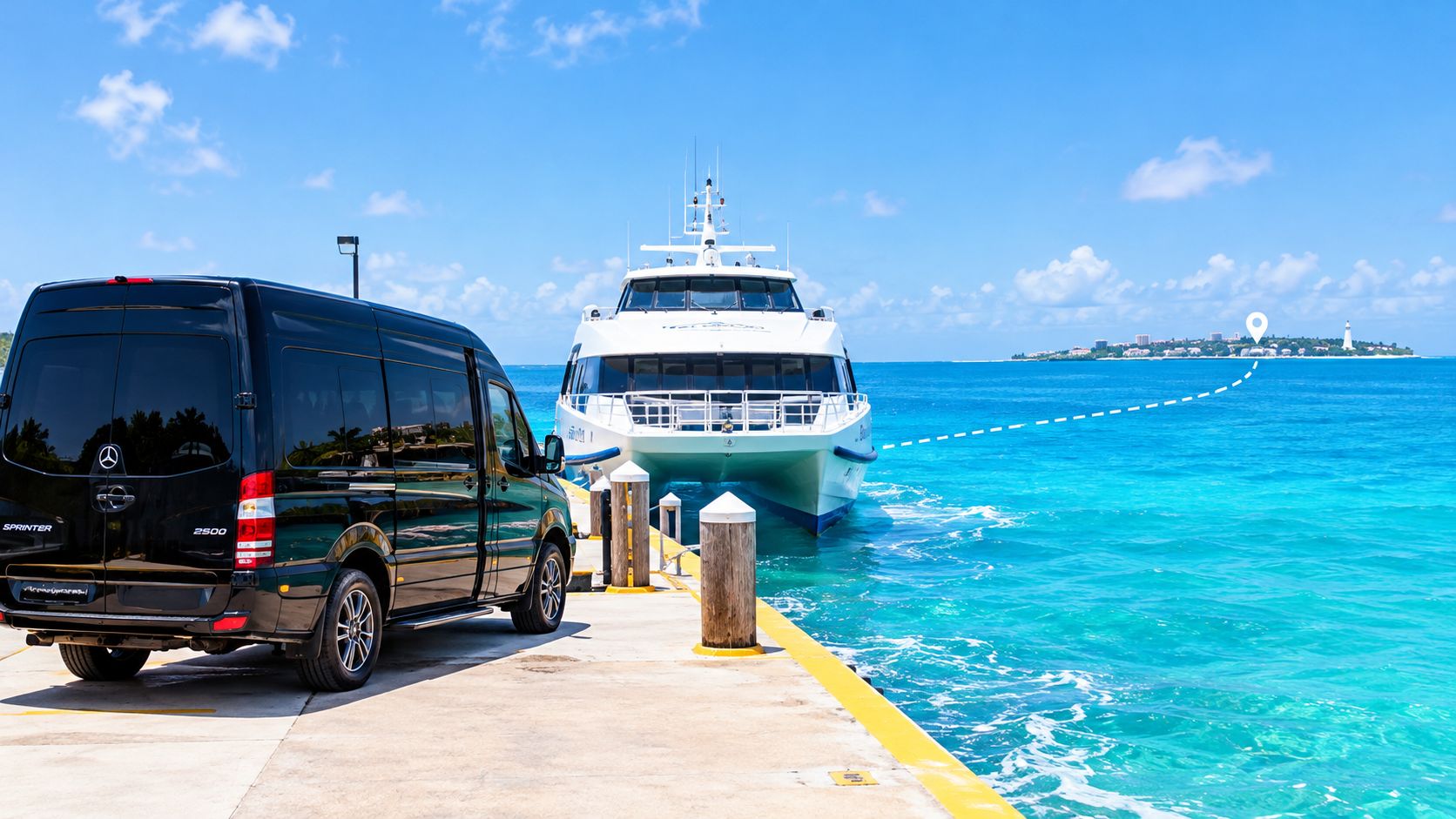
You've landed at Cancún International Airport, collected your bags, and want to be on Isla Mujeres before the day slips away. The ferry looks like the simple part. The detail that catches first-time visitors is that the boat leaves from a specific mainland pier, so reaching Isla Mujeres means coordinating a road transfer and a ferry crossing, not booking one ride from the airport to the island.
Choose the pier before arranging your pickup, then work backward from the sailing time. That's the no-nonsense way to plan Cancun to Isla Mujeres: match your hotel or airport location to the right terminal, leave room for baggage and boarding, and keep a backup if the weather disrupts service.
Table of Contents
- Why Cancun to Isla Mujeres Is Really Two Trips in One
- The Four Ferry Terminals and Who Each One Is For
- Ferry or Private Charter and How to Pick
- Getting from Cancun Airport to the Right Pier
- Ferry Schedules, Frequencies, and What They Cost
- Luggage, Seats, and Accessibility Without the Guesswork
- Weather Delays and How to Build a Backup Plan
- Booking Tips and Final Answers for First-Time Visitors
Why Cancun to Isla Mujeres Is Really Two Trips in One
You clear the airport, meet your driver, and head toward the coast. The trip still isn't over when the car pulls in at the ferry terminal: you need to reach the correct pier, allow time to board, and then cross the water. The islands sit approximately 8 nautical miles, or about 15 kilometers, apart, and direct passenger ferries generally take 20–30 minutes, depending on the terminal, vessel, and sea conditions (route overview and crossing details).
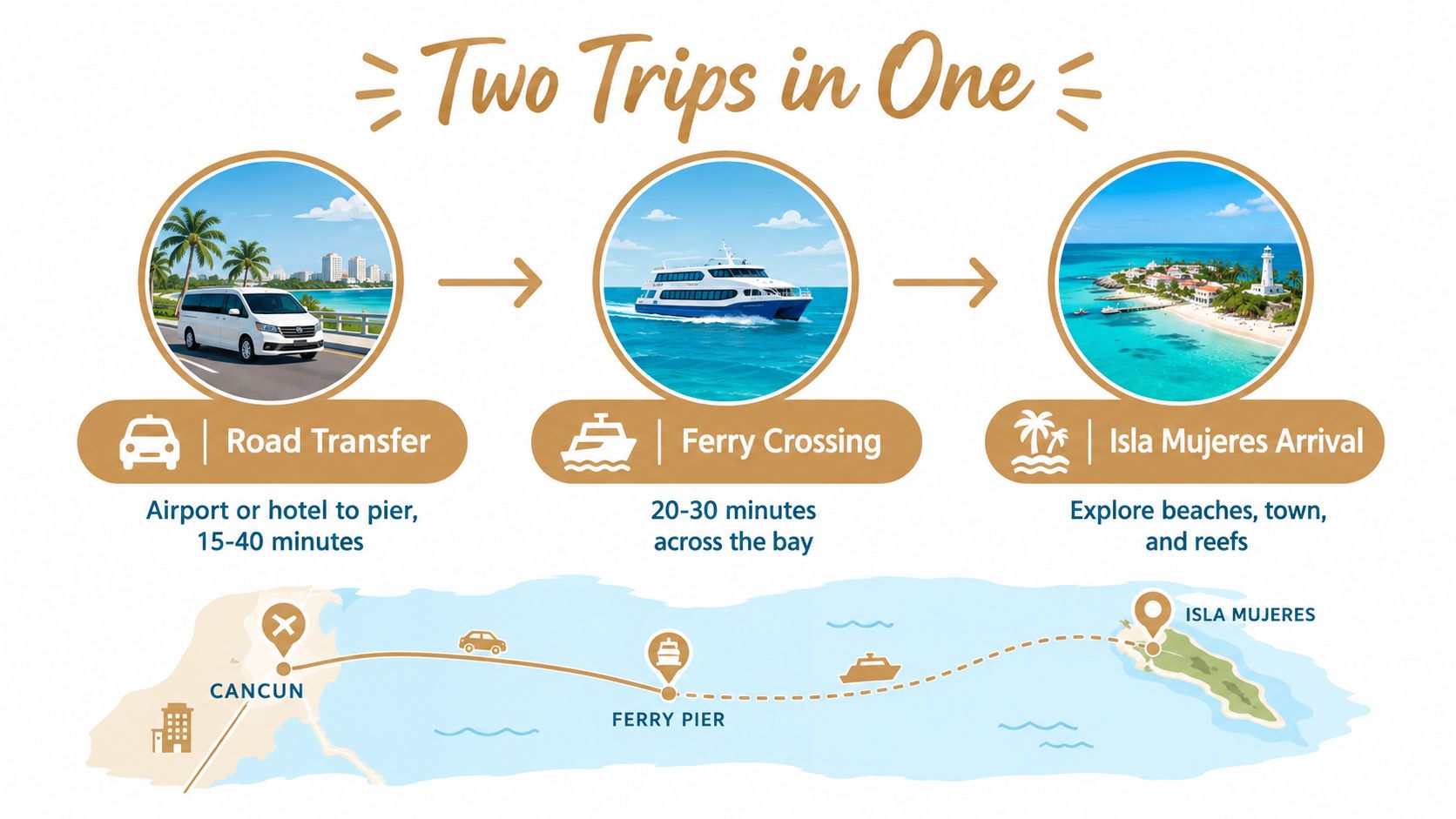
The road leg is the part that most often determines whether the plan works. Your pickup point, traffic, chosen pier, luggage, and ferry schedule all affect when you can board. The crossing isn't a door-to-door ride, and a ferry ticket doesn't solve the question of how you'll reach the dock on time.
Cancún-area departures include Puerto Juárez, Playa Tortugas, Playa Caracol, and the Xcaret Terminal. They serve different parts of Cancun and the Hotel Zone, so the nearest pier isn't automatically the right one. A sensible cancun airport transportation plan gets you to the named terminal with enough time to check in and board, rather than assuming every ferry leaves from the same place.
Dispatcher's rule: Pick the pier and sailing first, then arrange the road ride around them. Don't book a car to “the ferry” without confirming which terminal.
The short crossing makes Isla Mujeres realistic as a day trip or an add-on to a Cancun stay. But the day feels flexible only when the road and sea legs are treated as one itinerary. For visitors with children, bulky bags, or a group arriving on different flights, a prearranged transfer can remove guesswork between the airport and pier.
The Four Ferry Terminals and Who Each One Is For
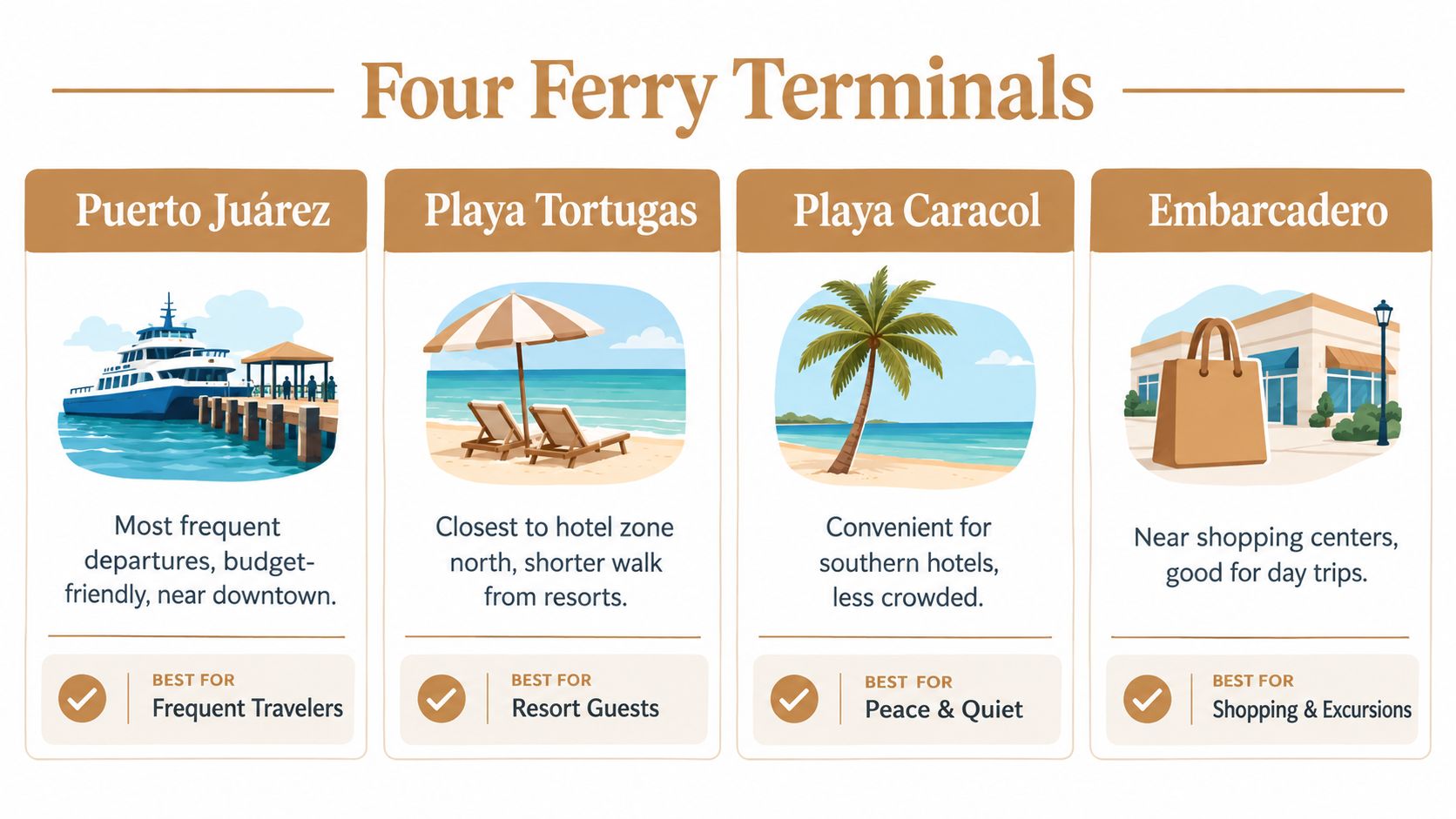
Choose the pier by where you sleep and how much road time you want before the boat. For CUN arrivals I usually send drivers to Puerto Juárez unless the hotel sits near a Hotel Zone dock. The wrong terminal costs you twice: once on the road, again while you wait for the next sailing.
| Terminal | Best fit | What to consider |
|---|---|---|
| Puerto Juárez | Airport arrivals, downtown stays, and travelers prioritizing frequent service | The crossing can take about 15 minutes. Published schedules show departures approximately every 30 minutes for much of the day, with later sailings listed as well. Give your driver the exact pier name. |
| Playa Tortugas | Guests staying near the northern Hotel Zone | It can shorten the road leg from nearby resorts, while the crossing is generally longer than Puerto Juárez. Check the last return before locking dinner plans. |
| Playa Caracol | Travelers based near the central or southern Hotel Zone | Convenient from some resort areas, but a shorter drive can still mean a longer day on the water. Confirm frequency before you set a pickup time. |
| Embarcadero / Xcaret Terminal | Visitors whose itinerary already connects with the terminal or related experiences | Crossing time and frequency differ from Puerto Juárez. Confirm the current timetable and ticket inclusions (round-trip, terminal access) on the operator's page before arranging a car. |
Puerto Juárez is my pick when you land at CUN and want the clearest path to the island. Its crossing is generally the shortest among the listed routes, and its schedule offers broad coverage. Hotel Zone guests get a different answer: if your resort sits close to Playa Tortugas or Playa Caracol, cutting the road transfer can beat saving minutes on the crossing.
Match the pickup to terminal check-in, not to flight landing. For a door-to-pier run to the main dock, review Puerto Juárez transfer options and have the driver stage for the sailing you plan to catch.
Ferry or Private Charter and How to Pick
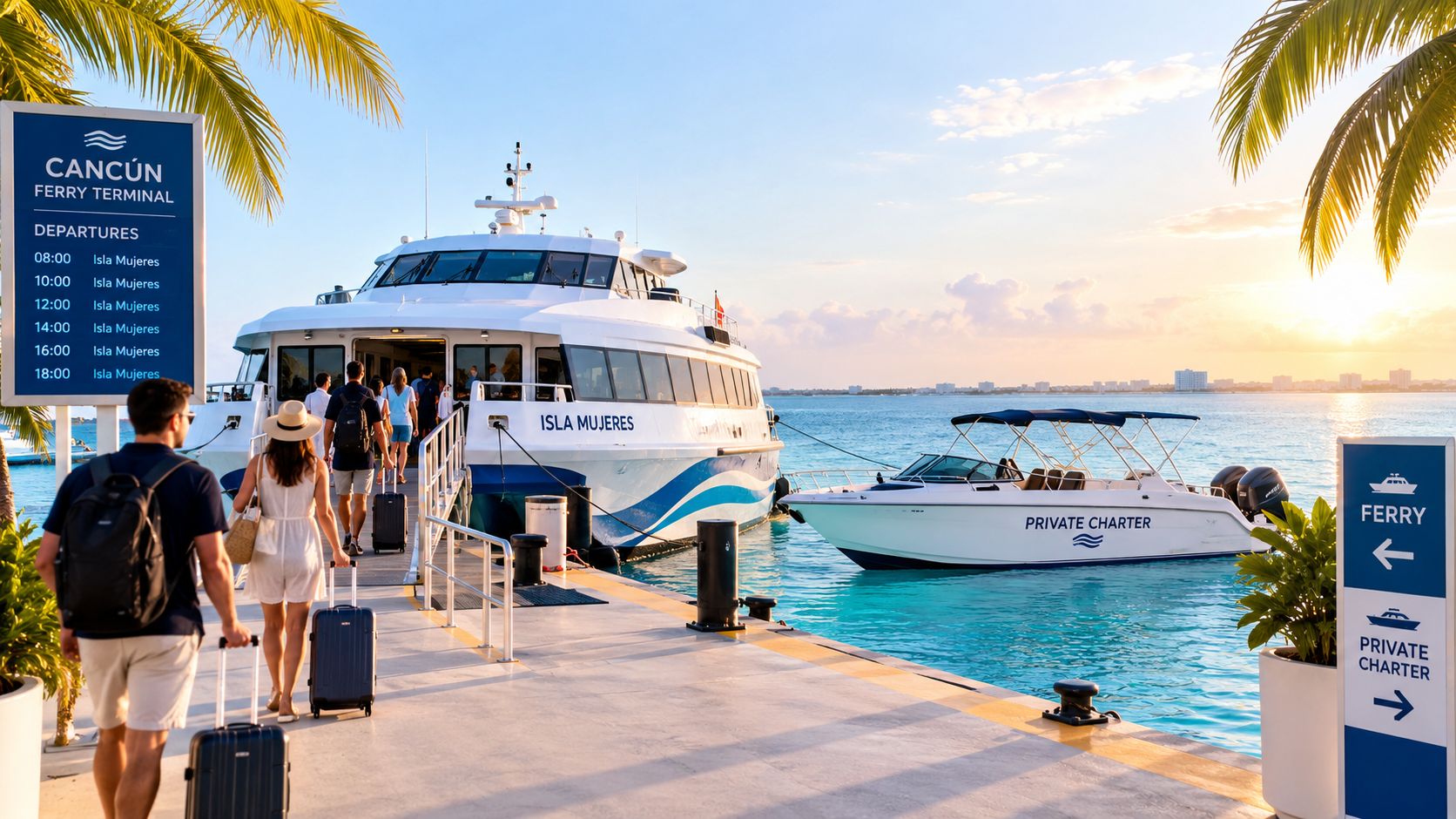
A scheduled ferry is the straightforward choice for most solo travelers, couples, and smaller groups. You buy a passenger ticket, follow the operator's timetable, and share the vessel with other travelers. That trade-off keeps the plan simple, but you must work around the ferry's departure point and schedule.
A private charter makes more sense when the group needs control over the boat plan. Wedding parties, corporate groups, photographers carrying equipment, and families with a specific itinerary may value a private departure, a chosen vessel, or a nonstandard pickup arrangement. Ask for the details in writing: passenger and luggage capacity, weather cancellation terms, fuel or other added charges, and whether the captain waits if a flight arrives late.
| Choose a scheduled ferry when… | Consider a private charter when… |
|---|---|
| You're comfortable using a published departure schedule. | Your group needs a departure plan built around its own itinerary. |
| You want the standard passenger option rather than a private boat. | You need to ask for specific space, equipment handling, or arrangements. |
| Your bags fit the operator's rules and you can reach its terminal in time. | Your party has bulky gear or needs a particular pickup plan. |
Don't assume a charter removes weather risk. Marine conditions can affect both scheduled and private operations, and policies vary by provider. Ask what happens if the harbor restricts navigation, and avoid paying extra for flexibility that the captain or operator hasn't confirmed.
The practical rule is simple: use the ferry if its fixed schedule fits your party; consider a charter when the group needs a different arrangement and has confirmed the limits. Neither option fixes a late airport pickup automatically. You still need a reliable road transfer to the pier.
Getting from Cancun Airport to the Right Pier
Cancún International Airport has four passenger terminals and operates 24 hours a day. Terminal 1 serves charter, private general-aviation, and executive flights; Terminal 2 handles domestic and international routes; Terminal 3 primarily serves scheduled international flights; and Terminal 4 serves international and selected domestic services (CUN terminal information). Confirm your arrival terminal and flight number before setting a pickup plan. The airport's complimentary terminal shuttle runs from 07:00 to 22:00, approximately every 20–30 minutes, but don't build a tight ferry connection around an assumed shuttle ride.

Set the pickup around the actual pier
Puerto Juárez is a strong airport connection if you want the shorter crossing and broad schedule coverage. Playa Tortugas, Playa Caracol, and the Xcaret Terminal may suit a Hotel Zone itinerary or a specific operator, but first verify that the departure works for your travel date. The road ride is its own leg, and the airport-to-pier timing depends on pickup location, traffic, and terminal choice. Don't treat a general drive estimate as a guarantee.
A reserved cancun car service can take your party directly to the terminal you've chosen. If you're comparing private transportation options in Cancun, focus on pickup instructions, vehicle space, flight tracking, and whether the service can accommodate your family's or group's needs. Unique Private Transportation offers chauffeured airport and ferry-terminal transfers with flight monitoring and meet-and-greet coordination.
For large airports and ferry hubs, orientation tools can help travelers understand how to move between pickup points and facilities. Mappedin's overview of indoor maps for transportation hubs is useful background, but confirm your actual meeting point with the driver rather than relying on a map alone.
Give the driver details that change the trip
At booking, provide your flight number, arrival terminal, passenger count, checked-bag count, exact ferry pier, and any child-seat or mobility requests. Those details help the dispatcher match the vehicle and pickup instructions to the road leg. If a flight is delayed, flight monitoring can help adjust dispatch, but it can't guarantee that a particular ferry will still be available.
Ferry Schedules, Frequencies, and What They Cost
Puerto Juárez is the schedule I would build around when connecting from the airport. The timetable linked in the terminal section shows frequent service through the main travel day, followed by fewer late-evening sailings. Return boats run on their own timetable, so check both directions for your date instead of assuming the schedules mirror each other.
That frequency gives you flexibility, but ferry timing begins when your flight lands. Baggage claim, pickup, traffic, terminal entry, and ticket purchase all draw from the same buffer. Work backward from your chosen sailing and reach the pier early enough to find the correct queue and board without rushing.
Pick the sailing first. Then set the pickup time that protects it.
For cost, price the journey as two transactions. Ferry fares can vary by terminal route, operator, passenger category, one-way or round-trip purchase, and seating class. Use the operator's current fare page to check the total for your exact date and passenger count; that live checkout figure is the only price worth budgeting.
Compare current private transportation rates separately from the ferry fare. Your vehicle quote does not include the crossing unless the provider explicitly bundles it, and the lowest quoted vehicle may stop being the cheapest option if your passenger count or luggage requires more space.
Luggage, Seats, and Accessibility Without the Guesswork
"Bags are allowed" is not a plan. One operator publishes an allowance of one piece up to 25 kilograms, with combined dimensions of 142 centimetres (Xcaret ferry and luggage information). Anything beyond that, dive gear, golf clubs, a wedding garment case, gets decided at the ticket window. Confirm the rule with your specific operator and route before you leave Cancun, because the allowance is not uniform across terminals.
Ask the same direct questions about wheels. A ferry may offer boarding help or a priority seating area, but the move from pier to deck can still mean a gap, a step, or a narrow threshold that shifts with the tide. Accessibility varies by terminal, vessel, and which crew is working, so a short crossing is no guarantee the whole path is step-free.
The door-to-pier equipment checklist
- Name every bag and wheel. Give the transfer company your passenger count, luggage count, and whether anyone needs an accessible vehicle, a child seat, or extra cargo room.
- Clear bulky items in advance. Ask the ferry operator about dive equipment, golf clubs, strollers, and oversized cases on your exact vessel and terminal.
- Request boarding help early. If a wheelchair or mobility aid is traveling, arrange assistance before arrival instead of asking at the ramp.
- Keep the small bag close. Medication, documents, cash, and a phone charger ride in a personal bag you hold, not in checked luggage.
Travelers choosing a mobility device for the island can compare folding vs portable scooters before deciding what to bring. For families and mobility-impaired travelers, the vehicle matters as much as the boat: a cramped sedan to Puerto Juárez undoes the benefit of a priority seat on the crossing, so book space for the people and gear you have.
Weather Delays and How to Build a Backup Plan
Your road transfer can run perfectly and the day can still fall apart at the water. Crossing conditions sit outside anyone's control, and as noted earlier, ferry schedules stay subject to weather and available capacity, so an on-time landing only secures the first leg.
Harbor authorities may restrict navigation during severe wind, swell, or tropical-cyclone conditions, which means sailings get delayed, altered, or suspended outright. Check the Servicio Meteorológico Nacional's forecasts and advisories before committing to the drive to the pier, and have your driver confirm the sailing status instead of trusting a morning update that may no longer hold.
Build the fallback before you leave the airport. Agree on who calls the driver, who checks the operator's service status, and where the group stays on the mainland if the crossing stops running. Keep ferry updates, flight details, and your transfer contact on the phone of the person coordinating, not scattered across five travelers.
Families, wedding parties, and corporate groups should also watch Protección Civil's alerts during tropical weather. A raised alert level should change your plan even while ferries still run, because suspended service strands groups fast and hotel rooms near the terminals go first. Confirm conditions again before the road journey to the pier, not just at booking time.
Booking Tips and Final Answers for First-Time Visitors
Book the road transfer and ferry as connected parts of one plan. Confirm your flight, arrival terminal, exact ferry pier, vehicle size, luggage, child-seat needs, and the sailing you intend to catch. Then check the operator's current schedule and fare for your date. Luxury transportation is useful when your priority is a private, coordinated ride, but it doesn't replace a ferry ticket or protect you from marine closures.
Quick answers before you confirm
Does the ferry run at night? Puerto Juárez's published timetable includes late departures, but service times can change by date and operator. Verify the sailing you plan to take before arranging an airport pickup.
Can I take a day trip if my flight lands late? Not safely by assumption. You still need to collect bags, meet your driver, reach the correct pier, and board before the sailing. If your arrival leaves little room for those steps, stay on the mainland and travel to the island later.
How should families with infants plan? Request the appropriate car seat when booking the road transfer, and tell the provider whether you're bringing a stroller and how much luggage you have. Check the ferry's equipment and accessibility policies in advance. Keep the infant's essentials with you, and don't count on a dockside connection to solve missing equipment.
For a beach day, include sun protection and consider how you'll handle insects while outdoors. This guide can help you find the right insect repellent. Before you pay, make sure your confirmation names the pickup point, destination pier, flight details, vehicle, passenger and bag count, and contact method for any change.
Unique Private Transportation arranges private airport pickups, chauffeured rides to Isla Mujeres ferry terminals, and vehicle coordination for families and groups. Confirm your flight, pier, luggage, and child-seat needs, then visit Unique Private Transportation to plan the road leg around your ferry departure.